
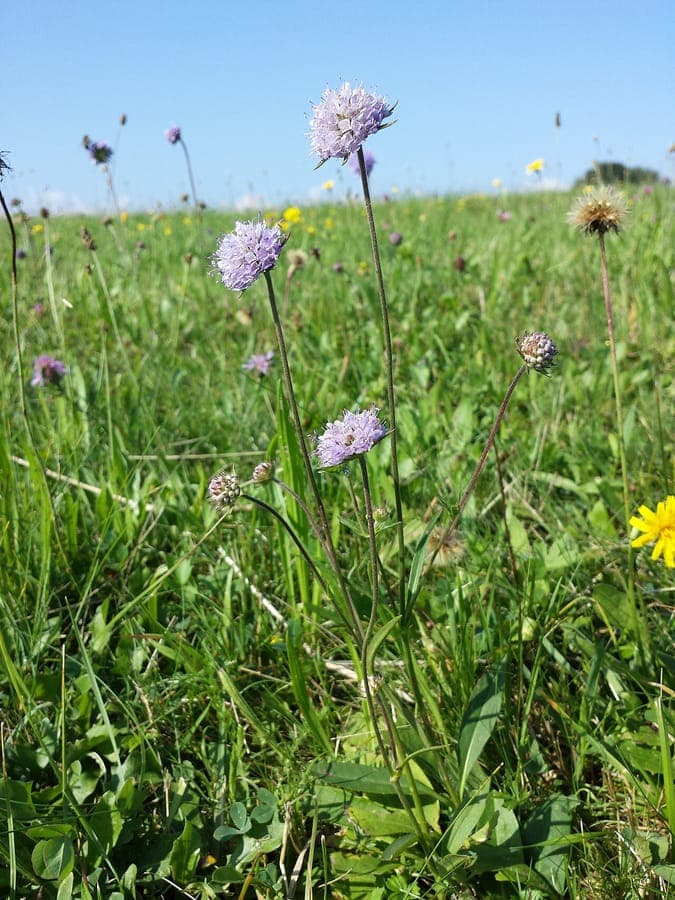
Stefan.lefnaer / CC BY-SA 4.0, via Wikimedia Commons
Premorse: complete guide
Succisa pratensis
¿Quieres ver Premorse: complete guide en tu jardín?
1 minuto, sin tarjeta de crédito
Premorse (Succisa pratensis), also known as devil's-bit or devil's-bit scabious, is an elegant meadow plant featuring dark blue, rounded flower heads. This perennial herb thrives in wet meadows, marshes, and damp grasslands throughout the Northern Hemisphere. With its attractive blue flowers and significant ecological value, premorse is an excellent choice for wildflower gardens. In this guide, we explore everything you need to know about cultivating this special plant.
Overview
Premorse is a perennial herb from the Caprifoliaceae family (honeysuckle family). The plant is native to damp grasslands and marshes in Europe and Asia. It grows in wet conditions and plays an important ecological role as food for insects, particularly butterflies, and as a nectar source for bees.
Appearance & Bloom
Premorse forms an upright rosette of elongated, rough-textured leaves. The plant reaches heights of 30 to 60 centimeters during flowering. The flowers are the most striking feature: dark blue to purple globules appear from July through October. These flowers consist of numerous tiny florets arranged in a dense, ball-shaped flower head. The plant forms characteristic truncated roots (from which the name derives) and distinctive seed heads.
Ideal Location
Premorse thrives best in moist to wet locations with full sun to partial shade. Plant this herb where it receives at least 4 to 6 hours of direct sunlight daily, but where soil remains moister than typical dry meadow plants. The plant can grow at the edges of shallow pools.
Soil
Premorse prefers nutrient-rich, moist to wet soil. Add ample compost or well-rotted leaf mold to improve moisture retention. The plant grows better in slightly acidic to neutral pH (6.0 to 7.0). In dry soil, the plant will perform poorly.
Watering
Premorse requires regular watering, especially during the growing season. In coastal damp climates, regular rainfall will suffice. During dry periods, supplemental water is needed. Ensure soil does not dry out between waterings. The plant thrives best in conditions where it receives several centimeters of water.
Pruning
Premorse requires minimal maintenance pruning. Remove spent flowers to encourage further blooming. After season's end, the plant can be cut back close to ground level to promote new growth. Leave seed heads for winter feeding of birds and insects.
Maintenance Calendar
Mar-Apr: Beginning of growth period; add compost. May-Jun: Flower bud development. Jul-Oct: Flowering period; water regularly. Nov-Feb: Winter dormancy and seed dispersal.
Winter Hardiness
Premorse is very hardy and grows in zones 5 to 9. The plant survives cold winters without protection. In very cold regions, mulching may be beneficial but is usually not necessary.
Companion Plants
Premorse combines well with other wet meadow plants such as marsh marigold, wet wildflowers, and primrose. These combinations create authentic wildflower meadows.
Closing
Premorse is a fascinating blue-flowering plant that adds natural beauty to any garden. With its dark blue flowers, significant ecological value, and preference for moist soil, it is an excellent choice for wildflower gardens in temperate climates. Visit gardenworld.app/en for more wildflower plant recommendations.
¿Quieres ver Premorse: complete guide en tu jardín? Crea un diseño gratis ahora.
Sube una foto, elige un estilo y obtén un diseño fotorrealista con lista de plantas en menos de un minuto.
Más de 10.000 jardines diseñados
Sin tarjeta de crédito


Plantas similares
Yellow honeysuckle (Lonicera tragophylla): complete guide
Lonicera tragophylla
Meet yellow honeysuckle (Lonicera tragophylla): a Chinese climber with large golden flowers that thrives in partial shade.
Lonicera korolkowii: complete guide
Lonicera korolkowii Stapf
Discover blueleaf honeysuckle, a vigorous shrub with beautiful flowers. Guide on growing, shaping and why this Asian climbing plant is perfect for gardens.
Lonicera oblongifolia: complete guide
Lonicera oblongifolia Hook.
Discover swamp fly honeysuckle, a North American woodland plant. Guide on growing, caring and why this native species is valuable for gardens.