
Wikimedia Commons / CC BY-SA 3.0, via Wikimedia Commons
Winter Daffodil: complete guide
Sternbergia lutea
¿Quieres ver Winter Daffodil: complete guide en tu jardín?
1 minuto, sin tarjeta de crédito
Winter Daffodil: complete guide
Overview
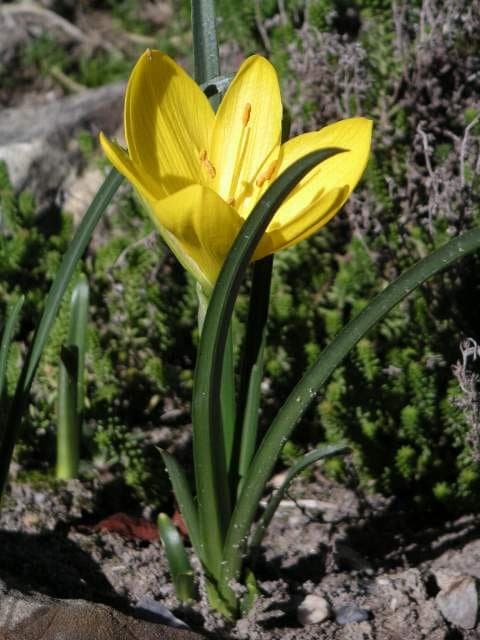
The Winter Daffodil or Sternbergia lutea is a magnificent autumn-blooming bulb from the Amaryllidaceae family. Originally from the Mediterranean region, from Spain to Asia, this plant brings brilliant yellow color to your garden just when other plants fade. With its elegant, trumpet-like flowers appearing from September to October, this plant adds an indispensable touch of summer warmth to the autumn landscape. This bulb is highly suitable for Mediterranean-oriented gardens.
Appearance and bloom
The Winter Daffodil reaches a height of approximately 10-20 centimeters with long, narrow, grass-like leaves appearing directly from the ground. The plant produces 1-3 flowers per bulb, each with a stunning yellow color. The flowers are approximately 3-4 centimeters wide and have a characteristic trumpet shape with six petals. The flowers emit a pleasant, subtle fragrance. A unique feature is that the leaves fully develop after blooming and remain standing through winter.
Ideal location
The Winter Daffodil grows perfectly in sunny to partially shaded spots with at least 6 hours of direct sunlight daily. This plant feels at home in warm, well-dried locations. Plant this bulb in positions where it can receive winter sunlight, as this helps leaf development. Avoid damp, shaded spots.
Soil
The Winter Daffodil requires well-draining, sandy or loamy soil with a pH of 7 to 7.5 (neutral to slightly alkaline). This plant grows well on steep slopes and in alpine garden settings. Add sand and organic material to heavy clay soil. Good drainage is essential to prevent bulb rot.
Diseño gratis
¿Quieres ver Winter Daffodil: complete guide en tu jardín? Crea un diseño gratis ahora.
Watering
Once planted, the Winter Daffodil is very drought-tolerant. Water the bulbs thoroughly at planting, but thereafter ensure dry, well-drained soil. During the blooming period (September-October) you can water lightly if extremely dry. After bloom, when leaves are growing, provide slightly more water, although excessive rainfall in Mediterranean climates is usually sufficient.
Pruning
Pruning is not necessary. Let the leaves remain until late spring, as they gather energy for next season. Remove only dead or damaged leaves.
Maintenance calendar
August to September: Plant bulbs directly in the ground. September to October: Enjoy the yellow flowers. November to May: Leaves continue growing; minimal care. June to August: Plant dormancy period; no watering needed.
Winter hardiness
The Winter Daffodil is moderately frost-hardy, suitable for zones 7-10. In colder areas, you can grow the bulbs in pots and protect them in winter. In mild winters, this plant can remain outdoors. Mulch with sand and gravel in areas with hard winters.
Companion plants
The Winter Daffodil combines beautifully with:
- Lavender (Lavandula)
- Rosemary (Rosmarinus)
- Sage (Salvia)
- Bear's breeches (Acanthus)
- Yarrow (Achillea)
This composition creates an authentic Mediterranean garden feel.
Closing
The Winter Daffodil is a must-have for those who love autumn bloom. This beautiful bulb requires minimal care and guarantees yellow light in autumn. Plant the bulbs in late summer for gorgeous blooms in September-October. Available at major bulb dealers and garden centers. For more gardening tips and designs, visit gardenworld.app.
On gardenworld.app you can request professional garden designs.
¿Quieres ver Winter Daffodil: complete guide en tu jardín? Crea un diseño gratis ahora.
Sube una foto, elige un estilo y obtén un diseño fotorrealista con lista de plantas en menos de un minuto.
Más de 10.000 jardines diseñados
Sin tarjeta de crédito


Plantas similares
Douglas' Onion: complete guide
Allium douglasii
Douglas' onion is a compact ornamental allium with purple flowers, perfect for rock gardens and sunny borders. Learn care, siting and hardiness.
Oblique onion: complete guide
Allium obliquum
The oblique onion is a hardy ornamental allium with chartreuse flower heads and blue-green foliage. Location, soil and care explained.
False hooded garlic: complete guide
Allium pseudocalyptratum
Discover false hooded garlic (Allium pseudocalyptratum): a rare ornamental onion from Lebanon for rock gardens and alpine troughs.