
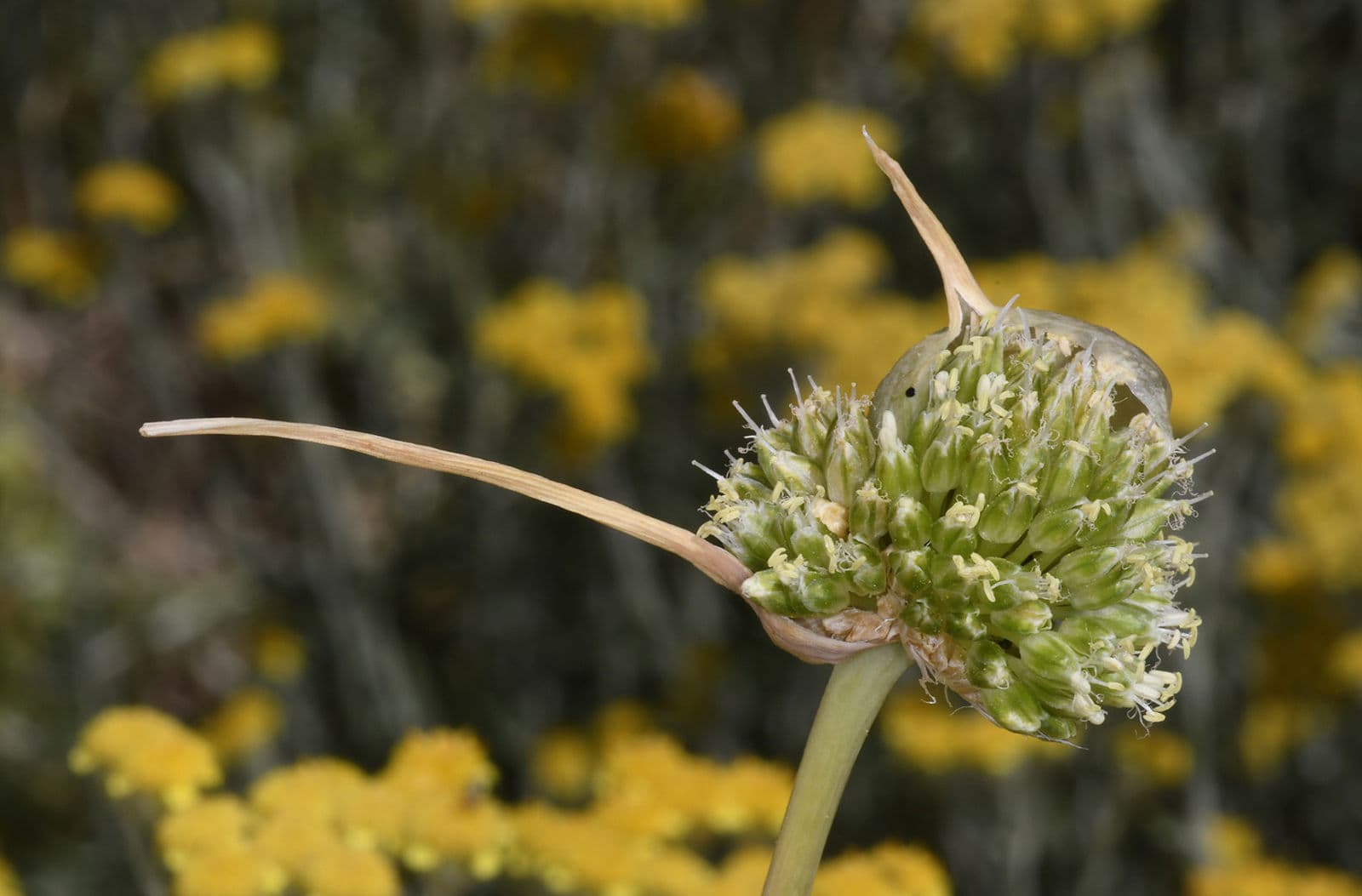
False hooded garlic: complete guide
Allium pseudocalyptratum
¿Quieres ver False hooded garlic: complete guide en tu jardín?
1 minuto, sin tarjeta de crédito
Overview
False hooded garlic (Allium pseudocalyptratum) is a rare ornamental onion from the rocky mountain slopes of Lebanon, particularly around Mount Hermon, and western Saudi Arabia. The species belongs to the vast Allium genus, which also includes garlic, onion and chives, but unlike its kitchen-garden cousins it is almost exclusively a plant for rock garden enthusiasts and botanical bulb collectors. Its species name refers to its resemblance to Allium calyptratum, a related species with a hood-like sheath around the flower head.
Because false hooded garlic is barely available commercially, it mostly reaches collectors through specialist bulb nurseries, botanical gardens and seed exchanges run by alpine plant societies. Anyone who takes on the challenge is rewarded with an authentic piece of Levantine mountain flora in their own garden. When sketching out a rock garden or steppe bed on gardenworld.app, it is worth reserving a well-drained corner in advance for this kind of special, small-scale bulb. Because mature bulbs rarely circulate in trade, propagation mostly happens from seed, obtained through botanical gardens or seed exchanges run by specialist bulb societies. From seed it typically takes three to five years before a young bulb flowers for the first time, so patience is a requirement for anyone wanting to grow this species.
Appearance and bloom
As with many Allium species from dry mountain regions, the narrow, grey-green, strap-shaped leaves appear early in spring, often as early as February or March, and largely die back by the time flowering begins. This is a typical survival strategy for bulbs from a Mediterranean and Irano-Turanian climate with wet winters and bone-dry summers: the plant uses the moist period for leaf growth and retreats into the bulb as soon as drought sets in.
The flower head is a compact, rounded umbel on a bare, leafless stem, typically 15 to 30 cm tall. The individual florets are small, star-shaped and range from white to very pale pink, often with a subtle greenish or purplish midvein on each petal. In its native habitat, flowering occurs in May and June, at altitudes of roughly 1,500 to 2,500 metres, where patches of snow can still linger late in the season.
Ideal location
Full sun is an absolute requirement for this mountain dweller. Choose a spot that stays as dry as possible in summer, such as a rock garden, a raised bed with gravel, or an alpine trough, ideally on a slight slope for extra drainage. Avoid any spot where rainwater can pool, since false hooded garlic is extremely prone to bulb rot during summer dormancy. A position against a south-facing wall, where the bulb gets extra warmth and dryness in summer, best mimics the natural conditions of the Levantine mountain slopes.
Soil
Above all, the soil must drain quickly: a mix of coarse sand, grit or volcanic gravel with a small proportion of lean, chalky garden soil is ideal, since the natural growing sites are limestone slopes. The ideal pH is 7.0 to 8.0, neutral to slightly alkaline. When planting, add a 5 to 10 cm layer of coarse gravel beneath the bulb for extra drainage. Rich, moisture-retentive potting soil, such as standard bulb compost from the garden centre, is too rich and too damp; mix it with at least 50% grit before planting the bulbs if that is what you have on hand. Many specialist growers prefer to raise this kind of rare Levantine bulb in a raised bulb frame with a removable glass lid, so summer rain can be excluded entirely while winter cold still gets through, a proven technique from the rock gardening world for species that need a strictly Mediterranean rainfall rhythm.
Diseño gratis
¿Quieres ver False hooded garlic: complete guide en tu jardín? Crea un diseño gratis ahora.
Watering
Water moderately in autumn and winter, during the active growth period, once the soil has fully dried out, but never let the bulb sit waterlogged. As soon as the leaves start to discolour and die back in May, stop watering completely: summer dormancy needs to be as dry as possible to prevent bulb rot. For bulbs in a pot or alpine trough, this means moving the container to a dry, covered spot from June to September, for example under an overhang or in a cold frame.
Pruning
Real pruning is not really relevant for this small ornamental onion. Let the foliage die back completely on its own after flowering and only remove it once it is fully withered and comes away easily, usually in June or July; removing it too early deprives the bulb of valuable nutrients for the following season. Remove spent flower stems if you want a tidier look, unless you want to collect seed for propagation, in which case leave the seed capsules to ripen until they turn brown and dry.
Maintenance calendar
- January to February: first leaf growth in mild winters, keep the soil lightly moist.
- March to April: active leaf growth, water moderately during dry spells.
- May to June: flowering; taper off watering as the leaves discolour.
- July to August: full summer dormancy, keep the bulb as dry as possible.
- September: first careful watering to stimulate new growth.
- October to December: new leaf growth with rainfall, check the position for drainage.
Winter hardiness
False hooded garlic comes from mountain areas with substantial winter snowfall and frost, suggesting reasonable winter hardiness, comparable to USDA zones 6 to 8. The biggest threat in a northwestern European garden is not the cold itself, but the combination of cold and wet soil in winter, which leads to bulb rot. Strict drainage, and possibly a rain cover or placement in a cold frame during the wettest winter months, greatly improves its chances of survival.
Companion plants
Combine false hooded garlic with other drought-loving rock garden plants that require similarly lean, well-drained soil, such as sedums, honesty (Lunaria), or other small high-mountain Allium species like Allium karataviense or Allium oreophilum. Avoid pairing it with moisture-loving border or waterside plants, which would disturb the bulb's summer dormancy. A stony, sparse setting with scattered gravel and rock features also highlights the natural, understated beauty of this unusual species. A small cluster of five to ten bulbs planted together gives the best effect, since the individual flower heads are modest in size on their own.
Closing
False hooded garlic is not a plant for an ordinary border, but a fascinating piece of wild mountain flora for anyone who loves rare bulbs and is not afraid of a challenge. With the right bone-dry summer dormancy and sharply drained soil, this small ornamental onion can return year after year in a rock garden or alpine trough. Use gardenworld.app to plan a suitably well-drained spot for this kind of special bulb in your garden design, so that even the rarest species get a chance to thrive.
¿Quieres ver False hooded garlic: complete guide en tu jardín? Crea un diseño gratis ahora.
Sube una foto, elige un estilo y obtén un diseño fotorrealista con lista de plantas en menos de un minuto.
Sin tarjeta de crédito


Plantas similares
Turkestan onion: complete guide
Allium karataviense
Everything you need to know about Allium karataviense: care, planting, ideal spots, and companion plants for your garden.
Mountain garlic: complete guide
Allium oreophilum
Mountain garlic is a precious alpine flower with delicate pink blooms in globe-shaped heads. Discover everything about growing this unique ornamental allium.
Persian onion: complete guide
Allium cristophii
Everything you need to know about Allium cristophii: care, bloom time, ideal spot and companion plants. Perfect for sunny borders in UK and US gardens.