
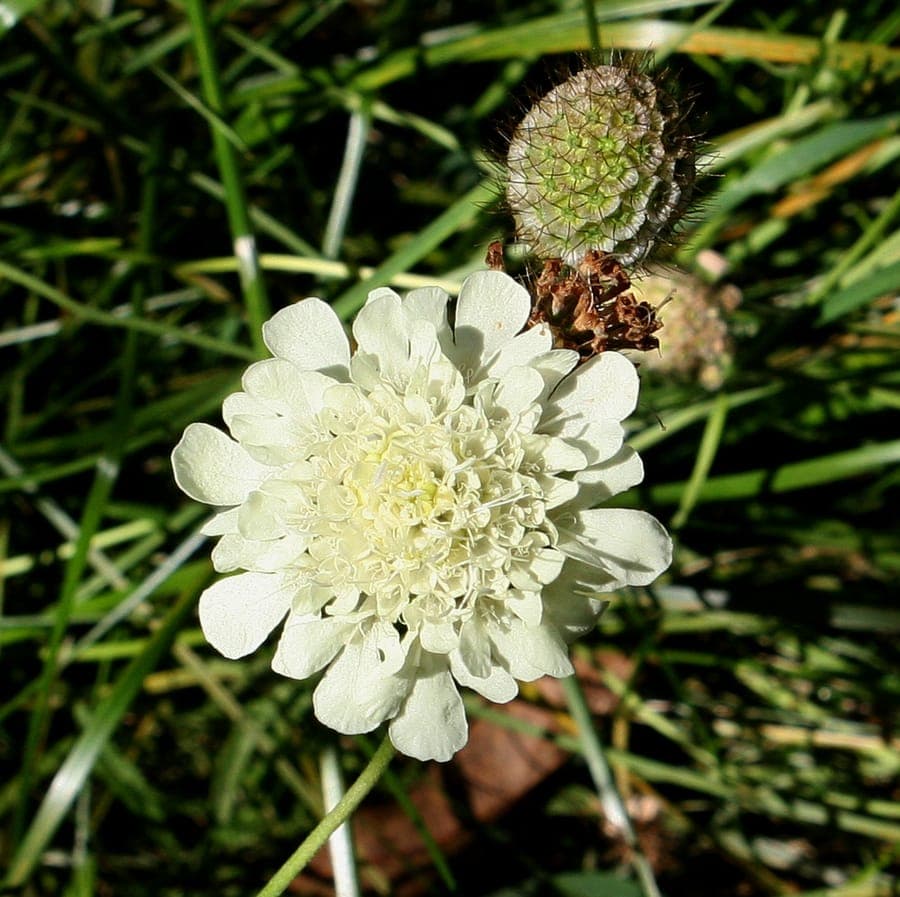
Hardyplants (talk) / Public domain, via Wikimedia Commons
Scabiosa ochroleuca: complete guide
Scabiosa ochroleuca
¿Quieres ver Scabiosa ochroleuca: complete guide en tu jardín?
1 minuto, sin tarjeta de crédito
Overview
Scabiosa ochroleuca, better known as Cream Pincushion or Yellow Scabious, is a fascinating plant from Europe and the Mediterranean region. This plant is celebrated for its interesting, pale-blonde flowers and its remarkable ability to thrive on very dry, nutrient-poor soils where many other plants cannot survive.
This is the perfect plant for dry gardens, rock gardens, and xeriscapes. With its elegant flowers, robust structure, and magnetic attraction to pollinators, it is a wonderful addition to any garden.
Appearance and Bloom
Scabiosa ochroleuca forms a dense, compact mound of green foliage that is excellent for creating shape in gardens. The foliage is green and somewhat linear, with a rough texture that contributes to the overall plant structure.
But the real stars are the flowers. They are globe-shaped, approximately 3-5 centimeters in diameter, with a very unique structure. The flowers are yellow-green or pale yellow, sometimes described as cream or pale yellow. They consist of many tiny florets arranged in a heathery ball, which gives the plant its name "pincushion."
Blooming extends from May through September, with peak flowering from June through August. This long blooming period makes the plant invaluable for the entire summer.
Ideal Location
This is exactly the plant for that troublesome, warm, dry spot in your garden where nothing else grows. Scabiosa ochroleuca demands full sun - at least 6-8 hours of direct sunshine per day. More sun is always better.
The plant also grows well against south-facing walls, on stony slopes, and on other high-drainage locations.
In very warm climates, light afternoon shade can be beneficial, but this is unusual.
Soil
This is where Scabiosa ochroleuca truly distinguishes itself. While many plants prefer rich soil, this plant thrives on lean, dry, well-draining ground.
Ideal soil composition:
- Sandy or gritty soil
- Poor in nutrients (lean soil is truly better)
- Excellent drainage
- pH neutral to slightly alkaline, 6.5 to 7.5
We cannot stress enough: good drainage is critical. Add plenty of gravel, sand, and small stones to the planting area if you live on heavier soil.
Rich soil can lead to excessive foliage growth and fewer flowers.
Watering
Once established, this plant requires very little water. In fact, too much water can be problematic, especially in winter if drainage is not perfect.
During the first growing season water regularly, but let the soil dry out between waterings. Once established (after 1-2 growing seasons) virtually no supplemental water beyond natural rainfall.
During dry periods some water can help, but the plant is far more tolerant of drought than of excess moisture.
Note: avoid overhead watering. This can leave moisture on the leaves and can encourage fungal issues.
Diseño gratis
¿Quieres ver Scabiosa ochroleuca: complete guide en tu jardín? Crea un diseño gratis ahora.
Pruning
Scabiosa ochroleuca requires minimal pruning. If your plant begins to lose its shape, you can carefully remove dead or leggy stems in spring.
Remove spent flower heads in the next growing season - this encourages more blooming.
Hard pruning is not recommended; this plant prefers subtle shaping.
Maintenance Calendar
March-April: Growing season begins. Check drainage. Water as needed.
May-June: Blooming begins. Regularly enjoy the insect visits.
July-August: Peak blooming period. Minimal water except during drought.
September-October: Blooming begins to decline. Do not overwater.
November-February: Winter dormancy. Virtually no water. Protect from wet conditions.
Winter Hardiness
Scabiosa ochroleuca is hardy to about -15 to -20 degrees Celsius, depending on local conditions. However, it may suffer from wet winters.
The primary threat is not frost but moisture-related root rot in winter. Well-draining soil is essential.
Companion Plants
This plant pairs beautifully with other dry site plants:
Sedum species: The same dry soil preference makes them perfect partners.
Lavandula: Purple flowers of lavender against the yellow of Scabiosa create lovely contrasts.
Salvia species: Red, purple, and blue Salvias add color.
Thymus species: These creeping plants grow well around Scabiosa.
Dianthus: The colors and textures of carnation add depth.
Pollinator Appeal
This is one of the top plants for pollinators. Bees, butterflies, and other insects visit the flowers continuously. If bee-friendly gardening interests you, this plant should be a priority.
Propagation
Seeding is easiest. Plant seed in spring in a seed-starting mix. Seeds germinate relatively quickly with warmth.
Careful division of established plants can also occur in spring, though the plant does not truly support splitting readily.
Closing Thoughts
Scabiosa ochroleuca is a stunning, robust plant that transforms dry, warm spots in your garden. With minimal care and focus on good drainage, you will enjoy years of blooming. This is one of those plants that makes not only you but also bees and butterflies happy.
Want to learn more? Visit gardenworld.app. For seedlings and mature Scabiosa ochroleuca, check OBI or Hornbach in Germany, or Truffaut/Jardiland in France.
¿Quieres ver Scabiosa ochroleuca: complete guide en tu jardín? Crea un diseño gratis ahora.
Sube una foto, elige un estilo y obtén un diseño fotorrealista con lista de plantas en menos de un minuto.
Más de 10.000 jardines diseñados
Sin tarjeta de crédito


Plantas similares
Yellow honeysuckle (Lonicera tragophylla): complete guide
Lonicera tragophylla
Meet yellow honeysuckle (Lonicera tragophylla): a Chinese climber with large golden flowers that thrives in partial shade.
Lonicera korolkowii: complete guide
Lonicera korolkowii Stapf
Discover blueleaf honeysuckle, a vigorous shrub with beautiful flowers. Guide on growing, shaping and why this Asian climbing plant is perfect for gardens.
Lonicera oblongifolia: complete guide
Lonicera oblongifolia Hook.
Discover swamp fly honeysuckle, a North American woodland plant. Guide on growing, caring and why this native species is valuable for gardens.