
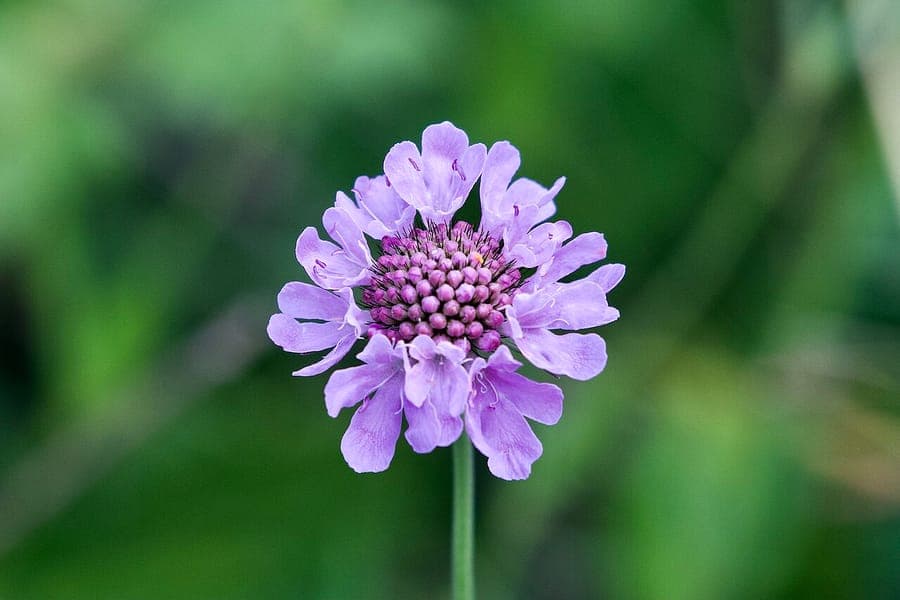
Dario / CC0, via Wikimedia Commons
Shining Scabious: complete guide
Scabiosa lucida
¿Quieres ver Shining Scabious: complete guide en tu jardín?
1 minuto, sin tarjeta de crédito
Overview
Shining Scabious (Scabiosa lucida) is a captivating alpine flower that blooms from July to September with gleaming blue flower heads. Native to the Pyrenees and Carpathians, this perennial thrives on limestone slopes in its natural habitat. It attracts butterflies, bees, and other pollinators, making it an excellent choice for wildlife gardens.
Appearance and Bloom
The plant reaches heights of 30-50 cm and produces distinctive rounded flower heads with tightly packed florets. Individual flowers measure 2-3 cm across and have characteristic pincushion-like shapes. The glossy appearance of the petals gives the plant its common name. Stems are slender and hairy, with narrow, lance-shaped leaves arranged alternately along their length.
Ideal Location
Shining Scabious performs best in full sun with at least 8 hours of direct sunlight daily. The plant is extremely hardy and suitable for gardens throughout northern Europe. Position it where it can be prominently displayed, such as in rock gardens, borders, or raised beds.
Soil
The plant prefers alkaline, well-draining soil with a pH between 7.5 and 8. Heavy clay soils should be amended with sand and compost to improve drainage. When planting, add 5 cm of coarse sand beneath the root ball for optimal drainage conditions.
Diseño gratis
¿Quieres ver Shining Scabious: complete guide en tu jardín? Crea un diseño gratis ahora.
Watering
Once established, this plant is very drought-tolerant. During the growing season, water once weekly, but avoid waterlogging. During wet periods, supplemental watering is unnecessary.
Pruning
After flowering, deadhead spent flowers to maintain neat appearance. In spring, cut plants back to 10 cm to encourage denser growth and fuller flower production. Remove any dead or diseased stems promptly.
Maintenance Calendar
May: Support young plants. June: Pinch tips to increase branching. July-September: Deadhead spent flowers regularly. October: Collect seeds or leave stems for winter interest and wildlife food.
Winter Hardiness
Shining Scabious is fully hardy to -15 degrees Celsius. In snowy climates, heavy snow loads can damage branches, so clear snow gently from plants. A mulch layer of leaves provides adequate winter protection in exposed locations.
Companion Plants
Pair Shining Scabious with pink Gaura, white Coreopsis, or purple Salvia for striking color combinations. In rock gardens, it complements dwarf junipers beautifully. The dried seed heads attract goldfinches in autumn. Visit gardenworld.app/en for more inspiration.
Closing
Shining Scabious is a dependable alpine flower that provides years of beautiful blue blooms with minimal care. With proper drainage and sunny placement, this plant meets most garden requirements. Purchase from specialty nurseries or online suppliers like gardenworld.app/en.
¿Quieres ver Shining Scabious: complete guide en tu jardín? Crea un diseño gratis ahora.
Sube una foto, elige un estilo y obtén un diseño fotorrealista con lista de plantas en menos de un minuto.
Más de 10.000 jardines diseñados
Sin tarjeta de crédito


Plantas similares
Yellow honeysuckle (Lonicera tragophylla): complete guide
Lonicera tragophylla
Meet yellow honeysuckle (Lonicera tragophylla): a Chinese climber with large golden flowers that thrives in partial shade.
Lonicera korolkowii: complete guide
Lonicera korolkowii Stapf
Discover blueleaf honeysuckle, a vigorous shrub with beautiful flowers. Guide on growing, shaping and why this Asian climbing plant is perfect for gardens.
Lonicera oblongifolia: complete guide
Lonicera oblongifolia Hook.
Discover swamp fly honeysuckle, a North American woodland plant. Guide on growing, caring and why this native species is valuable for gardens.