
Wikimedia Commons / CC BY-SA 3.0, via Wikimedia Commons
Hoary Plantain: complete guide
Plantago media
¿Quieres ver Hoary Plantain: complete guide en tu jardín?
1 minuto, sin tarjeta de crédito
Overview
Hoary plantain (Plantago media) is an esteemed native grassland wildflower spanning Europe to far Eastern Russia and Iran. This plant serves as a quiet performer in wildflower meadows and mixed borders, bringing ecological value through her soft pink blooms and native heritage. Less celebrated than trendy cultivars but equally beautiful and useful, hoary plantain deserves recognition from gardeners seeking truly sustainable, naturalistic landscapes.
Appearance and Bloom
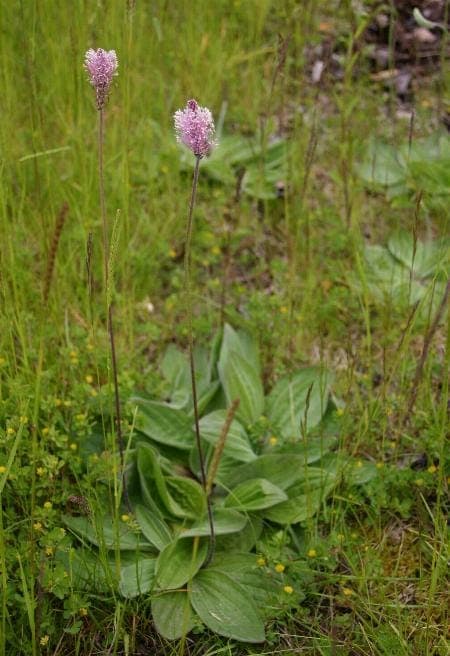
Hoary plantain forms compact rosettes of green, elliptical leaves (4-8 cm long) nestled close to ground. From May to July, flower stems rise 15-40 cm tall. These bear characteristic flower spikes with fine, reddish anthers and ivory-white petals - a classic wildflower signature. Flowers attract numerous insects and set seed abundantly. Foliage maintains green tones throughout the growing season.
Ideal Location
Hoary plantain wants full sun to light shade, minimum 4-5 hours daily sunlight. The plant grows in half-shade but flowers less abundantly. In sunny spots, blooming becomes lush and copious. Hoary plantain tolerates windy locations without issue - wind actually aids pollination. Plant on slightly elevated terrain or gentle slopes; winter waterlogging is unfavorable. For meadow use, choose unfertilized sites.
Soil
This is critical: hoary plantain thrives in nutrient-poor to moderately fertile soil. Heavy fertilization and nitrogen excess cause lush foliage at flowering's expense. The plant accepts sandy, clay, grassland, and loamy soils if well-drained. In drought-prone sandy soils, hoary plantain grows nicely if somewhat compact. Slightly acidic to neutral pH (5.5-7.5) is ideal. For garden integration, add no extra compost - use standard soil as-is. Excess organic matter feeds competitors.
Watering
Hoary plantain is fairly self-sufficient. During growth (April-May), check soil moisture and water during extreme drought, but normally rainfall suffices. In summer drought (July-August), hoary plantain tolerates mild stress without dying. In very dry years, one good watering helps. In containers, water more frequently - prevent complete drying. Winter moisture can be higher - the plant tolerates dampness. Stagnation, however, is harmful and causes root rot.
Diseño gratis
¿Quieres ver Hoary Plantain: complete guide en tu jardín? Crea un diseño gratis ahora.
Pruning
Hoary plantain needs almost no pruning. Remove faded flower stems after blooming (July-August) by cutting at mow height. This encourages compact shape and prevents unwanted self-seeding in formal borders. In wildflower meadows, let plants flower and set seed for next season - mow only in September. In spring (March-April), carefully remove dead leaf clusters. Formal shaping isn't needed.
Maintenance Calendar
January-February: Check drainage and soil moisture. March-April: Remove last year's dead foliage; sow seeds in trays in borders. May-June: Monitor moisture; stake floppy types if needed. July-August: Remove faded blooms in borders; leave standing in meadows. September: Collect seed for next year; clean dead matter. October-November: Sow autumn bloomers; accept late flowering. December: Guard against water excess.
Winter Hardiness
Hoary plantain is very hardy to -15 to -20 degrees Celsius without problem. The plant tolerates snow, frost, and prolonged freezing with ease. In very dry winters, no ice damage occurs thanks to low growth. In waterlogged winter soil, roots may rot - ensure good drainage. Protection measures aren't needed except exceptional years. Young plants may benefit from extra dry mulch in first winter.
Companion Plants
Hoary plantain combines harmoniously with other wildflowers: genuine chamomile, common speedwell, daisy, wild carrot, herb betony, wild marjoram, and field sage. For structure add compact grasses: meadow fescue, red fescue. In borders pair hoary plantain with low ornamental grasses and other hardy perennials: woodrush, bugle, small daffodils. Avoid vigorous spreaders like Joe Pye weed - they'll overwhelm hoary plantain.
Closing Thoughts
Hoary plantain is an understated yet powerful addition for those truly pursuing sustainable, naturalistic gardens. This native plant proves you need no trendy cultivars for refined borders or productive wildflower meadows. With elegant flower spikes, local heritage, and insect benefits, hoary plantain merits recognition. Discover this plant through specialty retailers or online seed merchants. Gardenworld.app helps devise smart plant combinations for your meadow or wildflower project. Plant hoary plantain and experience true, sustainable gardening satisfaction.
¿Quieres ver Hoary Plantain: complete guide en tu jardín? Crea un diseño gratis ahora.
Sube una foto, elige un estilo y obtén un diseño fotorrealista con lista de plantas en menos de un minuto.
Más de 10.000 jardines diseñados
Sin tarjeta de crédito


Plantas similares
Sea Plantain: complete guide
Plantago maritima
Sea plantain is a climate-resilient coastal shrub with fine linear foliage and green-red flower spikes. Ideal for salt zones, dry gardens, and wind-exposed spots. Learn care, cultivation, and companion plants.
Plantago major: complete guide
Plantago major
Plantago major (Common plantain) is a native perennial with broad leaf rosettes and edible properties. Perfect for ecological gardens and traditional uses.
Bird's-eye speedwell: complete guide
Veronica chamaedrys
Explore bird's-eye speedwell (Veronica chamaedrys), a charming native wildflower with sky-blue blooms. Complete guide for natural gardens, meadows, and insect-friendly landscapes.