
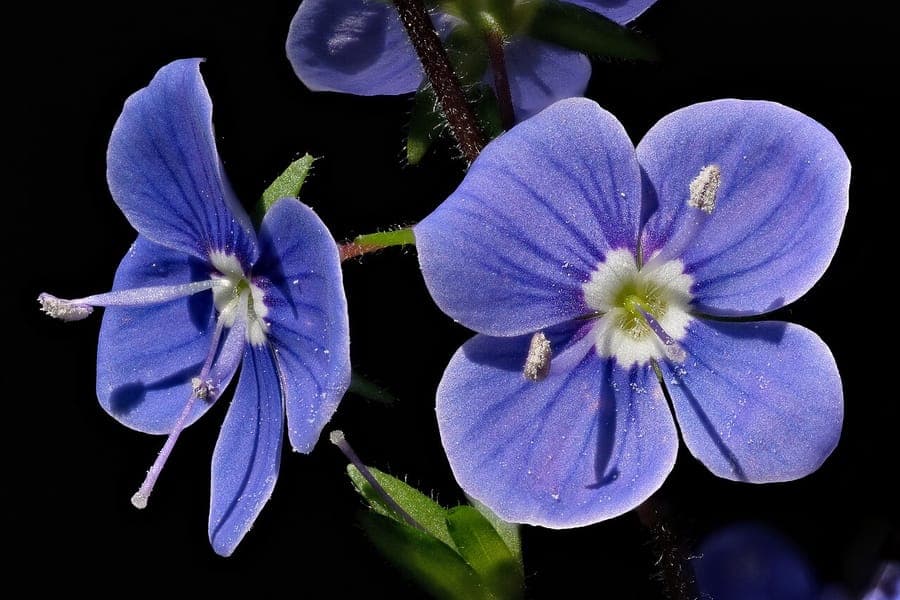
Johannes Robalotoff / CC BY-SA 4.0, via Wikimedia Commons
Bird's-eye speedwell: complete guide
Veronica chamaedrys
¿Quieres ver Bird's-eye speedwell: complete guide en tu jardín?
1 minuto, sin tarjeta de crédito
Overview
Bird's-eye speedwell (Veronica chamaedrys), also called germander speedwell or common speedwell, is a charming native wildflower in the Plantaginaceae family. This plant grows naturally throughout Europe to Siberia and is recognized for its sky-blue flowers and hairy stems. In gardens, this plant offers valuable benefits for pollinating insects and forms an attractive element in meadow-like plantings and wildflower groupings.
Appearance and bloom
Bird's-eye speedwell grows as a low, creeping or upright plant with hairy stems reaching 15 to 40 centimeters high. The oval leaves are small, green, and hairy. The most striking feature is the sky-blue flowers with white and yellow markings at the center, typically appearing in two rows along the stems. The flowering period extends from April through June, providing abundant presence in spring months. The flowers attract numerous bees and other pollinators.
Ideal location
Bird's-eye speedwell thrives best in sunny to half-shade locations with open views. The plant flourishes in meadows, grasslands, embankments, and along waysides where sufficient sunlight is present. In gardens, it finds an ideal place among grass mixtures, in wildflower meadows, and in natural border arrangements. Though tolerant of partial shade, flowers appear most abundantly in locations with at least four hours of direct sun daily.
Soil
This plant thrives in varied soil types, from sandy to clay-based soils. A pH range of 5.5 to 6.5 is preferred, hence slightly acidic. Bird's-eye speedwell is very tolerant of nutrient-poor soils, making it particularly suitable for untamed garden environments. It tolerates compacted soils better than many other wildflowers, making it suitable for intensively used grasslands. Excessive nutrients are undesirable and usually lead to larger foliage at the expense of flowers.
Diseño gratis
¿Quieres ver Bird's-eye speedwell: complete guide en tu jardín? Crea un diseño gratis ahora.
Watering
After planting, this plant requires regular watering until well established, typically for two to three weeks. Once established, bird's-eye speedwell is drought-tolerant and needs little supplementary watering. In very dry periods, regular watering can promote flowering, but this is not essential. In gardens irrigated artificially or by rainfall, the plant tolerates excessive moisture use.
Pruning
After the flowering period, plants can be cut back to ground level to prevent an unkempt appearance and promote new growth. This is however optional. In natural garden situations, pruning is not necessary. If plants grow too aggressively in their surroundings, they can be carefully removed from their borders or relocated.
Maintenance calendar
Spring: Sow seed or plant young specimens on moist soil. Remove competitive weeds. Summer: Keep soil moderately moist during flowering. Monitor for flowering repeats after pruning. Autumn: Reduce watering as the plant begins to decline. Let seed drop when ripe for self-sowing. Winter: The plant survives winters as ground cover and bud forms.
Winter hardiness
Veronica chamaedrys is highly winter hardy with tolerance for temperatures down to minus 25 degrees Celsius. This makes it ideal for cold climates. The plant typically dies back to the rootstock in winter in colder regions. New shoots appear in early spring as temperatures rise.
Companion plants
Bird's-eye speedwell plants beautifully with other wildflowers such as marsh marigold, bird's-foot trefoil, gorse, and many daisy species. In mixed borders, it works well with lavender, roses, and other garden bloomers. Avoid planting with aggressive growers that may overtake it.
Closing
Bird's-eye speedwell is an inconspicuous yet valuable native wildflower for natural gardens. With its early blue flowers and bird and insect value, this plant offers years of beauty and support for beneficial creatures. Available at major garden centers across Europe. Learn more about wildflowers at gardenworld.app/en and gardenworld.app/nl.
¿Quieres ver Bird's-eye speedwell: complete guide en tu jardín? Crea un diseño gratis ahora.
Sube una foto, elige un estilo y obtén un diseño fotorrealista con lista de plantas en menos de un minuto.
Más de 10.000 jardines diseñados
Sin tarjeta de crédito


Plantas similares
White Beardtongue: complete guide
Penstemon albidus
Discover white beardtongue (Penstemon albidus) - elegant perennial with white to cream flowers. Drought-resistant, perfect for prairie and dry gardens.
Longsepal Beardtongue: complete guide
Penstemon calycosus
Discover longsepal beardtongue (Penstemon calycosus) - beautiful perennial with lilac-blue flowers. For partial shade and moist soil. Ideal for naturalized.
Penstemon cusickii: complete guide
Penstemon cusickii
Discover Cusick's beardtongue, a compact alpine flowering plant with violet-pink blooms. Perfect choice for rock gardens and water-wise landscaping.