
Cwmhiraeth / CC BY-SA 3.0, via Wikimedia Commons
Sea Plantain: complete guide
Plantago maritima
¿Quieres ver Sea Plantain: complete guide en tu jardín?
1 minuto, sin tarjeta de crédito
Overview
Sea plantain (Plantago maritima) is a hardy, salt-buffering native plant thriving along European coasts from subarctic regions to the Mediterranean. This fine-textured evergreen is remarkably resilient in harsh garden locations where typical plants fail. With characteristic thin, linear foliage and discrete flowering spikes, sea plantain brings refined elegance to contemporary designs, particularly for coastal and salt-tolerance projects.
Appearance and Bloom
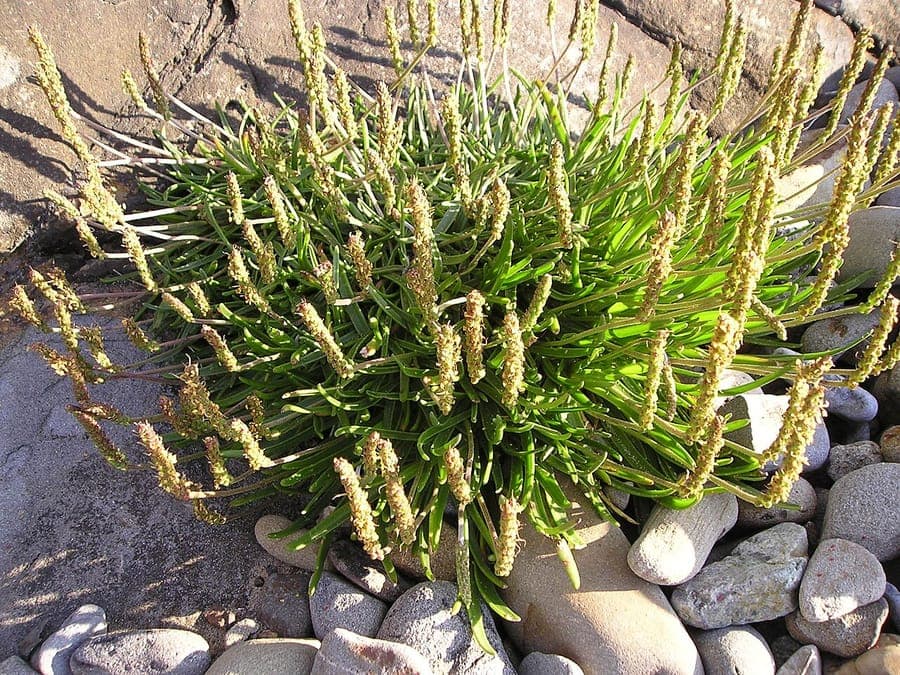
Sea plantain forms low, grey-green mats of very narrow, needle-like leaves typically 10-30 cm tall. The plant clusters densely and creates tight groupings. From May to August, understated flowering spikes emerge - short, compact inflorescences with green to reddish-brown tones. These subtle blooms give the plant character without dominance. The foliage remains glossy year-round and drives the visual impact.
Ideal Location
Sea plantain demands full sun - minimum 6 hours direct sunlight daily. This is essential for compact growth and best grey coloration. The plant tolerates half-shade but becomes loose and less attractive. In seawind zones, sea plantain resists strong gusts without damage. Ideally plant on slightly elevated terrain where salt spray may occur without overwhelming. Avoid low-lying spots where rainwater stagnates.
Soil
Here sea plantain truly excels: the plant demands very well-draining, nutrient-poor to moderately fertile soil. Sandy, stony, or gravel-based substrates are ideal. The plant accepts slightly acidic to neutral pH and mild alkaline soils. For garden use, amend typical soil with at least 40% coarse sand or gravel. Heavy clay leads to root rot - always break it open. In containers use cactus or alpine mix. Salt in soil (up to ca. 1% salinity) is actually beneficial, maintaining the plant in its natural niche.
Watering
Watering requires careful dosing. Established sea plantain needs virtually no supplemental water in normal Dutch summers. Check soil moisture 5 cm deep - the plant only wilts in extreme drought. During dry periods (July-August on sandy soils) water moderately but infrequently. Container plants need slightly more, but let substrate partially dry between waterings. Winter rainfall usually suffices. In prolonged drought without rain, give one gentle watering in mid-July, no more. Avoid freshwater streams directly on seawind plants - rainwater or drip systems are better.
Diseño gratis
¿Quieres ver Sea Plantain: complete guide en tu jardín? Crea un diseño gratis ahora.
Pruning
Sea plantain requires almost no pruning. In spring (March-April), carefully remove dead or damaged leaf clusters with small scissors. Keep the natural form intact. In very wet winters, some rot spots may develop - cut these away to healthy tissue. After windy periods, remove a few snapped shoots. The plant self-regulates. Formal pruning ruins the refined, natural appearance.
Maintenance Calendar
January-February: Check moisture; remove dead material. March: Prune gently; add thin sand layer if soil settled. April-May: Plant container specimens out; no fertilizer needed. June-September: Check wind/salt damage; water sporadically in drought. October-November: Reduce intervention; accept natural leaf loss. December: Check drainage on wet sites.
Winter Hardiness
Sea plantain is very hardy to -20 to -25 degrees Celsius in dry seawind climates. In waterlogged winter soil, ice lens formation may cause issues - but this is rare. The plant tolerates snow and frost perfectly. In mild winters with heavy rain, water excess can be problematic - ensure extra drainage. Protection measures aren't needed except in exceptional years. Young first-year plants may benefit from thin mulch.
Companion Plants
Sea plantain pairs beautifully with other coastal champions: silverleaf (Atriplex portulacoides), sea purslane (Halimione portulacoides), sea mallow (Lavatera maritima where adapted), drought-tolerant lavender species, and grey marjoram. In salt-influence zones, sea aster (Limonium vulgare), plantain media and other Plantago relatives excel. For more volume, add native shrubs like sea buckthorn. In non-coastal situations use sea plantain with drought-terrain lovers: sea eagle, silver sage, date palms.
Closing Thoughts
Sea plantain is a quiet artist in difficult garden corners. This plant proves you need no exotic species to create refined, sustainable gardens. With its grey-green, fine structure and virtually maintenance-free nature, sea plantain fits perfectly in contemporary xeriscape and coast-friendly designs. Discover this native gem at specialty retailers offering expanded coastal shrub selections. Gardenworld.app also helps with matching combinations for your salty dream garden. Give this plant a chance and you'll be amazed how elegantly challenging terrain transforms. Sea plantain deserves a spot in every coastal garden enthusiast's front yard.
¿Quieres ver Sea Plantain: complete guide en tu jardín? Crea un diseño gratis ahora.
Sube una foto, elige un estilo y obtén un diseño fotorrealista con lista de plantas en menos de un minuto.
Más de 10.000 jardines diseñados
Sin tarjeta de crédito


Plantas similares
Hoary Plantain: complete guide
Plantago media
Hoary plantain is native grassland wildflower with elliptical leaves and pinkish-white flowers. Perfect for wildflower meadows, borders, and naturalistic gardens. Learn cultivation, care, and plant associations.
Sea purslane: complete guide
Atriplex portulacoides
Sea purslane (Atriplex portulacoides) is a resilient coastal plant that tolerates salt and wind. Learn how to grow this hardy shrub in challenging coastal gardens.