
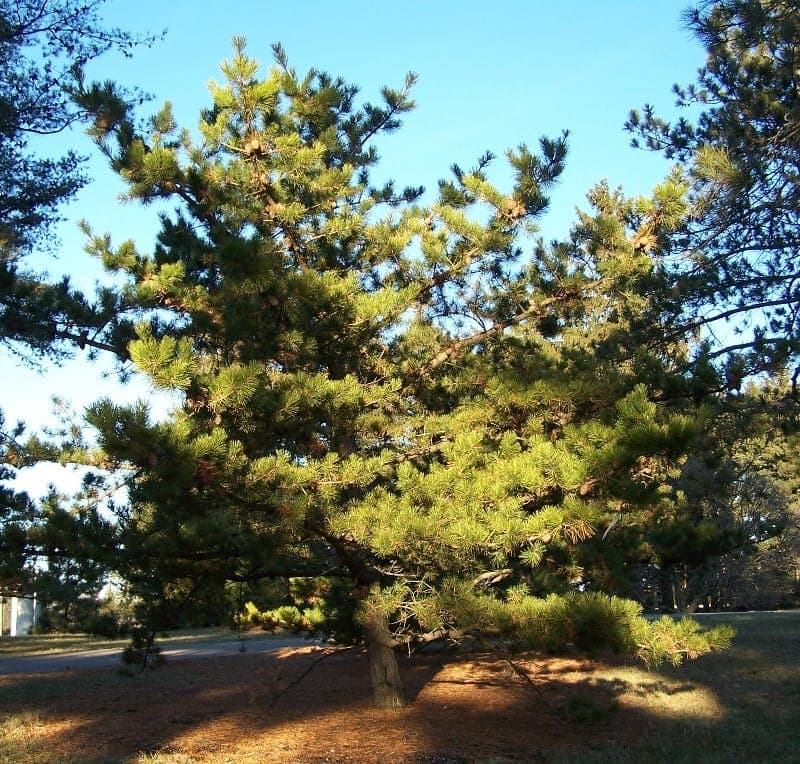
Bruce Marlin / CC BY-SA 2.5, via Wikimedia Commons
Table Mountain Pine: Complete Guide
Pinus pungens
¿Quieres ver Table Mountain Pine: Complete Guide en tu jardín?
1 minuto, sin tarjeta de crédito
Overview
The Table Mountain Pine or Hickory Pine (Pinus pungens), native to the Appalachian Mountains in eastern North America, is an exceptionally robust and frost-resistant conifer. This medium-sized tree is known for its formidable appearance with extremely sharp, prickly cone bracts that project at right angles from the branches. The mature tree reaches heights of 15-25 meters and forms a dense, conical crown. Despite its intimidating appearance, Table Mountain Pine is surprisingly maintenance-friendly and tolerant of difficult growing conditions, including poor soils and harsh winters.
Appearance and Bloom
The characteristic short, stiff needles of Table Mountain Pine are dark green and measure only 5-7 centimeters. They grow densely packed in all directions around the branches. The most striking feature, however, is the very sharp, curved cone bracts that project at right angles, giving the tree a prickly appearance. The cones themselves are brown and relatively compact, with a diameter of 5-8 centimeters. The grayish bark gives the tree a calm appearance year-round. In spring, yellowish male flowers appear inconspicuously.
Ideal Location
Table Mountain Pine performs exceptionally on difficult sites where many other conifers fail. Place it where it receives full sun - minimum six hours of direct daylight daily. The tree tolerates barren mountain slopes, coastal sites, and windy locations that deter better conifers. It grows well in elevated positions in gardens, such as on hillsides or raised terraces. Avoid low, wet places; drainage is essential. In structural design, Table Mountain Pine is a perfect accent plant for alpine or naturalistic gardens.
Soil
Table Mountain Pine is remarkably tolerant of difficult soils. It thrives in poor, acidic soils where many other trees struggle. Ideally pH 4.5-7 (can even be below). Heavy clay and sand are both acceptable; this tree is not demanding. However, severely waterlogging soils can be problematic. Improve thick clay by adding sand and organic material for better water drainage. Once established, soil fertility is less important.
Watering
Once this tree is established (after the first season), supplementary watering is rarely needed. Table Mountain Pine is very drought-tolerant, and its tough root system extracts moisture from poor soils. During the first growing months, however, water regularly. In exceptionally dry years, water weekly, especially young specimens. The tree tolerates coastal sites and the periodic soil moisture fluctuations better than almost any other conifer.
Diseño gratis
¿Quieres ver Table Mountain Pine: Complete Guide en tu jardín? Crea un diseño gratis ahora.
Pruning
Table Mountain Pine largely forms its perfect conical shape independently and requires very little pruning. Remove dead or damaged wood in late winter. The prickly cones are virtually impossible to safely remove from outside, so leave them alone - they add much character. Never prune back into old wood; this tree does not recover well. The less you prune, the better - the natural form is most beautiful.
Maintenance Calendar
January-February: Check for frost damage. Remove very dead twigs. No fertilizer needed.
March-April: Young trees - begin moderate watering. Monitor growth.
May-July: Normal maintenance. Water weekly in drought. Monitor pests.
August-September: Prepare for fall. Gradually reduce watering.
October-November: Autumn check. No interventions.
December: Winter protection for young trees in extreme climates.
Winter Hardiness
Table Mountain Pine is extremely hardy and ranks among the hardiest conifers. It tolerates temperatures down to -25 degrees Celsius without problems. This is not a tree requiring frost protection after establishment. The prickly cones remain intact through heavy snowfall and ice. Its natural habitat (the Appalachian mountain ranges) indicates where this tree truly thrived. In virtually every European climate, frost problems will not occur.
Companion Plants
Table Mountain Pine forms an excellent contrast with other robust alpine trees. Combine with Larix (larch), other Pinus species, or Picea (spruce). Low growers such as Calluna vulgaris (heather) and Juniperus (juniper) form beautiful underplanting. For texture variation, plant Festuca glauca (blue fescue) or Helictotrichon sempervirens (blue oat grass). The sharp forms of this combination deliver drama without loss of low maintenance.
Closing Thoughts
Table Mountain Pine is a silent hero for gardens in difficult locations. With its robustness, frost-hardiness, and formidable appearance, it delivers a statement without fussy requirements. Ideal for coastal areas, mountain slopes, or poor soil types. Plant it and forget it. For retailers: OBI and Hornbach often stock well-growing specimens. More design tips: gardenworld.app.
Practical References
Gardenworld.app offers extensive information about difficult garden locations and plant selection. Table Mountain Pine will serve for decades with minimal attention.
¿Quieres ver Table Mountain Pine: Complete Guide en tu jardín? Crea un diseño gratis ahora.
Sube una foto, elige un estilo y obtén un diseño fotorrealista con lista de plantas en menos de un minuto.
Más de 10.000 jardines diseñados
Sin tarjeta de crédito


Plantas similares
Montezuma Pine: Complete Guide
Pinus montezumae
Discover the spectacular Montezuma Pine (Pinus montezumae), a dramatic Mexican conifer with exceptionally long needles and rough bark. Perfect privacy tree and structural focal point for large gardens.
Red Pine: Complete Guide
Pinus resinosa
Discover the Red Pine (Pinus resinosa), an elegant North American conifer with striking reddish young bark. Perfect form for mixed needle forest landscapes.
Chinese Pine: Complete Guide
Pinus tabuliformis
Discover the Chinese Pine (Pinus tabuliformis), an Asian conifer with distinctive flat, table-like crown form. Perfect exotic accent tree for climate-resilient gardens.