
Respindola23 / CC BY-SA 4.0, via Wikimedia Commons
Montezuma Pine: Complete Guide
Pinus montezumae
¿Quieres ver Montezuma Pine: Complete Guide en tu jardín?
1 minuto, sin tarjeta de crédito
Overview
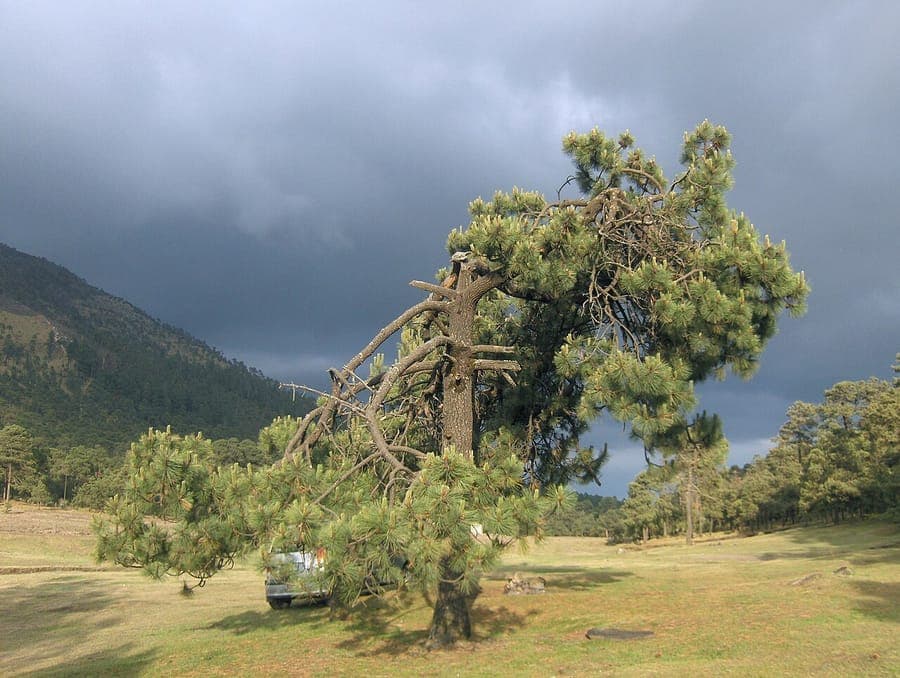
The Montezuma Pine (Pinus montezumae) is an impressive coniferous tree native to Mexico and Guatemala. This majestic conifer is renowned for its dramatic appearance with exceptionally long needles arranged in bundles of three to five. In its natural habitat, the tree reaches heights up to 50 meters, though in European gardens it remains more modest. With its open crown form and rough, grayish-brown bark, Montezuma Pine provides year-round ornamental value and creates a striking focal point in any landscape design.
Appearance and Bloom
The characteristic long, slender needles of Montezuma Pine are dark green and can reach up to 25 centimeters in length. They grow in bundles (fascicles) and have a waxy texture that glints almost silvery in sunlight. The female cones are yellowish-green and mature in two to three years into hard, brown structures measuring 10-15 centimeters. The rough, dark gray bark forms deep ridges that run diagonally, making the silhouette even more dramatic. In spring, yellowish flowers appear inconspicuously among the needles.
Ideal Location
Select a position with full sun to partial shade for Montezuma Pine. The tree requires substantial light to maintain its characteristic dense, regular crown form. Plant it where it stands centrally in view, as its spectacular silhouette deserves prominence. Ensure adequate space around it - minimum 6-8 meters distance from other trees and structures. Avoid windy locations causing excessive movement. In climates with winters above zero degrees, a sheltered south or southeast exposure is ideal.
Soil
Montezuma Pine thrives in well-draining, slightly acidic to neutral soil. Heavy clay must be improved with coarse sand, compost, or granules. Ideal pH range lies around 6.0-7.0. Ensure mineral soil structure by incorporating organic material annually. Once established, the tree tolerates fairly dry soil but grows faster with regularly moist root zone during growing season. Waterlogging must be avoided as it causes root rot.
Watering
During the first growing season after planting young specimens, water regularly to keep soil moist (not waterlogged). Once established (after approximately two years), the tree is quite drought-tolerant and can survive extended periods without supplementary water. In dry summers, however, water weekly, especially during the first five years after planting. Whether additional moisture is needed depends on rainfall and soil type - sandy soils require more frequent watering than clay. Winter generally requires no supplementary watering except in extremely dry conditions.
Diseño gratis
¿Quieres ver Montezuma Pine: Complete Guide en tu jardín? Crea un diseño gratis ahora.
Pruning
Montezuma Pine naturally forms an attractive, regular shape and requires minimal maintenance pruning. Remove only dead or damaged branches during late winter or early spring. This tree does not tolerate heavy pruning well; always prune above a lateral branch. The long needles and characteristic crown form are essential to its beauty - prune sparingly. If the tree becomes too large, it is better to plant another specimen elsewhere than drastically shorten an established tree.
Maintenance Calendar
February-March: Check for frost damage. Remove only dead wood edges. Apply nutrient boost with organic fertilizer.
April-May: Monitor growth. Establish drip irrigation during prolonged drought. Check for disease.
June-August: Regular watering schedules. No interventions unless necessary.
September-October: Reduce watering. Autumn inspection for damage.
November-December: Frost protection for young trees. No major pruning.
Winter Hardiness
Montezuma Pine is moderately hardy in temperate climates. Young trees are more vulnerable; protect them the first two winters with frost cloth or burlap screen. The tree tolerates temperatures down to approximately -15 degrees Celsius, though damage may occur. In cold regions, plant it best on southwest exposures against a warm wall or in lightly sheltered location. Wet winter soils pose greater risk than cold itself. Once established (five years+), winter hardiness improves significantly.
Companion Plants
Combine Montezuma Pine beautifully with other Mediterranean and southern tree species. Good companions are other pines such as Pinus pinaster (Cluster Pine) or Pinus nigra (Austrian Pine). Lower growers like Laurus nobilis (Bay Laurel) and Viburnum tinus fit perfectly underneath. For contrast, plant groundcovers such as Hedera helix (Ivy) or Carex species around the base. Avoid compact plantings; Montezuma Pine wants airflow and unobstructed light.
Closing Thoughts
Montezuma Pine delivers an unexpected, almost tropical character to European gardens. With its spectacular long needles and dark gray bark silhouette, this Mexican native is a statement plant for those who dare choose differently. Plant it as a solitary specimen, ensure good drainage, and let it grow. For retailers: check with OBI and Hornbach for established specimens. More information on design elements: visit gardenworld.app.
Practical References
Find information about vertical garden planning on gardenworld.app. Ensure adequate placement and winter protection, then your Montezuma Pine will provide beauty for decades.
¿Quieres ver Montezuma Pine: Complete Guide en tu jardín? Crea un diseño gratis ahora.
Sube una foto, elige un estilo y obtén un diseño fotorrealista con lista de plantas en menos de un minuto.
Más de 10.000 jardines diseñados
Sin tarjeta de crédito


Plantas similares
Table Mountain Pine: Complete Guide
Pinus pungens
Discover the Table Mountain Pine (Pinus pungens), a robust American conifer with short needles and distinctive sharp cones. Ideal for coastal-hardy and frost-resistant landscapes.
Red Pine: Complete Guide
Pinus resinosa
Discover the Red Pine (Pinus resinosa), an elegant North American conifer with striking reddish young bark. Perfect form for mixed needle forest landscapes.
Loblolly pine: complete guide
Pinus taeda L.
The Loblolly pine (Pinus taeda) is a fast-growing American conifer with warm golden-green foliage. Discover cultivation, care, and landscape applications of this impressive tree.