
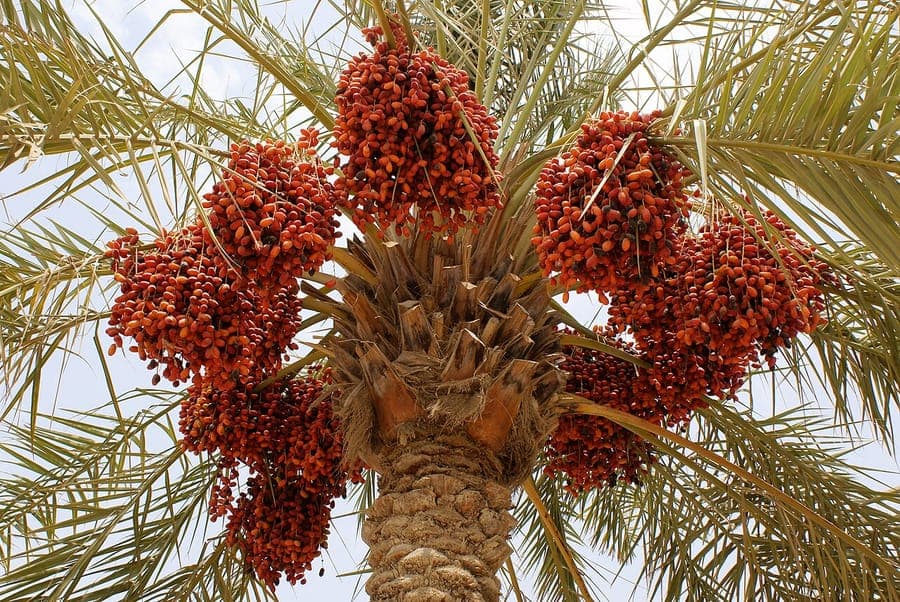
Nepenthes / CC BY-SA 3.0, via Wikimedia Commons
Phoenix dactylifera: complete guide
Phoenix dactylifera
¿Quieres ver Phoenix dactylifera: complete guide en tu jardín?
1 minuto, sin tarjeta de crédito
Overview
The date palm (Phoenix dactylifera) is a majestic palm originating from the Arabian Peninsula and South Pakistan. This plant belongs to the Arecaceae family and is known for its impressive growth, elegant arching leaves and useful fruits. The date palm can grow to over 20 metres tall under favourable conditions, although in containers and mixed gardens it usually remains much more compact.
The plant bears long, grey-green pinnate (feather-shaped) leaves that can reach 5-6 metres long. After many years, small yellow-white flowers emerge that eventually develop into sweet dates. This is an iconic plant for Mediterranean and subtropical gardens, giving any garden an exotic, luxury appearance.
Appearance and Growth
The date palm forms a distinct trunk covered with the persistent bases of older leaves. These bases give the trunk a unique, scaly texture. The trunk is grey-brown and can reach a diameter of up to 60 centimetres.
The leaves are pinnate (feather-divided), very long (up to 5-6 metres) and consist of many small, grey-green leaflets. These leaves arch gracefully downwards, which is very decorative. The plant grows very slowly, especially outside the tropics, adding only a few new leaves per year.
After 6-8 years, the first flowers can appear: small, yellow-white flowers in long hanging clusters. If there are male flowers nearby, these female flowers can develop into dates. The dates are oval, brown-yellow to dark brown, approximately 2-3 centimetres long, very sweet and edible.
Ideal Location
The date palm grows optimally in full sun: at least 6-8 hours of direct sunlight daily. However, the plant also tolerates partial shade, although this slows growth. Warm, sunny locations are essential for optimal fruiting.
Ensure protection from strong, dry winds that can damage the leaves. In warm Mediterranean climates, the palm can grow outdoors, but in cooler climates it must be in a pot that can be moved indoors for winter.
Soil Preparation
The date palm requires well-draining, preferably sandy or sandy-loamy soil. The plant tolerates saline, calcareous soils better than most plants. pH can range from 6.5 to 8.5.
Heavy clay soils should be amended with sand (50%) and gravel. Add organic material but not excessively, as this can lead to fungal growth. For pot culture use palm potting soil or a mixture of potting soil, sand and coco-husk.
Watering
Water regularly, especially during growth in the growing season. Allow the top 3-5 centimetres of soil to warm between waterings. In winter give considerably less water.
The plant tolerates drought better than overwatering. Be careful not to overwater, especially in winter, as this can cause root rot. In mixed soils water drains faster; in potting soil you must be more careful.
Diseño gratis
¿Quieres ver Phoenix dactylifera: complete guide en tu jardín? Crea un diseño gratis ahora.
Pruning and Maintenance
Minimal pruning is needed. Remove only dead or severely damaged leaves at the bottom. Never cut off healthy leaves, as this can weaken the plant. Leave the dead leaf bases in place, as they protect the trunk.
Remove wilted fruits and flowers. The plant requires no regular pruning and grows at a very slow pace.
Maintenance Calendar
May-September: Growing period, water regularly, apply nutrient feeding monthly. October-April: Rest period, minimal water, no feeding. June-July: Possible flowering, hand pollination can improve fruiting. December-March: Winter dormancy, move pots to warmer location if needed.
Winter Hardiness
The date palm is very frost-sensitive and cannot grow outdoors in areas where temperatures drop below 5-10 degrees Celsius. In mixed climates, the plant must grow in a pot that is brought indoors in winter. In warm Mediterranean gardens (zones 9-11), the palm can grow permanently outdoors.
The plant grows best at minimum temperatures of 15-18 degrees Celsius. Temperatures below 10 degrees Celsius will stop growth and can cause leaf damage.
Propagation
The date palm can be grown from seed, although this is very slow (seedlings reach only a few decimetres after 3-4 years). Seeds must first be disinfected and soaked. Sow in warm, moist seed boxes, temperature approximately 25-30 degrees Celsius.
Germination time can take 2-4 weeks. Young seedlings grow very slowly and need at least 3-5 years to achieve any noticeable growth.
Diseases and Pests
The date palm is relatively robust but can suffer from scale insects, spider mites and mealybugs. Inspect regularly the underside of leaves. Spraying treatments may be needed in severe infestations.
Root rot can occur with excessive watering, especially in winter. Good drainage and careful watering is essential.
Companion Plants
The date palm works well as a specimen plant or in groups with other Mediterranean plants. Combine it with lavender, rosemary, olives and other warm-tolerant plants. On a south-facing balcony it can grow together with other exotics such as bougainvillea and citrus fruit trees.
Lower-growing plants such as sedums, sempervivum and agave create nice contrast around the palm trunk.
Conclusion
The date palm brings true tropical glamour to your garden. Although it grows slowly, each plant forms a unique work of art with its characteristic leaves and potential fruits. Plant it in a warm, sunny spot and enjoy years of growth and exotic beauty. Available at specialized tree nurseries. Combine with other Mediterranean and subtropical plants for a summer paradise. Discover more inspiration at gardenworld.app.
¿Quieres ver Phoenix dactylifera: complete guide en tu jardín? Crea un diseño gratis ahora.
Sube una foto, elige un estilo y obtén un diseño fotorrealista con lista de plantas en menos de un minuto.
Más de 10.000 jardines diseñados
Sin tarjeta de crédito


Plantas similares
Phlomis fruticosa: complete guide
Phlomis fruticosa
Learn all about Jerusalem sage (Phlomis fruticosa): cultivation, care, flowers, maintenance and winter hardiness. Practical tips for your garden.
Phlomis russeliana: complete guide
Phlomis russeliana
Discover everything about Turkish sage (Phlomis russeliana): growth, care, yellow flowers, maintenance and winter hardiness. Tips for garden success.
Phlox paniculata: complete guide
Phlox paniculata
Everything about garden phlox (Phlox paniculata): growth, fragrance, beautiful flowers, pruning and propagation. Classic summer bloomer for borders.