
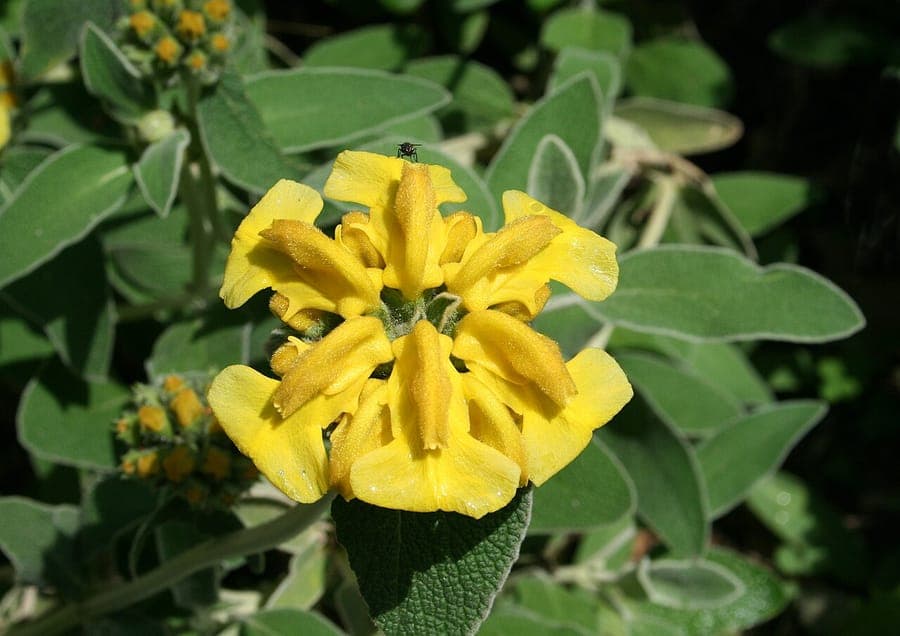
Jean-Pol GRANDMONT / CC BY-SA 3.0, via Wikimedia Commons
Phlomis fruticosa: complete guide
Phlomis fruticosa
¿Quieres ver Phlomis fruticosa: complete guide en tu jardín?
1 minuto, sin tarjeta de crédito
Overview
Jerusalem sage (Phlomis fruticosa) is a stunning Mediterranean shrub with striking yellow flowers. This species belongs to the mint family (Lamiaceae) and grows native in the Mediterranean region, from Italy to Turkey. The plant is known for its resilience in dry, sunny conditions and its extended flowering period from May to June. It is an ideal choice for gardeners seeking a low-maintenance plant that still offers significant visual impact. Jerusalem sage thrives in full sun and tolerates drought excellently.
The plant is a semi-woody shrub that can grow to about 120-150 centimetres tall. With its yellow flower spikes and aromatic foliage, this plant creates beautiful contrast in modern and Mediterranean garden designs. The plant attracts butterflies and bees, making it a valuable addition to pollinator-friendly gardens. This crop is suitable for hedges, borders and as a specimen plant in larger gardens.
Appearance and Bloom
Phlomis fruticosa displays characteristic densely packed yellowish flowers that grow in ornamental whorls (called Verticillasters). These flowers are approximately 2-3 centimetres long and feature the typical two-lipped structure characteristic of the mint family. The entire inflorescence radiates a warm yellow hue visible from a distance. The leaves are narrowly lance-shaped, about 3-5 centimetres long, with a grey-green to silvery-grey surface covered with fine hairs. This gives the plant a silvery-grey, velvety appearance.
The stems are angular and woody, typical of the Lamiaceae family. In summer, the plant forms a full, rounded crown approximately 100-150 centimetres wide. The flowering period extends from May to June, with sometimes additional bloom in July under favourable conditions. After flowering, small seed capsules form that provide bird food. This characteristic appearance makes the plant valuable throughout the year.
Ideal Location
Select a location with at least 6-8 hours of full sun daily for optimal flowering. Jerusalem sage also tolerates partial shade, but will produce fewer flowers. Ensure good air circulation, especially in humid climates, to prevent fungal diseases. The plant is wind-resistant and grows well in coastal or windy locations. Avoid draughts and areas with water stagnation. When planned well, Phlomis fruticosa works as a specimen plant or in groups of three to five specimens for maximum effect.
In modern gardens it works well in gravel gardens or Mediterranean planting schemes. For optimal results, plant it in locations with good drainage and where you can clearly see the flowers against a background.
Soil Preparation
Jerusalem sage requires well-draining, preferably poor to moderately fertile soil. Use a mixture of standard potting soil with sand (approximately 30-40%) to improve drainage. Heavy clay soils should be amended with coarse sand or gravel. The plant prefers a pH between 6 and 8, so neutral to slightly alkaline soil. Ensure the soil does not contain too much organic matter, as this can lead to overfertility and reduced flowering.
For container cultivation, use cactus or succulent potting soil mixed with sand. Well-prepared soil ensures healthier plants with better flowering.
Diseño gratis
¿Quieres ver Phlomis fruticosa: complete guide en tu jardín? Crea un diseño gratis ahora.
Watering
After planting, the plant needs regular watering for the first two weeks until the root system is established. After that, Jerusalem sage is very drought-tolerant and can thrive with minimal rainfall or supplemental irrigation. During normal growing periods, water when the top 2-3 centimetres of soil feel dry. During extremely dry periods, you can water weekly, but avoid stagnant water.
Once established, a well-rooted plant needs little extra water beyond the growing season. During winter, especially in wet climates, be cautious with watering. Avoid wet feet in winter, which can cause root rot.
Pruning and Maintenance
Phlomis fruticosa responds well to pruning in spring (March-April) just before new growth begins. Remove all damaged, dead, or weak branches completely. You can cut the plant back by 30-40% of its height to encourage a full, compact form. Regularly remove spent flowers (deadheading) to extend the flowering period and keep the plant looking neat. This also promotes more side flowers.
Excessive pruning after July is not recommended, as it may stimulate new growth that could be damaged by frost. Always use sharp pruning shears and make clean cuts.
Maintenance Calendar
March-April: Spring pruning, remove dead branches, apply slow-release fertilizer. May-June: Flowering period, enjoy the yellow blooms, deadhead for extended flowering. July-August: Warmer period, water as needed, no pruning. September-October: Reduce nitrogen feeding, prepare for winter. November-February: Minimal maintenance, no pruning, water cautiously. This calendar ensures optimal health and flowering.
Winter Hardiness
Phlomis fruticosa is hardy to about -10 to -12 degrees Celsius. In colder regions, it is recommended to protect the plant against severe frost with dry mulch or a frost cloth. In milder climates (zones 8-9) the plant generally thrives without additional protection. In the first winter after planting, additional protection may be beneficial. Once established, the plant will be more frost-resistant.
Companion Plants
Phlomis fruticosa pairs well with other Mediterranean plants such as lavender, rosemary, santolina, and marigold. The yellow flowers harmonize beautifully with blue bloomers like Salvia officinalis 'Blue Wonder' and bearded iris. Complementary partners include ornamental grasses like Festuca glauca (blue fescue) and succulents for structural contrast.
Plant alongside shrubs such as Cistus (rock rose) and Teucrium chamaedrys for a closed, textured garden. For a more natural appearance, combine it with wild marjoram, thyme, and other aromatic herbs that share the same growth and moisture preferences.
Practical Applications
This plant is perfect for sustainable gardens with minimal water input. It grows well in gravel or rock gardens and is ideal for xeriscaping concepts. Also suitable for roofs, balcony containers and Mediterranean borders. Plant it near seating and lounge areas to enjoy the aroma.
Conclusion
Jerusalem sage is an excellent choice for those seeking a beautiful, low-maintenance plant with strong visual impact. With minimal care, this Mediterranean shrub will provide yellow flowers for many years. Plant a few in your garden and enjoy the Mediterranean feel throughout the growing season. Available at many garden centres and retailers. Discover more garden inspiration at gardenworld.app and make your front yard dream a reality with our professional garden designs.
¿Quieres ver Phlomis fruticosa: complete guide en tu jardín? Crea un diseño gratis ahora.
Sube una foto, elige un estilo y obtén un diseño fotorrealista con lista de plantas en menos de un minuto.
Más de 10.000 jardines diseñados
Sin tarjeta de crédito


Plantas similares
Phlomis russeliana: complete guide
Phlomis russeliana
Discover everything about Turkish sage (Phlomis russeliana): growth, care, yellow flowers, maintenance and winter hardiness. Tips for garden success.
Phlox paniculata: complete guide
Phlox paniculata
Everything about garden phlox (Phlox paniculata): growth, fragrance, beautiful flowers, pruning and propagation. Classic summer bloomer for borders.
Phlox drummondii: complete guide
Phlox drummondii
Learn all about Drummond's phlox (Phlox drummondii): seeds, growth, colourful flowers, care and propagation. Perfect for full sun locations.