
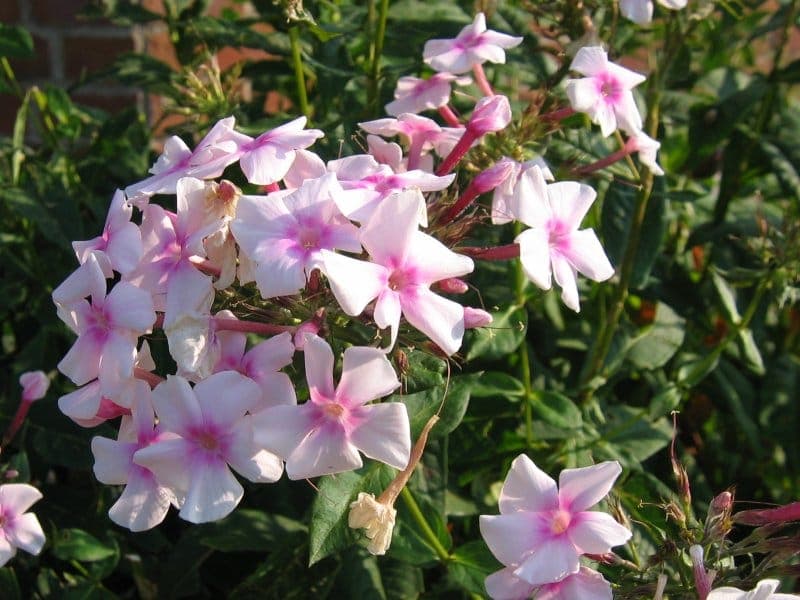
Kristian Peters -- Fabelfroh 08:34, 24 September 2005 (UTC) / CC BY-SA 3.0, via Wikimedia Commons
Phlox paniculata: complete guide
Phlox paniculata
¿Quieres ver Phlox paniculata: complete guide en tu jardín?
1 minuto, sin tarjeta de crédito
Overview
Garden phlox (Phlox paniculata) is a classic among perennial plants originating from eastern North America. This plant belongs to the Polemoniaceae family and is known for its beautiful, fragrant flowers in various colours. With a height of 60-120 centimetres depending on the cultivar, garden phlox forms a stately plant that flowers abundantly from July to September.
The flowers grow in large, dense clusters (panicles) at the end of long stems, which gives the plant its name. The flowers are available in white, pink, red, purple and bicolour shades. A large proportion of the cultivars emit a pleasant aroma that is especially noticeable in the evening. This is a reliable summer bloomer that, together with other perennials, can form a complete herbaceous border.
Appearance and Bloom
Garden phlox forms upright, vigorous stems covered with oblong to lance-shaped leaves. The leaves are approximately 5-10 centimetres long, green and have a dull surface. The plant grows into a sturdy, upright form of 60-120 centimetres tall.
The flowers are the most striking feature: they grow in large, densely packed flower panicles that can reach up to 20 centimetres long. Each individual flower is approximately 1-1.5 centimetres in diameter with five rounded petals. The colours range from pure white to bright red, pink, purple and lavender, and many cultivars have contrasting eyes. The flowering period extends from July to September, sometimes into October under favourable conditions.
Several cultivars such as 'Tenor' (white eyes), 'David' (white, fragrant) and 'Balmoral' (purple-pink) are highly popular and win many garden awards.
Ideal Location
Garden phlox grows optimally in full sun to light shade: at least 4-6 hours of direct sunlight daily for good flowering. In very hot areas, some afternoon shade is appreciated. Ensure good air circulation, which is important for preventing fungal diseases.
Plant the plant in sheltered locations protected from strong winds, as the long stems can break. A location with good drainage is essential.
Soil Preparation
Garden phlox requires well-draining, moderately fertile soil. Work organic material (compost or leaf mould) into the soil before planting. The plant grows on neutral to slightly acidic soil; pH 6.0-7.0 is ideal.
The plant is not very fussy but grows better in fertile, stable soil than in poor soils. Avoid very wet, waterlogged soils.
Watering
Ensure regular watering, especially during growth and flowering. Allow the top couple of centimetres of soil to warm between waterings, but ensure the plant never dries out completely. In dry periods, more frequent watering may be needed.
Prefer to water in early morning or evening, not on the foliage itself, to prevent fungal diseases. Avoid wet feet, especially in winter.
Diseño gratis
¿Quieres ver Phlox paniculata: complete guide en tu jardín? Crea un diseño gratis ahora.
Pruning and Maintenance Tips
Pinching back (Pinching) in June encourages bushier growth and more flowers. When the plant is about 30 centimetres tall, you can pinch off the growing tip with your fingers. This stimulates side branch formation.
Deadheading (removing spent flowers) extends the flowering period. When the entire cluster has faded, cut the entire flower stem off just above the next pair of leaves.
After flowering (October), the plant can be cut back to about 15 centimetres above the ground.
Maintenance Calendar
May-June: Pinching period, pinch off growing tips when plant is 30 cm tall. June: Regular watering, apply nitrogen feeding. July-September: Flowering period, deadhead spent clusters. October: Cut back to 15 cm height, prepare for winter. November-March: Winter dormancy, minimal maintenance.
Propagation
Garden phlox propagates easily via division in spring or early autumn. Dig up the plant, divide the rootball into 2-3 sections and replant them at appropriate distance. This also rejuvenates old plants.
The plant can also be grown from seeds, but cultivars will not always come true from seed. Cuttings of young growth can also be rooted in moist perlite or sand.
Diseases and Pests
Black spots (Phlox subulata Stem Canker) and powdery mildew are the main problems. Ensure good air circulation and avoid evening watering. Remove affected leaves. In severe cases, fungicide treatment may be needed.
Phlox spider mites (Carmichael's white mite) can cause leaf spots. Inspect regularly and remove affected leaves quickly.
Companion Plants
Garden phlox pairs well with other summer bloomers and perennials in the same height class. Plant it together with yellow Achillea, blue Delphinium or Salvia for nice colour contrast.
Lower-growing companion plants such as Nepeta (catmint), Coreopsis and geranium create beautiful transitions in borders. Fine-leaved plants such as Foeniculum and Fennel serve as background texture.
In full summer beds, groups of garden phlox together with other classics such as roses and lilies create a cottage garden look.
Conclusion
Garden phlox is an indispensable plant in classical gardens and borders. With regular deadheading, pinching and adequate drainage, you will have abundant flowers and fragrance from July to October. Plant groups of the same colour for maximum effect. Available at many garden centres and plant nurseries. Combine with other perennials for a full, colourful summer garden. Discover more garden inspiration at gardenworld.app.
¿Quieres ver Phlox paniculata: complete guide en tu jardín? Crea un diseño gratis ahora.
Sube una foto, elige un estilo y obtén un diseño fotorrealista con lista de plantas en menos de un minuto.
Más de 10.000 jardines diseñados
Sin tarjeta de crédito


Plantas similares
Phlox drummondii: complete guide
Phlox drummondii
Learn all about Drummond's phlox (Phlox drummondii): seeds, growth, colourful flowers, care and propagation. Perfect for full sun locations.
Phlomis fruticosa: complete guide
Phlomis fruticosa
Learn all about Jerusalem sage (Phlomis fruticosa): cultivation, care, flowers, maintenance and winter hardiness. Practical tips for your garden.
Phlomis russeliana: complete guide
Phlomis russeliana
Discover everything about Turkish sage (Phlomis russeliana): growth, care, yellow flowers, maintenance and winter hardiness. Tips for garden success.