
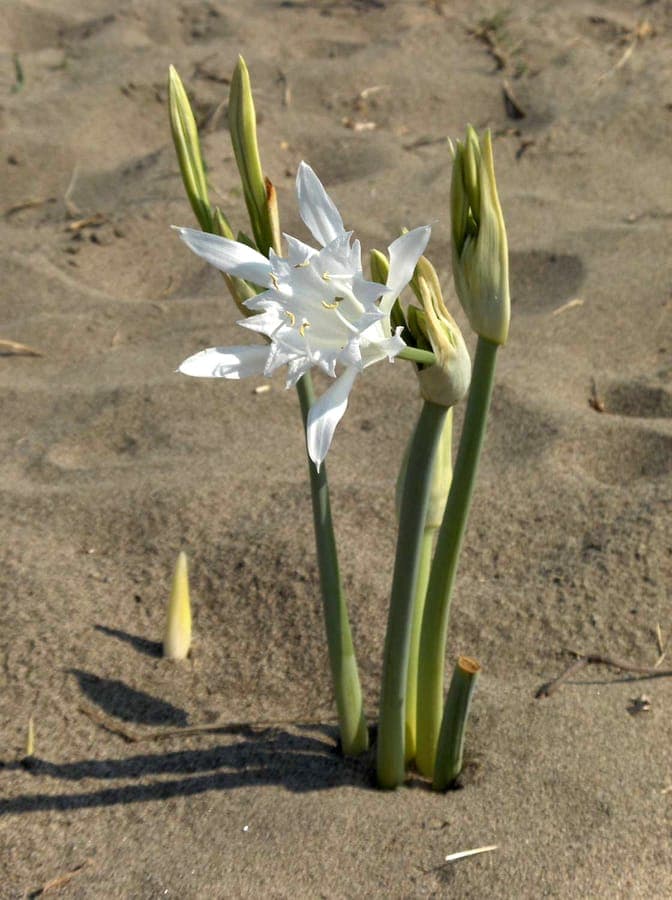
User:Stemonitis / CC BY-SA 2.5, via Wikimedia Commons
Sea-daffodil: complete guide
Pancratium maritimum
¿Quieres ver Sea-daffodil: complete guide en tu jardín?
1 minuto, sin tarjeta de crédito
Introduction
The sea-daffodil, scientifically known as Pancratium maritimum, is an enchanting Mediterranean flowering plant with a special preference for sandy coasts and beaches. This plant is renowned for its magnificent, strongly fragrant white flowers and interesting, flexible foliage. In nature, this flower grows along coasts from the Mediterranean to the Black Sea. This guide covers everything you need to know to successfully grow this special coastal plant in your garden or in containers.
Overview
Pancratium maritimum is a bulbous plant that grows only 30-50 centimeters tall. The plant comes from bulbs and typically blooms from August to September, when many other garden plants are past their peak. This makes it a valuable seasonal plant in the garden calendar. The strong, pleasant fragrance of the flowers makes this plant very popular with plant lovers. The plant grows in natural sandy soils where well-drained, mineral-rich conditions prevail.
Appearance and Bloom
The sea-daffodil is very distinctive in appearance. The leaves are narrow, linear, often gray-green or blue-green in color, with interesting spiral growth. This gives the plant a very special texture. The leaves can grow up to 60 centimeters long.
The flowers of Pancratium maritimum are the true highlight. They appear from July to October in dense clusters atop thin stems. Each flower is pure white, with six narrow petals and a characteristic crown or corona in the center - typical of the Amaryllidaceae family. The flowers are highly fragrant, with a delicate, pleasant perfume. The flowers attract many pollinators.
Ideal Location
Sea-daffodil requires full sun and can tolerate 8+ hours of direct sun - more is better. Plant this in a South or South-west facing location where it receives the most sunlight. The plant tolerates warm, windy conditions well and refuses to grow in shaded locations. This is not a plant for partial shade.
Protection from strong wind is actually not necessary - the plant grows naturally in windy, coastal conditions.
Soil
Pancratium maritimum thrives optimally on very well-drained, sandy soils. This is crucial - poor drainage will almost certainly lead to bulb rot. A mixture of approximately 50 percent coarse sand, 30 percent potting soil and 20 percent perlite is ideal. The plant tolerates very dry soils and lean earth, but refuses to grow on rich soils with much organic matter.
Calcareous soils are acceptable and even preferred. Soil acidity plays less role for this plant.
Diseño gratis
¿Quieres ver Sea-daffodil: complete guide en tu jardín? Crea un diseño gratis ahora.
Watering
Sea-daffodil is very drought-tolerant. After planting, some watering can help, but once established, the plant can largely survive without watering. During the growing season (before and after blooming) moderate watering can help, but must be done very carefully - water stagnation must be absolutely avoided.
In container culture you can apply more careful watering, but always allow it to dry well between waterings. During dormancy (if dormant) watering can be minimal.
Pruning
Pruning is not necessary. Simply remove yellowed foliage and yellowed flower stems after blooming to keep the plant tidy. This has no effect on next year's bloom.
Maintenance Calendar
Spring: Plant grows. Minimal maintenance. Summer: Plant grows stronger. Occasional watering in extremely dry periods. Fall: Bloom appears. Small amount of feeding can help. Winter: Plant becomes dormant. Minimal watering. Keep dry.
Winter Hardiness
Pancratium maritimum is moderately winter hardy to approximately -5 to -8 degrees Celsius. In much of the Netherlands protection will be needed or the plant may not survive outdoors. In milder parts of southern Netherlands it can grow without protection. In Germany protection will be needed in many places, and in France it can grow outdoors except in very severe years.
In container culture it is recommended to overwinter the plant indoors during winter or keep it considerably drier.
Companion Plants
Sea-daffodil combines well with other Mediterranean coastal plants such as Carpobrotus, Euphorbia, Sedum and other succulents. This combination creates a true coastal feel. Sandy soils with minimal feeding benefit this group of plants.
Closing
Pancratium maritimum is a unique plant that brings the warm, fragrant feeling of Mediterranean coasts into your garden. Although not fully hardy in much of Europe, container culture offers a good alternative. The strongly fragrant flowers make it well worth the effort. With well-drained soil and minimal maintenance, your sea-daffodil will provide years of blooms. For more inspiration on coastal plants and sunny gardens, visit gardenworld.app.
¿Quieres ver Sea-daffodil: complete guide en tu jardín? Crea un diseño gratis ahora.
Sube una foto, elige un estilo y obtén un diseño fotorrealista con lista de plantas en menos de un minuto.
Más de 10.000 jardines diseñados
Sin tarjeta de crédito


Plantas similares
Douglas' Onion: complete guide
Allium douglasii
Douglas' onion is a compact ornamental allium with purple flowers, perfect for rock gardens and sunny borders. Learn care, siting and hardiness.
Oblique onion: complete guide
Allium obliquum
The oblique onion is a hardy ornamental allium with chartreuse flower heads and blue-green foliage. Location, soil and care explained.
False hooded garlic: complete guide
Allium pseudocalyptratum
Discover false hooded garlic (Allium pseudocalyptratum): a rare ornamental onion from Lebanon for rock gardens and alpine troughs.