
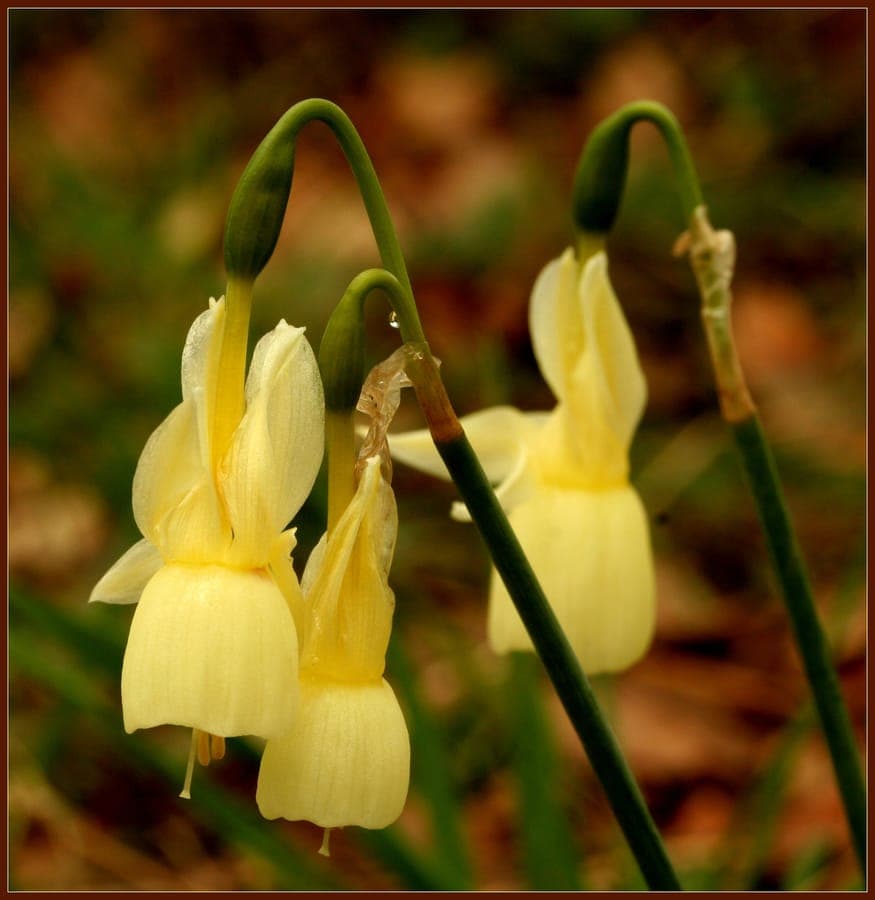
flickr-user spacepleb (Dave Gough) / CC BY 2.0, via Wikimedia Commons
Narcissus triandrus (Angel's-tears): complete guide
Narcissus triandrus
¿Quieres ver Narcissus triandrus (Angel's-tears): complete guide en tu jardín?
1 minuto, sin tarjeta de crédito
Overview
The Angel's-tears narcissus (Narcissus triandrus) is a delicate member of the Amaryllidaceae family, native to northwestern France, Portugal, and Spain. Named for its graceful, drooping white flowers, this charming bulb is prized by gardeners seeking subtle spring elegance. Each bulb produces multiple flowers on slender stems, creating an enchanting display in containers, borders, and alpine gardens.
Appearance & Bloom Cycle
This petite bulb reaches 15-25 centimeters in height, with delicate white tepals and yellow or pale crowns. Flowers appear from February through May, depending on location. The slender green leaves emerge with the flowers and fade as temperatures warm. Multiple flowers per bulb create a generous display despite the plant's modest stature.
Ideal Location
Plant Angel's-tears narcissus in full sun to partial shade, ideally receiving six or more hours of direct sunlight daily. The plant appreciates morning sun with afternoon shelter in very warm regions. A position under deciduous trees is excellent - the bulb gets light during active growth, then shade as it enters dormancy.
Soil Requirements
This narcissus thrives in well-draining soil with pH 7.0-7.5. Incorporate rotted compost before planting. If your garden has clay-heavy soil, add sand or perlite to prevent waterlogging. Rich organic matter improves soil structure without encouraging excessive moisture retention.
Diseño gratis
¿Quieres ver Narcissus triandrus (Angel's-tears): complete guide en tu jardín? Crea un diseño gratis ahora.
Watering
Keep soil consistently moist during the growing season, never waterlogged. After flowering, gradually reduce water as foliage naturally declines. During summer dormancy, water infrequently - only if extremely dry. Water at soil level rather than overhead to minimize fungal issues.
Pruning & Maintenance
Deadhead spent flowers to prevent seed formation, but leave foliage intact until it yellows naturally - this allows the bulb to replenish reserves for next season. In April-May, remove completely senescent leaves. No other pruning is necessary for this naturally tidy plant.
Maintenance Calendar
October-November: Plant bulbs 10 centimeters deep. January-March: Flowering period; water as needed. April-May: Remove yellowed foliage. June-September: Dormant period; minimal water.
Winter Hardiness
This narcissus is extremely cold-hardy (USDA zones 3-9) and overwinters reliably outdoors. It tolerates temperatures down to -15°C. Even in severe Northern European winters, these bulbs persist without protection, though a mulch layer offers extra insurance.
Companion Plants
Group Angel's-tears with snowdrops, crocuses, and hellebores for a cohesive early-spring display. They're exceptional in alpine troughs, rocky banks, and raised beds. Low-growing sedums and saxifrages provide pleasant textural contrast above and around the narcissus flowers.
Conclusion
Narcissus triandrus transforms spring gardens with its ethereal charm. This hardy, low-maintenance bulb deserves a spot in every garden plan. Plant them this autumn and look forward to delicate blooms come spring. For garden design inspiration and more plant knowledge, visit gardenworld.app.
¿Quieres ver Narcissus triandrus (Angel's-tears): complete guide en tu jardín? Crea un diseño gratis ahora.
Sube una foto, elige un estilo y obtén un diseño fotorrealista con lista de plantas en menos de un minuto.
Más de 10.000 jardines diseñados
Sin tarjeta de crédito


Plantas similares
Douglas' Onion: complete guide
Allium douglasii
Douglas' onion is a compact ornamental allium with purple flowers, perfect for rock gardens and sunny borders. Learn care, siting and hardiness.
Oblique onion: complete guide
Allium obliquum
The oblique onion is a hardy ornamental allium with chartreuse flower heads and blue-green foliage. Location, soil and care explained.
False hooded garlic: complete guide
Allium pseudocalyptratum
Discover false hooded garlic (Allium pseudocalyptratum): a rare ornamental onion from Lebanon for rock gardens and alpine troughs.