
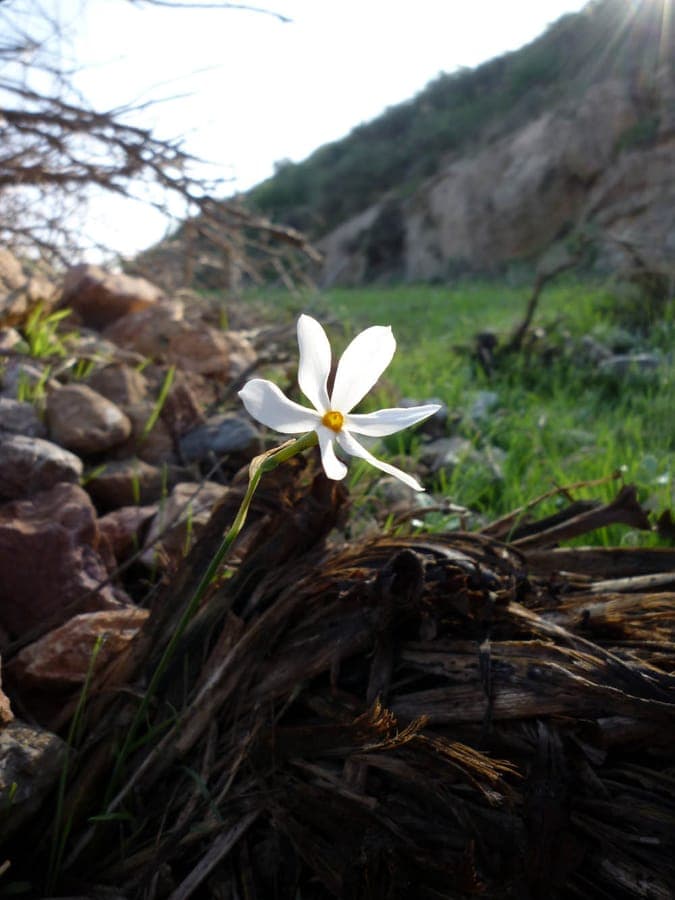
Nanosanchez / Public domain, via Wikimedia Commons
Narcissus serotinus: complete guide
Narcissus serotinus
¿Quieres ver Narcissus serotinus: complete guide en tu jardín?
1 minuto, sin tarjeta de crédito
Overview
Narcissus serotinus, also called autumn narcissus or late daffodil, is a rare and charming autumn bloomer from the Amaryllidaceae family. This smaller daffodil is native to southwestern Iberia and North Africa and grows in warm, dry regions where other flowers have faded. At only 15-20 centimeters tall with thin, grass-like leaves, this plant produces delicate white flowers with yellow trumpets in September and October. This plant deserves more attention for its unique blooming time and elegant, subtle beauty.
Appearance and bloom
Narcissus serotinus blooms later than all other daffodils, in September and October when gardens lose their color. The flowers are small to medium-sized, white with yellow trumpet flowers about 2-3 centimeters long. The fragrance is mild and pleasant. The leaves are narrow and grass-like, much less conspicuous than spring-blooming daffodils. Only a few flowers per bulb are produced.
Ideal location
Choose a very sunny location with at least 8 hours of direct sunlight daily for Narcissus serotinus. This plant grows in hot, dry hillsides just as in its homeland. Avoid shade completely. Protect from heavy autumn rains by positioning under roof overhang or against house wall.
Soil
This daffodil grows in well-draining, poor soils. Sandy, gravelly soils are preferred. The plant doesn't need rich soil and actually grows better in moderately fertile ground. Neutral to slightly alkaline soils (pH 6.5-7.5) are preferred. Moisture must drain well.
Diseño gratis
¿Quieres ver Narcissus serotinus: complete guide en tu jardín? Crea un diseño gratis ahora.
Watering
Thorough watering just after planting. After that, water very sparingly. The plant tolerates prolonged drought well. In very hot, dry summers, occasional watering may help, but waterlogging must be avoided. In autumn when the plant grows, lighter moisture supply is acceptable.
Pruning
Pruning is not applicable. Wilted flowers can be gently broken off. Let foliage completely yellow before removing in late spring, allowing the bulb to build energy for next blooming.
Maintenance calendar
August/September: Blooming begins, yellowing leaves. October: Full bloom. November/December: Seed setting, foliage disappears. January/July: Dormancy under hot, dry conditions.
Winter hardiness
Narcissus serotinus is hardy to about -5C in temperate climates and grows best in warm, dry zones. In very cold regions, recommend growing in pots with protection. Zone 8-10 ideal. In frost-prone areas, mulch around the bulb in first winter helps.
Companion plants
Combine Narcissus serotinus with other Mediterranean, drought-tolerant plants like lavender, rosemary, and santolina. Low-growing groundcover sedums form nice understory. Avoid moisture-loving plants nearby. Late-blooming bellflowers and hellebores provide color continuity.
Closing
Narcissus serotinus is a unique, elegant addition for gardens seeking autumn interest. With its rarity and delicate flowers, this plant deserves more recognition from gardeners. Online bulb retailers offer specimens. Discover more garden designs on gardenworld.app for Mediterranean garden styles and late-season planting strategies.
¿Quieres ver Narcissus serotinus: complete guide en tu jardín? Crea un diseño gratis ahora.
Sube una foto, elige un estilo y obtén un diseño fotorrealista con lista de plantas en menos de un minuto.
Más de 10.000 jardines diseñados
Sin tarjeta de crédito


Plantas similares
Douglas' Onion: complete guide
Allium douglasii
Douglas' onion is a compact ornamental allium with purple flowers, perfect for rock gardens and sunny borders. Learn care, siting and hardiness.
Oblique onion: complete guide
Allium obliquum
The oblique onion is a hardy ornamental allium with chartreuse flower heads and blue-green foliage. Location, soil and care explained.
False hooded garlic: complete guide
Allium pseudocalyptratum
Discover false hooded garlic (Allium pseudocalyptratum): a rare ornamental onion from Lebanon for rock gardens and alpine troughs.