
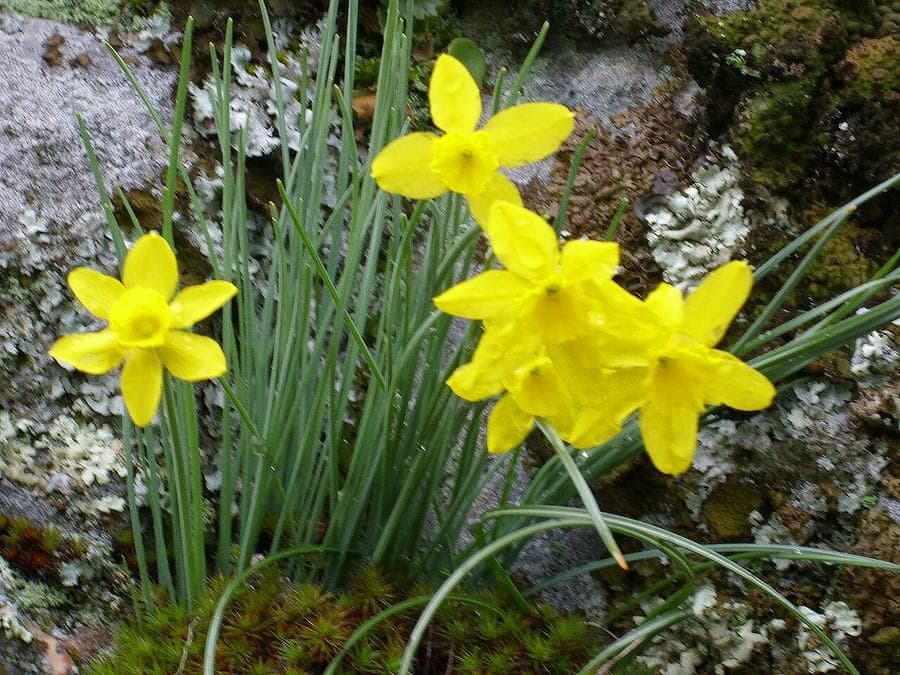
Javier martin / Public domain, via Wikimedia Commons
Rock narcissus: complete guide
Narcissus rupicola
¿Quieres ver Rock narcissus: complete guide en tu jardín?
1 minuto, sin tarjeta de crédito
Overview
Narcissus rupicola, the rock narcissus, is an exceptionally rare dwarf daffodil native to rocky mountain regions of northern Spain and Portugal. This delicate alpine gem is prized by specialized alpine and botanical gardeners for its refined botanical characteristics. Its pale yellow flowers are exquisitely refined.
Appearance and flowering period
This diminutive narcissus reaches merely 10-20 centimeters in height. Fine, grass-like foliage is extremely compact and neat. Individual flowers are tiny, approximately 1.5 centimeters wide, with narrow, refined petals in pale yellow. The flowering period extends from March through May, depending on conditions. Each bulb typically produces one or two flowers.
Ideal location
Plant this alpine specialist in full sun to very light shade. In containers, full sun is acceptable given superior drainage control. It grows best in warm, very well-drained rocky sites. For garden integration, position in rocky, dry slopes, scree, or alpine troughs. Protect from physical damage and excessive moisture.
Soil requirements
Alpine rock plants demand excellent drainage and gritty structure. Mix 50% fine gravel or lava stone, 30% well-rotted leaf mould, 20% coarse sand. Avoid peat entirely; this specialist requires mineral-dominant substrate. Neutral to slightly acidic pH preferred.
Diseño gratis
¿Quieres ver Rock narcissus: complete guide en tu jardín? Crea un diseño gratis ahora.
Watering
After autumn planting, water sparingly; this plant tolerates drought better than wetness. Apply regular, light watering during growth period (February-April). After flowering, reduce almost to dry. This replicates rocky alpine conditions. Summer dryness is normal and beneficial.
Pruning
No pruning applicable. Allow spent flowers to naturally detach. Yellowed foliage may be carefully removed after complete browning.
Maintenance calendar
September-October: Plant in drainage-rich alpine mix. November-January: Keep dry, minimal watering. February: Begin careful watering as growth signals appear. March-April: Regular moisture application; avoid saturation. May: Reduce watering. June-September: Keep very dry; plant dormant.
Winter hardiness
Narcissus rupicola is hardy to USDA zone 4-5 (-25 to -28degC). Across Netherlands and Belgium, it thrives outdoors in warm, excellently-drained rocky corners. In less temperate regions, container cultivation with winter protection is essential. Snow accumulation and waterlogging are intolerable.
Companion planting
This plant is primarily a specialist's collector piece. Grow in alpine troughs, scree gardens, or in containers filled with fine gravel/tufa. Pairing with fellow dwarf alpine narcissi and sempervivums creates thematic alpine collections.
Closing
Narcissus rupicola is for the dedicated alpine enthusiast. With proper drainage and dry summers, it grows reliably. Available from specialized alpine nurseries. For more botanical design inspiration, visit gardenworld.app.
¿Quieres ver Rock narcissus: complete guide en tu jardín? Crea un diseño gratis ahora.
Sube una foto, elige un estilo y obtén un diseño fotorrealista con lista de plantas en menos de un minuto.
Más de 10.000 jardines diseñados
Sin tarjeta de crédito


Plantas similares
Douglas' Onion: complete guide
Allium douglasii
Douglas' onion is a compact ornamental allium with purple flowers, perfect for rock gardens and sunny borders. Learn care, siting and hardiness.
Oblique onion: complete guide
Allium obliquum
The oblique onion is a hardy ornamental allium with chartreuse flower heads and blue-green foliage. Location, soil and care explained.
False hooded garlic: complete guide
Allium pseudocalyptratum
Discover false hooded garlic (Allium pseudocalyptratum): a rare ornamental onion from Lebanon for rock gardens and alpine troughs.