
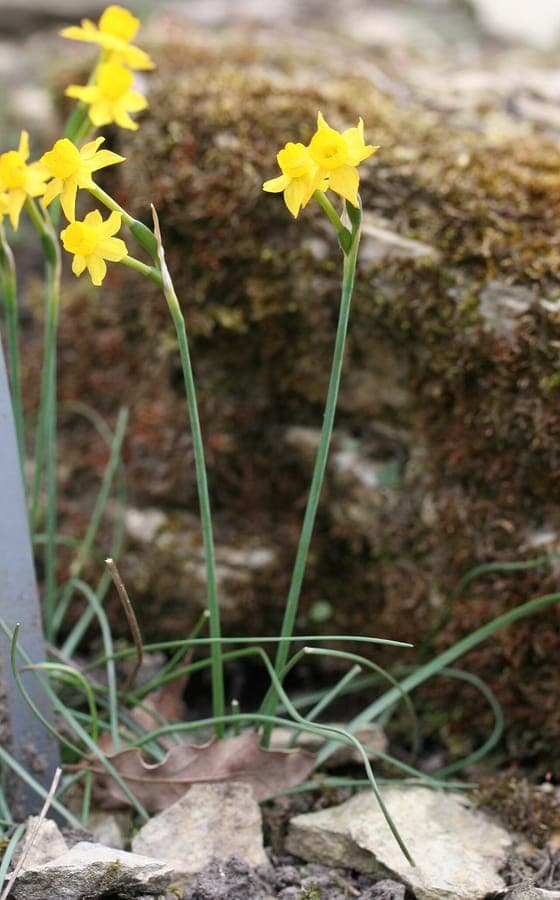
Michael Wolf / CC BY-SA 3.0, via Wikimedia Commons
Narcissus gaditanus: complete guide
Narcissus gaditanus
¿Quieres ver Narcissus gaditanus: complete guide en tu jardín?
1 minuto, sin tarjeta de crédito
Overview
Narcissus gaditanus, a rare and charming small daffodil native to southern Spain and Portugal, is a gem for gardeners seeking something unique. This plant grows in the mountain regions around Cadiz, where it thrives in dry, stony mountain areas. This is not an ordinary daffodil - this is a special collector's plant for lovers of alpine flowers and miniatures. The flower is small but perfectly formed, with a red corona and pale perianth.
Gaditanus is probably the most underrated daffodil, perhaps because it isn't widely available. Gardeners who try it swear by it. This is your plant if you like growing something different.
Appearance and Bloom
The plant reaches only 10-15 centimeters tall, much smaller than standard daffodils. The flower is elegant in proportions: narrow, pale yellow petals with a small red corona in the heart. The corona is the feature - crystal-clear red tone against soft yellow background.
Blooming comes early in the season, often in February or March, depending on location. This makes it excellent for Easter gardens and early spring interest.
Ideal Location
Set Narcissus gaditanus on a sunny, well-draining bed - full sun is ideal. The plant blooms in partial shade too, but flowers are less vibrant. Mountain-like landscapes, alpine troughs, and rock gardens are perfect. It can also be grown in pots in a cool greenhouse.
Diseño gratis
¿Quieres ver Narcissus gaditanus: complete guide en tu jardín? Crea un diseño gratis ahora.
Soil
The plant thrives on poor, well-draining, stony soil. This is a gardener's preference - sandy soil mixed with gravel is ideal. Work plenty of grit or gravel in if your soil is too clayey. The plant doesn't thrive on wet soils.
Watering
Once established, this is a drought-tolerant plant. During the growing period (autumn to spring), ensure the soil stays regularly moist but never waterlogged. In summer, when the bulb is dormant, reduce watering. Excessive summer moisture can cause rot.
Pruning and Maintenance
Narcissus gaditanus requires no pruning. Let foliage die down at least six weeks after flowering so the bulb gathers energy. This is normal daffodil management.
Maintenance Calendar
After blooming (April-May): Remove spent flowers but leave stems and leaves.
Summer: Bulb is dormant. Give minimal water.
Autumn: Root growth begins. Water if dry.
Winter: Blooming period - ensure moisture and cool temperatures.
Winter Hardiness
This daffodil is fairly winter-hardy - to -15°C. In cold winter areas, pot cultivation is better so you can protect them.
Companion Plants
Group with other alpines: Saxifrage, Sedum, Armeria. In rock garden, combine with stony succulent vegetation. Beautiful in troughs with other small daffodils.
Closing Thoughts
Narcissus gaditanus is for specialists and lovers of special plants. This isn't an everyday daffodil, it's a collector's plant. Seek seeds and bulbs from specialized suppliers. For more inspiration on rare plants, check gardenworld.app.
Grow this special Spanish daffodil and make your garden unique.
¿Quieres ver Narcissus gaditanus: complete guide en tu jardín? Crea un diseño gratis ahora.
Sube una foto, elige un estilo y obtén un diseño fotorrealista con lista de plantas en menos de un minuto.
Más de 10.000 jardines diseñados
Sin tarjeta de crédito


Plantas similares
Douglas' Onion: complete guide
Allium douglasii
Douglas' onion is a compact ornamental allium with purple flowers, perfect for rock gardens and sunny borders. Learn care, siting and hardiness.
Oblique onion: complete guide
Allium obliquum
The oblique onion is a hardy ornamental allium with chartreuse flower heads and blue-green foliage. Location, soil and care explained.
False hooded garlic: complete guide
Allium pseudocalyptratum
Discover false hooded garlic (Allium pseudocalyptratum): a rare ornamental onion from Lebanon for rock gardens and alpine troughs.