
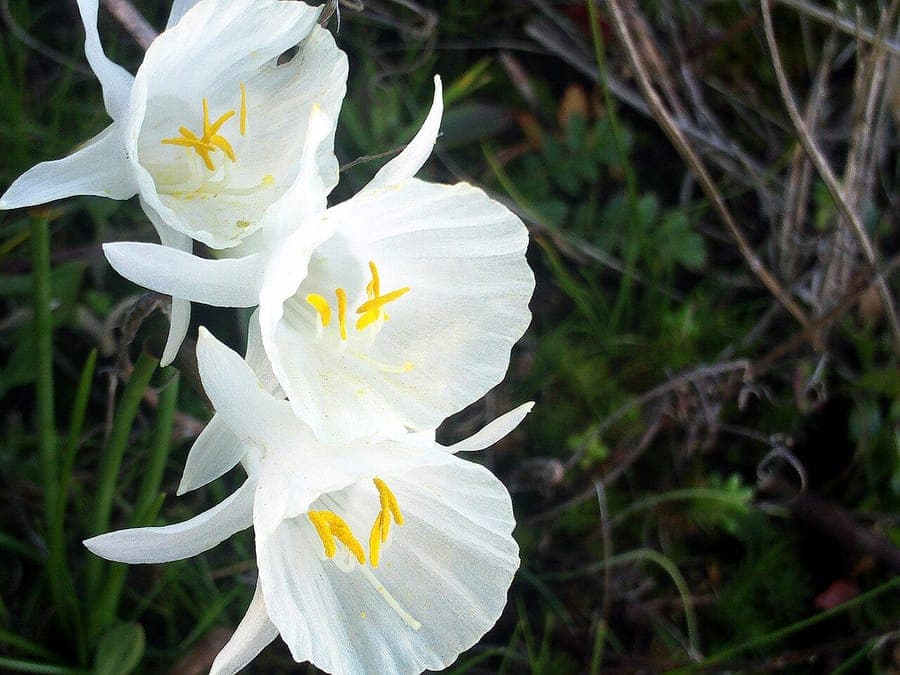
Javier martin / Public domain, via Wikimedia Commons
Narcissus cantabricus: complete guide
Narcissus cantabricus
¿Quieres ver Narcissus cantabricus: complete guide en tu jardín?
1 minuto, sin tarjeta de crédito
Overview
Narcissus cantabricus, commonly known as White Hoop Petticoat Daffodil or Asturian Narcissus, is a rare and delicate bulbous plant from the Amaryllidaceae family. Growing naturally in the mountain regions of southern Spain and North Africa in moist rocky habitats, this plant is highly sought by alpine and rock garden enthusiasts for its unique flowers.
This delicate plant is especially prized for its beautiful white flowers with a distinctive yellow crown resembling a full hoop petticoat. The plant is ideal for alpine gardens, rock gardens, and container cultivation. It is an excellent choice for experienced gardeners with enthusiasm for growing alpine bulbs.
Appearance and Bloom
Narcissus cantabricus is a very small bulbous plant reaching only 10 to 20 centimeters in height. The plant forms clusters of thin, grass-like, dark green foliage with a somewhat serpentine form. Leaves appear simultaneously with or just before flowers emerge.
Flowering occurs in early spring, typically February to March, sometimes as early as January in mild years. The flowers are absolutely unique and fascinating - they feature six white reflexed petals surrounding a prominent, inflated yellow crown resembling a hoop skirt or voluminous petticoat. This characteristic shape explains the plant's common name. Flowers are sweetly scented though not strongly fragrant. Each bulb typically produces two to four flower stems per season.
Ideal Location
Narcissus cantabricus thrives best in a location with plenty of light and full sun to partial shade. The plant feels at home in alpine, rocky sites where excellent drainage is essential. The plant may be grown in alpine troughs, rock gardens, scree beds, or in containers with alpine soil.
The plant must be protected from excessive winter moisture, making a well-draining location absolutely necessary.
Soil
Narcissus cantabricus requires extremely well-draining soil, more so than typical bulbs. The plant grows naturally in rocky, mountainous habitats and requires these conditions in cultivation. Use alpine soil mix, sand, stone chips, and minimal organic material.
A mixture of one part alpine soil mix, one part gravel, and one part sand works well. This plant cannot grow in heavy clay soils.
Watering
Narcissus cantabricus requires careful water management. The plant grows best in an environment that is moist during the growing and flowering period (winter to early spring) but much drier during the rest of the year. Once foliage begins to fade after flowering, water must be drastically reduced.
In containers, underwatering is better than overwatering. Overwatering leads to root rot, which can be fatal for this plant. Water sparingly only when soil feels completely dry.
Diseño gratis
¿Quieres ver Narcissus cantabricus: complete guide en tu jardín? Crea un diseño gratis ahora.
Pruning and Maintenance
Narcissus cantabricus requires minimal pruning. Remove only dead leaves and flowers after blooming. Allow foliage to yellow completely and die back before removal, as nutrients return to the bulb.
As a small bulb, virtually no pruning is necessary.
Maintenance Calendar
January-March: Flowering period. Water sparingly. No feeding required.
April-May: Foliage fades. Drastically reduce water. Bulb builds food reserves.
June-October: Summer dormancy. Soil may remain dry. Minimal care.
November-December: Preparation for blooming. Soil may become lightly moist.
Winter Hardiness
Narcissus cantabricus is moderately hardy, tolerating temperatures to approximately -10 to -15 degrees Celsius. In colder regions, protection is recommended. However, the plant grows much better in containers in an alpine house or cold frame, where winter moisture can be managed.
Companion Planting
Narcissus cantabricus combines beautifully with other alpine bulbs and alpine rock garden plants. Particularly attractive are combinations with other small daffodils such as Narcissus pseudonarcissus subsp. obvallaris (Tenby Daffodil). The plant may be grown with Helleborus niger, alpine Primula species, and rock garden Sedums.
The white flowers with yellow crowns harmonize well with blue alpine Veronica species and purple alpine phlox varieties.
Blooming Success and Timing
For best blooming results, ensure adequate winter chilling of at least 12 weeks below 10 degrees Celsius. This is essential for flower development. Once flowering ceases, the bulb enters dormancy but should be kept dry during summer months. Resume light watering in November to trigger the new growth cycle.
Flower longevity is typically 2 to 3 weeks depending on temperature - cooler conditions prolong flowering. The distinctive yellow crowns remain prominent throughout the bloom period.
Conclusion
Narcissus cantabricus is a unique and beautiful bulb for alpine plant enthusiasts and rare bulb collectors. This plant offers exotic, distinctive flowers and is relatively careful in cultivation. With correct soil mixture (extremely well-draining), moisture management, and protection from winter rain, this rare plant becomes a precious jewel in alpine gardens.
Bulbs may be obtained from specialized bulb dealers and alpine plant nurseries. With the guidance in this article, you will succeed in cultivating this beautiful, rare daffodil. Discover on gardenworld.app how to integrate this exotic flower into your alpine garden design! Growing this rare treasure rewards your care with unforgettable springtime blooms.
¿Quieres ver Narcissus cantabricus: complete guide en tu jardín? Crea un diseño gratis ahora.
Sube una foto, elige un estilo y obtén un diseño fotorrealista con lista de plantas en menos de un minuto.
Más de 10.000 jardines diseñados
Sin tarjeta de crédito


Plantas similares
Douglas' Onion: complete guide
Allium douglasii
Douglas' onion is a compact ornamental allium with purple flowers, perfect for rock gardens and sunny borders. Learn care, siting and hardiness.
Oblique onion: complete guide
Allium obliquum
The oblique onion is a hardy ornamental allium with chartreuse flower heads and blue-green foliage. Location, soil and care explained.
False hooded garlic: complete guide
Allium pseudocalyptratum
Discover false hooded garlic (Allium pseudocalyptratum): a rare ornamental onion from Lebanon for rock gardens and alpine troughs.