
Olei / CC BY-SA 3.0, via Wikimedia Commons
Narcissus assoanus: complete guide
Narcissus assoanus
¿Quieres ver Narcissus assoanus: complete guide en tu jardín?
1 minuto, sin tarjeta de crédito
Overview
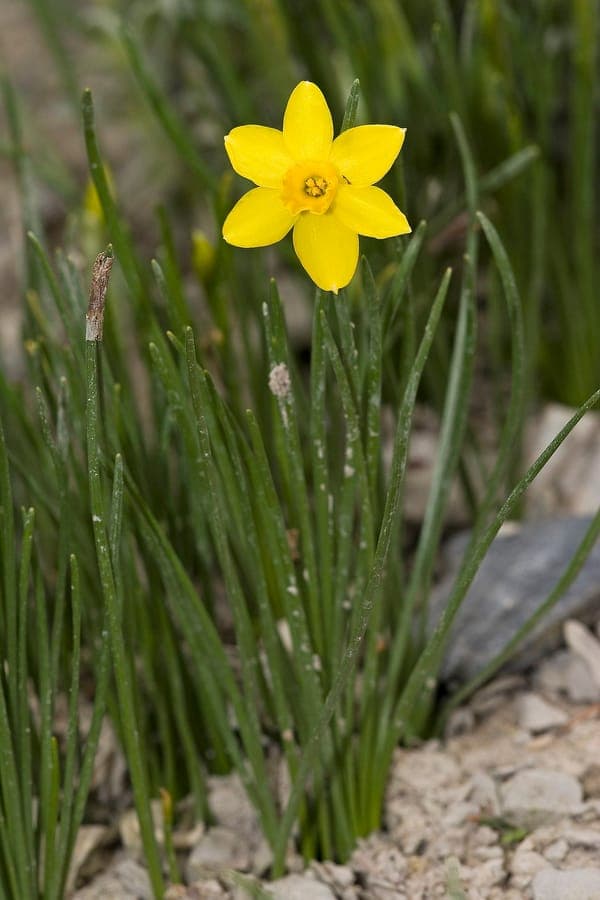
Narcissus assoanus, also known as rushleaf jonquil, is a small jonquil native to southern France and Spain. This minute spring bulb is known for its yellow flowers and pleasant fragrance. It is a popular choice for rock gardens and sunny borders.
Appearance and Bloom
Narcissus assoanus grows to a very small plant reaching only 10 to 15 centimeters tall. The foliage is thin and needle-like, a characteristic feature of jonquils. The yellow flowers are small, approximately 1.5 centimeters in diameter, and possess a pleasant fragrance. The flowers appear in spring, typically March to April. Each stem usually bears just a single flower.
Ideal Location
Narcissus assoanus grows best in a location with full sunlight. Ensure the plant receives at least 6 to 8 hours of direct sun daily. A location with good air circulation is beneficial.
Soil
This jonquil prefers well-draining soil, preferably sandy to sandy loam. It thrives in neutral to slightly alkaline soil (pH 7.5 to 8.0). Poor drainage can lead to root rot.
Watering
Narcissus assoanus is drought-tolerant once established. Water regularly during the growing season in spring, especially if there is no rain. Once the plant goes dormant after bloom, you can greatly reduce watering. Excessive water can lead to root rot.
Diseño gratis
¿Quieres ver Narcissus assoanus: complete guide en tu jardín? Crea un diseño gratis ahora.
Pruning
Maintenance pruning is not necessary. Simply remove dead flower stems and foliage after bloom to keep the plant neat.
Maintenance Calendar
Plant bulbs in autumn (October-November). In spring (March-April) flowers appear. After bloom (April-May) you can remove dead stems but leave foliage until it naturally dies back. In summer the plant goes dormant. In autumn (October-November) prepare the plant for the next season.
Winter Hardiness
Narcissus assoanus is winter hardy to USDA zone 6, meaning the plant can grow in most parts of western Europe. The plant can tolerate temperatures down to minus 20 degrees Celsius. In harsher climates, it is better to grow the bulbs in containers and overwinter them indoors.
Companion Planting
Plant Narcissus assoanus in groups in rock gardens, scree beds, or as underplanting in borders. They combine well with other early-blooming bulbs and sun-loving groundcovers.
Final Thoughts
Narcissus assoanus are small charming flowers that bring fragrance each spring. With good drainage, full sunlight, and minimal care, these bulbs will flower for many years. These are perfect plants for those seeking small, delicate Mediterranean beauty. Purchase your bulbs from quality suppliers.
Embellish your garden with these small yellow beauties on gardenworld.app! Perfect for Mediterranean, minimalist, and dry-feeling gardens.
¿Quieres ver Narcissus assoanus: complete guide en tu jardín? Crea un diseño gratis ahora.
Sube una foto, elige un estilo y obtén un diseño fotorrealista con lista de plantas en menos de un minuto.
Más de 10.000 jardines diseñados
Sin tarjeta de crédito


Plantas similares
Douglas' Onion: complete guide
Allium douglasii
Douglas' onion is a compact ornamental allium with purple flowers, perfect for rock gardens and sunny borders. Learn care, siting and hardiness.
Oblique onion: complete guide
Allium obliquum
The oblique onion is a hardy ornamental allium with chartreuse flower heads and blue-green foliage. Location, soil and care explained.
False hooded garlic: complete guide
Allium pseudocalyptratum
Discover false hooded garlic (Allium pseudocalyptratum): a rare ornamental onion from Lebanon for rock gardens and alpine troughs.