
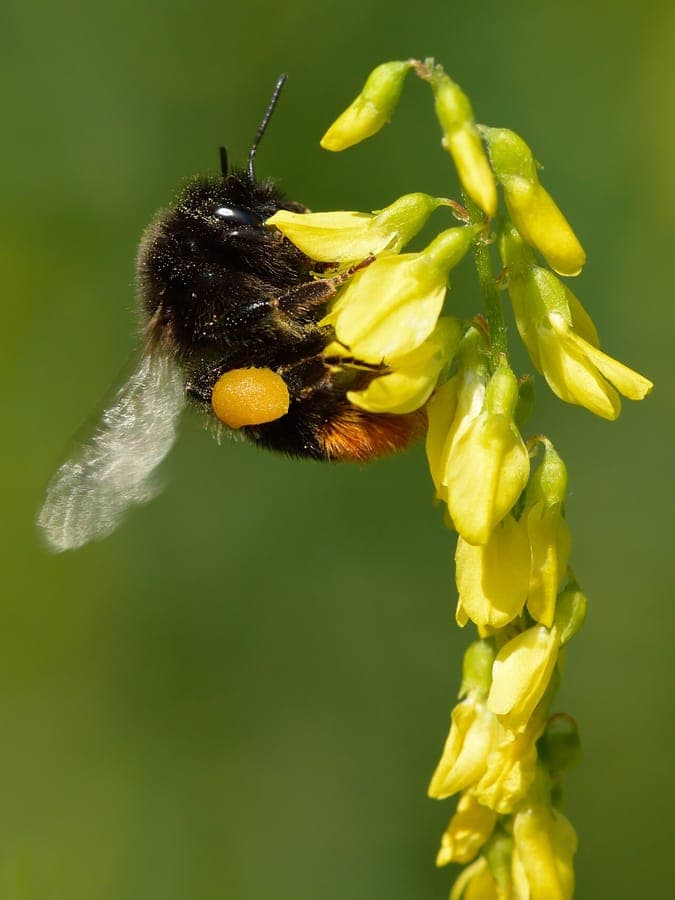
Ivar Leidus / CC BY-SA 4.0, via Wikimedia Commons
Yellow sweetclover: complete guide
Melilotus officinalis
¿Quieres ver Yellow sweetclover: complete guide en tu jardín?
1 minuto, sin tarjeta de crédito
Overview
Yellow sweetclover (Melilotus officinalis) is a classic biennial plant with a long history of medicinal use in Europe. Also known as common melilot or true honeyflower, this species originates from Europe through West Himalaya and the Arabian Peninsula. Yellow sweetclover differs from its white namesake primarily through yellow flowers and its extensive use in herbal medicine for more than two millennia. This plant is ideal for gardeners seeking both aesthetics and functional properties, as it produces splendid flowers while simultaneously containing useful substances that historically provided benefits to animals and possibly humans.
The name officinalis points to its historical medicinal value. In medieval herbals and later pharmacological texts, yellow sweetclover was recommended for diverse applications, from circulation support to inflammation relief. This makes it a plant of particular interest to gardeners with interest in ethnobotany and traditional medicine.
Appearance and Bloom Cycle
Yellow sweetclover reaches 60-150 cm height under normal growing conditions, making it taller than melilotus indicus but shorter than melilotus altissimus. The growth pattern is strongly vertical, with minimal side branching in year 1 and more branching in year 2. The plant has an elegant, rising appearance that looks good in perspective-conscious designs.
The stems are sturdy, smooth, and green with no or very minimal hairiness. They have a characteristic fine texture. In very warm or dry conditions, stems can become slightly yellow.
The leaves consist of three green leaflets 6-12 mm long with finely toothed margins. These are slightly larger than M. albus but smaller than M. altissimus, providing a pleasant proportion.
The bloom period is the showstopper: long, slender spikes of 4-6 cm completely packed with small, intensely yellow flowers of approximately 2-3 mm. The yellow color is warmer and more saturated than in M. indicus, almost golden. The bloom period runs from May through October, with peak around July-August. Importantly: yellow sweetclover has a characteristic fragrance - less intense than M. albus but pleasantly vanilla-like with lemony tones.
Ideal Location
Yellow sweetclover thrives optimally in full sun: at least 6 hours of uninterrupted direct sunlight daily. With less sun (4-5 hours) the plant grows taller but sparser with flowers. Sheltered locations are favorable, although the plant is reasonably wind-resistant due to its sturdy stems.
The plant also grows very well against south-facing walls or other heat-radiating surfaces, where microclimates are warmer. This can extend bloom and stimulate fragrance production.
Soil Requirements
Yellow sweetclover is as resilient with soil types as other melilotus species. pH 5.5 to 7.5 is completely acceptable. The plant accepts poor to moderate soils thanks to nitrogen fixation.
Although yellow sweetclover grows on minimal soil, it responds positively to moderate nutrient input. Application of 3-4 cm well-aged compost in the top 20 cm promotes robust growth and better flower production.
Drainage is important but less critical than with many garden plants. The plant tolerates moderately draining moisture-holding soils, though optimal drainage is always preferable.
Diseño gratis
¿Quieres ver Yellow sweetclover: complete guide en tu jardín? Crea un diseño gratis ahora.
Watering
Once established (4-5 weeks after sowing) yellow sweetclover is reasonably drought-tolerant thanks to its taproot. Young seedlings must, however, be kept consistently moist: water two to three times weekly until true leaf pairs appear.
In normal growing years in temperate Europe like the Netherlands you typically need no supplemental water beyond emergence. However, in very dry years (no rain 2+ weeks) one watering per week can extend bloom period and keep plants fuller.
Pruning
Yellow sweetclover requires minimal pruning. You can remove spent flower spikes to extend bloom period (usually 1-2 weeks), but this is optional.
Second-year plants need only minimal care: remove dead stems in early spring for disease prevention.
Maintenance Calendar
April-May: Sow seed directly or transplant seedlings. Thin to 30-40 cm spacing. Apply fertilizer at 2-3 leaf pairs.
June-July: Monitor for insect damage (very rare). Check moisture in dry periods.
August-September: Deadhead flowers minimally. Expect seed setting now.
October-November: Let seed dry in-situ. Remove second-year plants.
December-March: Ground preparation.
Winter Hardiness
Yellow sweetclover is a true biennial plant and hardy in zones 2-10 (USDA). In the Netherlands (8a/8b) it overwinters without problem. First-year rosettes tolerate temperatures to -25°C.
Companion Plants
Yellow sweetclover is more versatile than its namesakes in plant associations thanks to its medium height. Combine with:
Lower groups of Catananche caerulea (blue), Scabiosa (purple), and Achillea (yellow-red) create interesting color plots. Melilotus officinalis provides yellow background.
In wild meadows with Knautia macedonica, Centaurea scabiosa, and Foeniculum groups, yellow sweetclover slots between for yellow-purple contrast.
Medicinal Application (Informational)
Yellow sweetclover contains coumarin and other active substances of which traditional use was reported for circulation support and inflammation relief. Modern studies confirm coumarin as biologically active. This makes yellow sweetclover interesting for herb gardens. Note: coumarin can affect certain medications; consult a professional before medicinal use.
Closing
Yellow sweetclover offers a unique combination of aesthetics, ecological benefit, and historical-medicinal interest. For seeds check specialist nurseries. For container plants, many garden centers stock Melilotus groups.
This biennial plant is valuable in bee gardens, medicinal herb gardens, and wildflower mixes. With minimal care yellow sweetclover blooms abundantly and produces useful seed. Visit gardenworld.app for integration of this multifunctional plant in sustainable garden designs. Gardenworld.app helps you harmonize traditional medicinal plants with modern gardening principles.
¿Quieres ver Yellow sweetclover: complete guide en tu jardín? Crea un diseño gratis ahora.
Sube una foto, elige un estilo y obtén un diseño fotorrealista con lista de plantas en menos de un minuto.
Más de 10.000 jardines diseñados
Sin tarjeta de crédito


Plantas similares
White sweet-clover: complete guide
Melilotus albus
White sweet-clover is a biennial plant with fragrant white flower spikes. Ideal for bee gardens, wildflower meadows, and green manuring. Easy to grow and maintain.
Lotus corniculatus: complete guide
Lotus corniculatus
Discover bird's-foot trefoil: a robust, evergreen groundcover with bright yellow flowers. Ideal for rocky situations and naturalistic gardens.
Hop trefoil: complete guide
Medicago lupulina
Hop trefoil (Medicago lupulina) is a legume valuable for ground cover and fodder. Learn about cultivation, maintenance and benefits.