
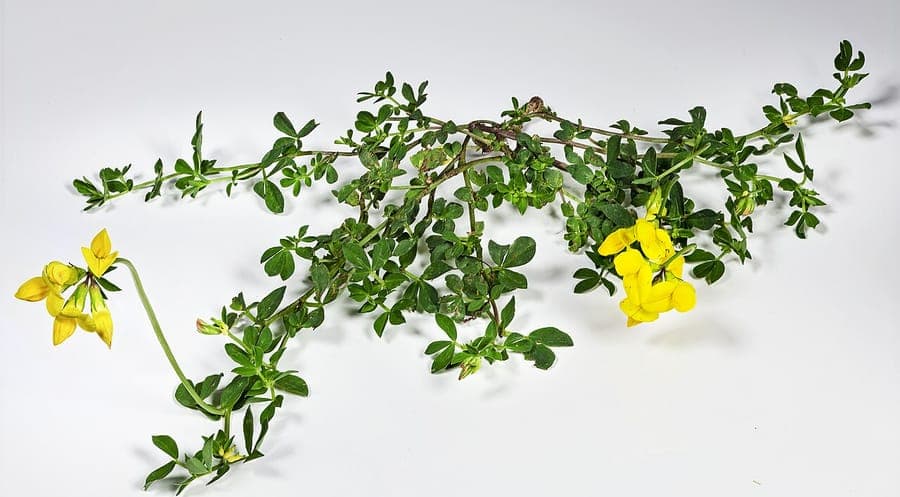
Didier Descouens / CC BY-SA 4.0, via Wikimedia Commons
Lotus corniculatus: complete guide
Lotus corniculatus
¿Quieres ver Lotus corniculatus: complete guide en tu jardín?
1 minuto, sin tarjeta de crédito
Overview
Lotus corniculatus, commonly called bird's-foot trefoil or common bird's-foot trefoil, is a popular and resilient groundcover from Europe and temperate Asia. This evergreen, low-growing perennial thrives in diverse conditions and proves particularly valuable in rock gardens, lawns and naturalistic garden settings. With its bright yellow flowers, compact growth habit and minimal maintenance requirements, this represents an intelligent choice for many gardeners.
Originally native to Europe, the Mediterranean region and temperate Asia, bird's-foot trefoil grows wild on grasslands, rocky slopes and along roadsides. This broad geographic range indicates how adaptable this plant truly is. In many European countries it has naturalized and grows freely in wild places. This makes it an excellent choice for gardeners wanting a plant that feels almost natural in the landscape.
The plant is particularly valuable because it fixes nitrogen in the soil, giving it an advantage in less nutrient-rich soils. The roots contain bacteria that convert atmospheric nitrogen into plant-available forms, meaning the plant and its neighbors benefit from increased nutrient availability. This makes bird's-foot trefoil ideal for naturalistic gardens where you want minimal artificial inputs. Additionally, it is highly attractive to insects, particularly bees and butterflies, and forms a vital food source for many small creatures in the ecosystem.
Appearance & bloom cycle
Lotus corniculatus grows as a low, spreading perennial, typically 10-40 cm tall and 30-60 cm wide. The plant forms dense green mats of fine, wiry branches and finely textured foliage. The leaves are small, composed of 5 tiny leaflets, creating the characteristic bird's-foot appearance, especially visible from close inspection. The foliage is evergreen, so green color persists throughout winter.
The flowers are the true attraction of this plant. They appear in small rounded clusters at stem ends from May through August, with peak display in June and July. The blooms are bright yellow, typically 8-12 mm long, growing in clusters of 2-8 flowers per rounded head. Some flowers may develop orange-yellow or even red-spotted coloring, particularly as they age. This color variation adds charm to the overall display.
Once pollinated, narrow seed pods develop, approximately 1-2 cm long, renowned for their bird's-foot-like shape with stiffly projecting segments. These pods are amusing and interesting, adding extra visual interest extending into late season. The plant reaches full size within the first or second season and gradually spreads via seeds and underground runners.
Ideal location
Lotus corniculatus grows best in full sun to light shade. The plant requires at least 4-5 hours of direct daily sunlight for optimal blooming. In more shaded situations it will survive and grow, but with significantly fewer flowers. This is a plant that grows in virtually all aspects, though south or west-facing positions promote flowering.
The plant is highly wind-tolerant and grows well in windy situations. This makes it ideal for coastal or mountain gardens. It also grows excellently on slopes and other difficult-to-reach places, as it requires only minimal care once established. Its low growth habit means it doesn't compete with taller plants.
The plant also thrives in poor, inhospitable places where little else grows. This makes it ideal for gardeners wanting to green difficult, unwelcoming corners.
Soil requirements
Lotus corniculatus is unfussy about soil and grows in virtually all soil types, from sand to clay, acidic to alkaline. The ideal pH is between 4.8 and 8.0, so it accepts virtually anything. This is an enormous advantage of this plant. It grows well in poor, lean soil and actually performs better than in over-fed soil. It tolerates salt, making it suitable for coastal gardens.
When planting, incorporating organic material is helpful but not essential. The plant truly grows in difficult conditions without any preparation. This makes it ideal for challenging locations. Once established it needs no feeding; indeed, heavy feeding can cause excessive foliage growth and fewer flowers.
Diseño gratis
¿Quieres ver Lotus corniculatus: complete guide en tu jardín? Crea un diseño gratis ahora.
Watering
Lotus corniculatus is drought-tolerant once established, though it performs better with some water. Newly planted specimens should water regularly until well-rooted, approximately twice weekly during the growing season. Once established (after 1 year), the plant tolerates considerable drought. In most gardens, rainfall alone suffices except during very dry periods.
The plant thrives on lean, dry soil and is actually more likely to suffer from overwatering than insufficient water. This makes it ideal for water-conscious gardeners. Container-grown specimens will need more frequent watering.
During winter virtually no watering is needed. The plant isn't truly dormant because it's evergreen, but it uses considerably less water.
Pruning
Lotus corniculatus needs minimal pruning. The plant grows naturally compact and forms attractive mats without much guidance. Optionally, at season's end (October-November), lightly trim the plant to keep it tidy and compact. This also promotes denser growth the following season. Some gardeners trim it short after flowering (August) for a fresher appearance.
The plant recovers well from heavy pruning, so if it becomes largely dead or excessively overgrown, it can undergo heavy cutting in spring. This will revitalize it.
Faded flowers and dead twigs should be removed year-round for neatness.
Maintenance calendar
April: Check for frost damage. Perform light pruning if needed. Add some well-rotted compost.
May-August: Water regularly, especially during dry spells. Enjoy yellow flowers and bee activity. Allow seeds to form and self-sow.
August-September: Optional light pruning after flowering. Continue watering.
October-November: Light trim for neatness. Reduce watering as season ends.
December-March: Minimal maintenance needed. Heavy frost damage very unlikely. Remove wintered dead leaves.
Winter hardiness
Lotus corniculatus is very winter hardy and tolerates temperatures down to approximately -25°C, making it suitable for USDA zones 3-10. This is remarkable given its southern origin, indicating the plant has adapted to many different climates. The plant is practically indestructible in temperate climates.
Even in very harsh winters, the plant will practically never die, though it may suffer some foliage damage. It regenerates vigorously in spring. No winter protection is needed.
The evergreen nature means foliage remains visually interesting year-round, even in snow.
Companion plants
Lotus corniculatus works well in wild and naturalistic gardens as an underplanting for almost anything. It combines well with other low green groundcovers like Thyme and Sedums. In alpine gardens it can grow with other alpine groundcovers. It also works well as an edging plant along grass pathways or flower borders.
The plant excels in meadow-like landscapes with grasses and other wildflowers. It combines well with other insect-friendly plants like Marjoram, Oregano and Catmint. Because it attracts birds, it grows well near bird feeders and houses.
It works well in company with other nitrogen-fixing plants like other clovers. This would indeed be extremely valuable for improving soils.
Conclusion
Lotus corniculatus is an excellent choice for gardeners wanting a reliable, low-maintenance groundcover with both visual and ecological interest. With its bright yellow flowers, evergreen foliage and adaptability, it performs consistently well. Whether you want a rock garden, meadow, or naturalistic landscape, this plant is likely a winner.
Explore more garden ideas and plant advice at gardenworld.app, where you'll find detailed guidance for integrating these groundcovers into your garden design. With help from gardenworld.app, you can easily create a vibrant, insect-friendly front garden that brings pleasure year after year with minimal effort.
¿Quieres ver Lotus corniculatus: complete guide en tu jardín? Crea un diseño gratis ahora.
Sube una foto, elige un estilo y obtén un diseño fotorrealista con lista de plantas en menos de un minuto.
Más de 10.000 jardines diseñados
Sin tarjeta de crédito


Plantas similares
Tall Silky Lupine: complete guide
Lupinus elatus
Tall silky lupine is a fast-growing Californian perennial with silvery foliage and blue-purple flower spikes, ideal for a prairie-style garden.
Garfield Lupine: complete guide
Lupinus garfieldensis
The Garfield lupine is a rare, fast-growing American perennial for alkaline, dry grassland gardens, with striking blue flower spikes.
Lupinus elegans: complete guide
Lupinus elegans
Lupinus elegans, the elegant lupine, is a spectacular blooming plant from Mexico with blue flower spikes. Care, cultivation and garden use.