
Garfield Lupine: complete guide
Lupinus garfieldensis
¿Quieres ver Garfield Lupine: complete guide en tu jardín?
1 minuto, sin tarjeta de crédito
Overview
The Garfield lupine (Lupinus garfieldensis) is a rare perennial in the pea family, Fabaceae, with a strikingly limited distribution confined to Garfield County and the surrounding canyon grasslands in Washington State, United States. The species is named after this county and grows exclusively in the characteristic, basalt-formed grasslands of this region, known as the "scablands" of the Columbia Plateau.
This lupine is closely related to the more widely distributed Lupinus sericeus, silky lupine, and was previously even treated as a variety of that species before taxonomic research recognised it as a distinct, endemic plant. Because of its extremely restricted natural range, the Garfield lupine is considered a botanical rarity, making it particularly interesting for enthusiasts of unusual, uncommon perennials.
The species naturally grows with multiple stems from the base, unlike many other lupine species that form only a single crown stem per plant. This gives the Garfield lupine a fuller, more shrub-like appearance that sets it apart from, for example, tall silky lupine, and makes it an interesting focal point in a varied border.
In the garden, the Garfield lupine offers a unique opportunity to recreate a piece of the American inland landscape, with its characteristic blue flower spikes above fine, silvery foliage. The plant is particularly well suited to alkaline, dry grassland gardens and steppe-style planting where many other perennials struggle to thrive. Because the species occurs in only a handful of wild populations, seed or plant material is scarce in trade and usually available only through specialist nurseries focused on North American steppe plants.
Appearance and bloom
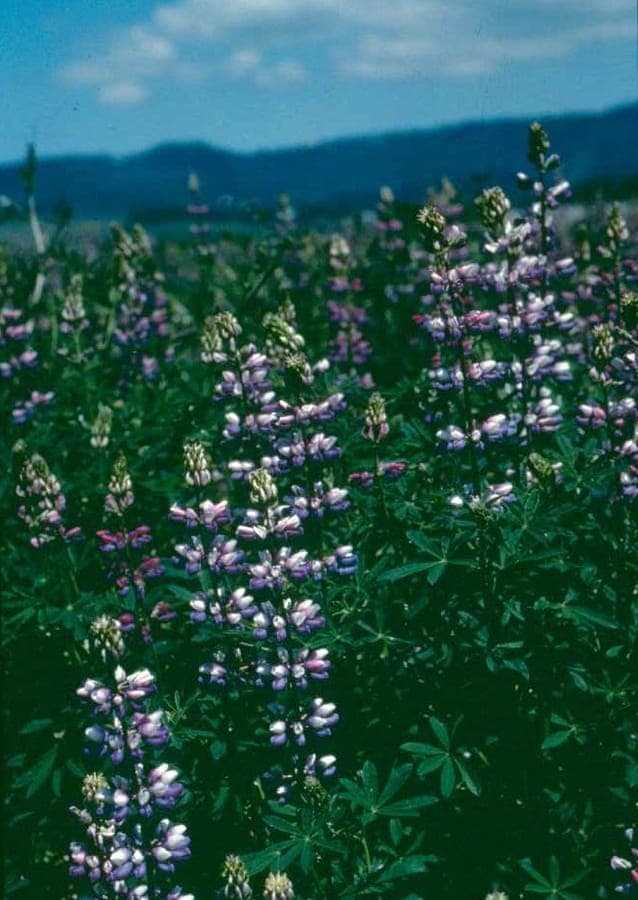
The Garfield lupine grows quickly into a plant with multiple stems arising from the base, giving it a fuller, more shrub-like habit compared with lupine species that form only a single crown stem. The plant reaches an average of 30 to 60 centimetres in height and has finely textured, palmately compound foliage with a light silky covering of hairs.
Flower spikes appear in late spring to early summer, bearing dozens of small, pea-shaped flowers in shades of blue to blue-purple, characteristic of most lupine species from the interior Pacific Northwest. After flowering, striking, hairy pods develop, adding to the plant's ornamental value well into late summer, when they split open and disperse the seed.
Ideal location
This lupine performs best in full sun in an open, warm location that mimics its natural habitat in the canyon grasslands of Washington. At least six hours of direct sunlight per day is essential for compact growth and abundant flowering.
Given its origin in dry, rocky grassland, this species is particularly well suited to gravel gardens, alkaline rock gardens, and steppe-style planting. Avoid shady or damp spots, as the plant is adapted to a dry, open landscape and cannot tolerate prolonged wet conditions.
Soil
The Garfield lupine stands apart from many other lupine species in its preference for neutral to slightly alkaline soil, with a pH between 7.0 and 7.5. This reflects the basalt-derived, calcium-rich soils of its natural habitat in inland Washington, in contrast to most lupine species, which actually prefer acidic soil.
This trait makes the plant particularly valuable for gardeners with alkaline soil, where many other lupines perform poorly. The soil must be well-draining; heavy, wet clay quickly leads to root rot. Lean to moderately fertile soil gives the best results, since the plant, as a legume, can fix its own nitrogen through root nodules. When planting in naturally more acidic soil, a handful of garden lime or ground shell grit can be mixed into the planting hole to raise the pH slightly toward the range this plant prefers. Avoid using acidic potting compost or peat, as this can hinder the growth of this particular lupine.
Diseño gratis
¿Quieres ver Garfield Lupine: complete guide en tu jardín? Crea un diseño gratis ahora.
Watering
Young plants need regular watering during their first season after planting to develop a deep root system capable of withstanding later dry spells. Water once the top layer of soil feels dry.
Once established, the Garfield lupine is highly drought-tolerant, consistent with its origin in the dry canyon grasslands of the interior. In most European climates, natural rainfall is more than sufficient, and overwatering should be avoided to prevent root rot.
Pruning
After flowering, spent flower spikes can be cut back to just above the foliage to encourage a lighter second flush of bloom. Leave some pods in place if you want the plant to spread through self-seeding in the garden.
In late autumn, above-ground growth can be cut back, particularly in gardens where the plant serves as a permanent border feature. Otherwise, simply remove dead or damaged leaves during the growing season.
Maintenance calendar
March-April: new stems emerge from the base; fertilising is rarely necessary.
May-June: main bloom period with blue flower spikes; plenty of bee and bumblebee activity.
July-August: pods develop and split open; seed drops or can be collected.
September-October: spent stems can be cut back.
November-February: winter dormancy; above-ground parts largely die back.
Winter hardiness
The Garfield lupine is hardy to USDA zones 5 to 6, corresponding to hardiness zones common across the Netherlands, Belgium, Germany, and France. The inland climate of Washington features cold winters and dry summers, which has given the plant robust winter hardiness despite its restricted natural range.
The plant dies back above ground in colder climates but reliably resprouts from the rootstock in spring, provided winter drainage is adequate to prevent root rot.
Companion plants
The Garfield lupine pairs beautifully with other drought-tolerant grassland plants such as Achillea, Echinacea, and ornamental grasses like Stipa tenuissima and Festuca glauca, which tolerate the same dry, alkaline conditions. The blue flower display creates a lovely contrast against yellow tones from Rudbeckia or Coreopsis.
For a naturalistic, North American-inspired grassland scheme, the plant can be combined with other native lupine species such as Lupinus sericeus or Lupinus caudatus. Plant the Garfield lupine in small groups of three to five for the most naturalistic effect, giving the plant enough room so its multiple basal stems can develop freely without competition from closely spaced neighbours.
Closing
The Garfield lupine is a rare, fast-growing perennial that, with its blue flower spikes and preference for alkaline soil, offers a unique addition to any dry, sunny grassland garden. Visit GardenWorld to see how this plant fits into a complete garden design, and check the GardenWorld plant database for further growing details.
¿Quieres ver Garfield Lupine: complete guide en tu jardín? Crea un diseño gratis ahora.
Sube una foto, elige un estilo y obtén un diseño fotorrealista con lista de plantas en menos de un minuto.
Sin tarjeta de crédito


Plantas similares
Lupinus sericeus: complete guide
Lupinus sericeus
Silky lupine grows to 60 cm with purple-blue flower spikes. Blooms May-July. Deep-rooted, drought-tolerant wildflower native to west.
Lupinus leucophyllus: complete guide
Lupinus leucophyllus
Velvet lupine grows to 50 cm with purple flower spikes. Woolly foliage in silvery-white, blooms June-July. Alpine plant, drought-tolerant.
Longspur lupine: complete guide
Lupinus arbustus
This hardy North American lupine offers spectacular purple-blue flowers and thrives in dry, sunny gardens with minimal water.