
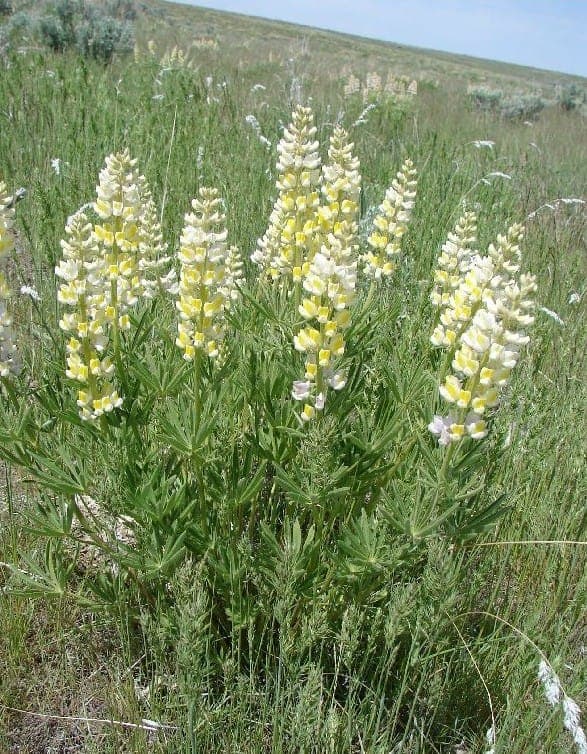
Sheri Hagwood / Public domain, via Wikimedia Commons
Longspur lupine: complete guide
Lupinus arbustus
¿Quieres ver Longspur lupine: complete guide en tu jardín?
1 minuto, sin tarjeta de crédito
Overview
Lupinus arbustus, known as longspur lupine, is a native North American subshrub belonging to the legume family. This hardy plant brings vibrant colour to the garden with dense, tall flower spikes that appear throughout summer. Perfect for dry borders and naturalistic landscapes, it thrives where other plants struggle.
Appearance & Bloom
This substantial perennial reaches 60-90 cm in height, forming an upright, woody subshrub. The foliage is finely divided into finger-like leaflets with silvery tones. Flowers emerge in dense spikes from July through September, displaying rich purple-blue hues often with white or cream markings on the upper petals.
Ideal Location
Longspur lupine demands full sun exposure of 6-8 hours minimum daily. Plant in a location where the flower spikes can be appreciated from viewing areas. This species excels on dry hillsides, rocky outcrops, and border edges. Pair with other sun-loving, drought-tolerant companions for dramatic effect.
Soil
Well-draining, poor to moderately fertile soil is critical. Rich soils encourage foliage at the expense of flowers. Acidic to neutral pH (5.5-7.0) suits this species well. Amend heavy clay with gravel and sand for superior drainage.
Watering
Once established, this lupine requires minimal irrigation. Water deeply but infrequently during dry spells. Water young plants regularly during their first season to encourage deep rooting. Avoid waterlogging, as wet soil promotes root rot and fungal diseases.
Diseño gratis
¿Quieres ver Longspur lupine: complete guide en tu jardín? Crea un diseño gratis ahora.
Pruning
Deadhead spent flower spikes to encourage continued blooming. Remove any dead, diseased, or winter-damaged wood in spring. Light shaping every third year maintains compact form and promotes fuller branching without overstimulating soft growth.
Maintenance Calendar
May: Plant after the last hard frost in well-draining soil. June: Water regularly to establish roots. July-September: Enjoy prolific blooms; remove faded flowers. October: Collect seed heads. November-April: Winter dormancy.
Winter Hardiness
Fully hardy to -20C and below. This plant is native to the cold mountain regions of the American West and tolerates severe winters, snow, and ice stress without injury.
Companion Plants
Pair with drought-loving, sun-demanding companions: Salvia greggii, Lavandula angustifolia, Stipa tenuissima, Centranthus ruber, and Nepeta. These combinations create striking colour gradations and textural interest across seasons.
Closing
Longspur lupine delivers years of colour with virtually no maintenance once established. Seek this beauty at local nurseries or garden centers. Once thriving in your garden, it rewards you annually with cascades of purple-blue spikes. Discover more plant guides at gardenworld.app.
¿Quieres ver Longspur lupine: complete guide en tu jardín? Crea un diseño gratis ahora.
Sube una foto, elige un estilo y obtén un diseño fotorrealista con lista de plantas en menos de un minuto.
Más de 10.000 jardines diseñados
Sin tarjeta de crédito


Plantas similares
Tall Silky Lupine: complete guide
Lupinus elatus
Tall silky lupine is a fast-growing Californian perennial with silvery foliage and blue-purple flower spikes, ideal for a prairie-style garden.
Garfield Lupine: complete guide
Lupinus garfieldensis
The Garfield lupine is a rare, fast-growing American perennial for alkaline, dry grassland gardens, with striking blue flower spikes.
Lupinus elegans: complete guide
Lupinus elegans
Lupinus elegans, the elegant lupine, is a spectacular blooming plant from Mexico with blue flower spikes. Care, cultivation and garden use.