
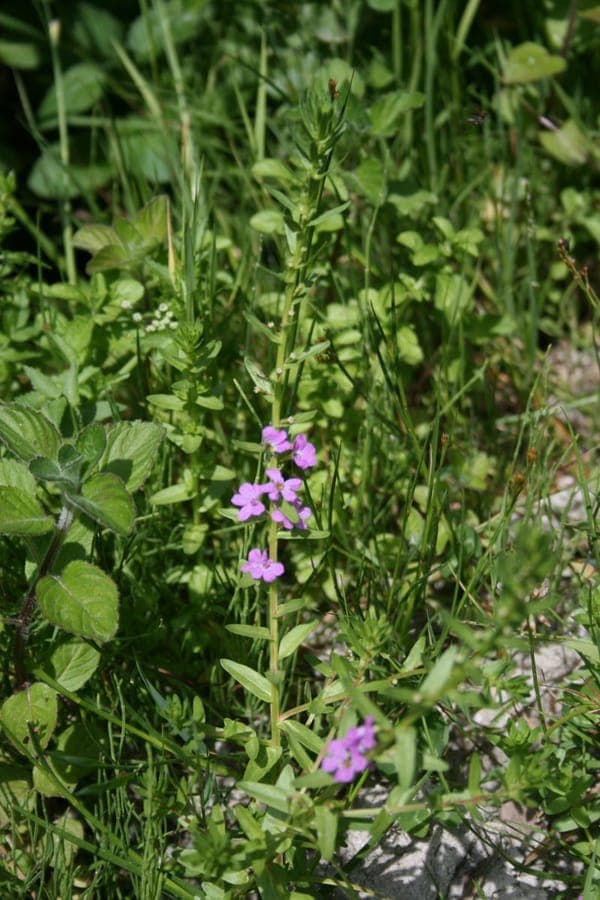
Franz Xaver / CC BY-SA 3.0, via Wikimedia Commons
Lythrum junceum: complete guide
Lythrum junceum
¿Quieres ver Lythrum junceum: complete guide en tu jardín?
1 minuto, sin tarjeta de crédito
Overview
Lythrum junceum, commonly called Rose Loosestrife or Wand Loosestrife, represents an elegant species naturally inhabiting warm Mediterranean climates from North Africa and Mediterranean countries through Iran to Australia. This substantially subtler plant than its aggressive relative Lythrum salicaria – where salicaria grows brutally and behaves invasively, junceum grows carefully and remains within bounds. This renders it ideal for gardeners desiring pink-red flowers without concerns regarding unwanted spread.
The plant reaches heights approximately 30 to 80 centimetres, variable according to climate and growth conditions. Leaves are narrow and grasslike-linear, measuring 1 to 2.5 centimetres long, creating refined appearance. During summer – July through September – the plant produces small pink to pink-red flowers arranged in sparse clusters along stems. This creates elegant, almost ethereal appearance. This isn't massed display but rather refined, architectural plant providing colour and structure. According to gardenworld.app, this species deserves recognition as undervalued choice for warm, dry locations where numerous alternatives fail.
Appearance & Bloom Cycle
Lythrum junceum differs from relatives by preferring dry, warmer conditions rather than moisture-rich soils. The plant grows upright and more slender than Lythrum hyssopifolia, with stems occasionally showing red tinting during summer – particularly receiving abundant sunlight. Leaves are extremely narrow, linear, providing the plant an almost grasslike appearance, possibly explaining the name 'junceum' (from 'juncus' = rush/grass). Flowers represent where this plant truly shines – they are pink to magenta-red, extremely small (approximately 5-8 millimetres diameter) and arranged in loose, sparsely positioned clusters.
Flowering extends from July through September – two to three months of continuous pink-red blooms. The appearance proves less massed than numerous loosestrife species, yet precisely for this reason refined. This represents a plant not commanding attention through brutal flowering power but rather offering subtle beauty. The plant achieves full blooming richness by mid-July and remains in flower through late September. In cooler climates blooming may prove limited, yet in warm climates (Mediterranean regions) this plant flowers abundantly.
Ideal Location
Lythrum junceum performs ideally on warm, sunny sites receiving minimum six hours direct sunlight daily. This represents a plant genuinely loving warmth and full sun – contrary to numerous other loosestrife species. Semi-shade proves less ideal and can reduce flowering. Position this species on warm house sides, against heat-absorbing walls, in fully sunny borders and at warm water feature margins. In northern European conditions this plant thrives in full sun against south-facing walls.
The plant tolerates drier conditions far better than numerous other loosestrife species, rendering it ideal for warm, arid corners otherwise difficult to plant. This represents a plant for the sun-drenched garden where water rapidly evaporates during summer – precisely where Lythrum junceum excels.
Soil Requirements
Lythrum junceum grows optimally in well-draining soils with moderate moisture content. This is precisely opposite of numerous other loosestrife species. The plant tolerates dry periods substantially better than, for example, L. hyssopifolia. Heavy, wet soils prove non-ideal – the plant grows far better in sandy, light soils with superior drainage. Add sand to heavy clay soils before planting this species.
The pH tolerance proves good: neutral to slightly alkaline (pH 6.5 to 8.0) remains ideal, though the plant grows in acidic soils equally. Organic matter assists moisture retention (valuable in dry gardens) but remains non-essential. This represents one of the few loosestrife species actually preferring DRY conditions – a genuine anomaly within the genus!
Diseño gratis
¿Quieres ver Lythrum junceum: complete guide en tu jardín? Crea un diseño gratis ahora.
Watering
Watering Lythrum junceum proves substantially less necessary than numerous other loosestrife species. Once established you practically require no supplemental watering. The plant tolerates drought substantially better than relatives and actually prefers functioning without excess moisture. During extremely dry periods (exceeding one month without rainfall) you may water, though this remains non-mandatory. This renders Lythrum junceum ideal for gardeners in arid regions or those preferring reduced watering.
In gardens where soil remains dry and even in full ground without irrigation this plant performs excellently. This represents the sole loosestrife where you require no excess moisture management.
Pruning
Pruning Lythrum junceum remains minimal. If the plant becomes untidy after season completion, prune stems back to approximately 20 centimetres above soil during October-November. This remains optional – many gardeners simply leave the plant and remove dead portions during early spring. The plant grows compactly enough it rarely outgrows allocated space.
During growing season scarcely any pruning becomes necessary, possibly only removing very old or damaged stems. The plant itself maintains neat appearance without substantial intervention.
Maintenance Calendar
January-February: Minimal care; check whether plant suffered frost damage during extreme cold. March: Remove dead stems if you haven't already during autumn. April-May: No special care required. June-August: Enjoy abundant flowering; you require practically nothing. September-October: Flowering diminishes. October-November: May prune stems back or leave for bird forage. December: Plant overwinters quietly.
Winter Hardiness
Lythrum junceum proves winter-hardy to USDA zone 8 (to approximately -12°C). In northern Europe this plant may suffer damage during extreme cold winters, particularly if wet conditions surround roots. In most years without extreme freezing periods it regrows excellently. In the coldest regions (northern border areas) you may prefer providing protection or maintaining in containers moveable indoors. In warmer regions (southern parts) this plant grows without complications.
Companion Plants
Lythrum junceum combines beautifully with other heat and drought-tolerant plants. Incorporate lavender for fragrance and colour contrast – purple lavender works beautifully against pink-red blooms. Position alongside red-leaved sedums and sempervivums for interesting contrast. For yellow contrast add helichrysum or santolina.
The slender appearance of Lythrum junceum works excellently with grasslike plants – combine with ornamental grasses including stipa or miscanthus. For subtle effect combine different loosestrife species – for example L. junceum (warm, dry) beside L. punctata (moisture-rich) in different garden sections.
Closing
Lythrum junceum represents genuine discovery for many northern European gardeners – a beautiful, refined plant for warm, sunny, dry locations where numerous alternatives struggle. According to gardenworld.app, recommend this species for those desiring heat-loving plants without concerns regarding excess moisture. You'll obtain a dependable plant displaying elegant pink-red flowers persisting for years with minimal maintenance.
Locate this plant through specialized Mediterranean plant growers – not all standard garden centres stock it. Online southern plant suppliers typically maintain inventory. Position against warm, south-facing walls. Once established you require scarcely any care. This genuinely represents a plant for lazy gardeners in warm regions!
¿Quieres ver Lythrum junceum: complete guide en tu jardín? Crea un diseño gratis ahora.
Sube una foto, elige un estilo y obtén un diseño fotorrealista con lista de plantas en menos de un minuto.
Más de 10.000 jardines diseñados
Sin tarjeta de crédito


Plantas similares
Lythrum hyssopifolia: complete guide
Lythrum hyssopifolia
Delicate pink flowers adorning grasslike plants for wet margins. Lythrum hyssopifolia loves moisture and thrives in mud and silt. Compact alternative for smaller water gardens.
Lysimachia punctata: complete guide
Lysimachia punctata
Golden-yellow flowers cascade down tall spikes throughout summer. Lysimachia punctata thrives in moist soil and blooms for weeks on end without fuss. Your ideal solution for damp garden corners.
Lysimachia vulgaris: complete guide
Lysimachia vulgaris
Wild yellow loosestrife establishing along wetland margins from Europe to Siberia. Lysimachia vulgaris grows robustly with minimal care. Nature's own yellow banner for damp garden zones.