
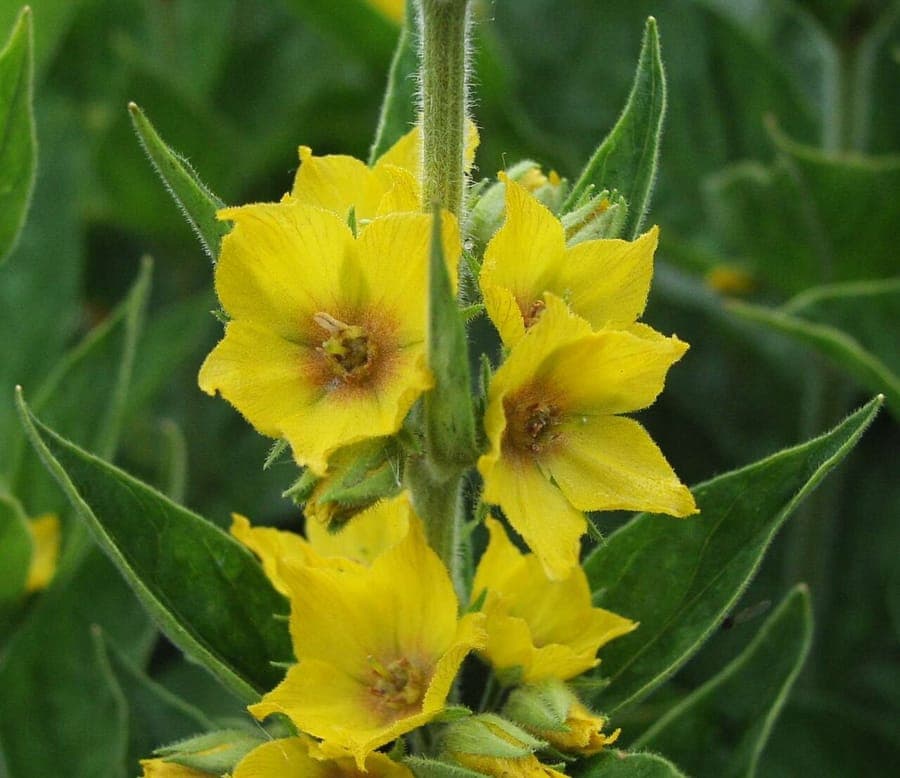
sarefo / CC BY-SA 3.0, via Wikimedia Commons
Lysimachia punctata: complete guide
Lysimachia punctata
¿Quieres ver Lysimachia punctata: complete guide en tu jardín?
1 minuto, sin tarjeta de crédito
Overview
Lysimachia punctata, commonly known as Large Loosestrife or Yellow Primrose Willow, is a robust perennial that genuinely earns its place in any garden. This European native thrives naturally in moisture-rich habitats from Eastern and Central Europe through to Northern Iran, explaining its obvious preference for wet, heavy soils. Once established, Lysimachia punctata flourishes with minimal intervention and produces abundant golden-yellow flowers arranged in distinctive spiral whorls stacked tightly along the stems. The plant reaches heights between 60 and 90 centimetres and spreads via underground rhizomes, making it an excellent choice for gardeners wanting to quickly fill damp zones. This spreading habit is precisely what makes it attractive to most gardeners – you can transform an awkward wet patch into a productive flower display with just a handful of plants.
The natural distribution of this species across European wetlands and damp margins explains why it performs so reliably in nearly every temperate region. It's the kind of plant that develops real character through the seasons and consequently appears in numerous historical European gardens. Lysimachia punctata excels along pond edges, in water features, and in those challenging damp corners where conventional perennials simply fail. According to gardenworld.app, this plant is especially valuable for families who spend significant time in their gardens – the weeks-long yellow bloom display provides genuine seasonal joy and presence. The flowers attract bees, butterflies, and other pollinators throughout its extended flowering season, essentially transforming any damp patch into a thriving habitat.
Appearance & Bloom Cycle
The flowers of Lysimachia punctata represent its greatest strength. They develop in dense, spiral whorls arranged tightly around the stems, creating a visually striking display that remains distinctive from considerable distances. Each individual flower consists of five bright golden-yellow petals with reddish or darker spotted markings towards the centre – hence the name 'punctata'. In full bloom, flowers reach approximately 1.5 centimetres in diameter, but the sheer quantity produces an authentic yellow spectacle. The flowering period begins in June and extends through mid-August – a full three months of continuous yellow presence in your borders.
The stems are sturdy and strongly upright, clothed with lance-shaped leaves arranged oppositely along their length. These leaves measure approximately 5 to 8 centimetres long and present an attractive dark-green appearance that provides structural appeal even when flowers fade. In autumn, foliage develops pale yellow-orange tones before senescence, contributing pleasant seasonal colour shifts. The whorled flower arrangement means no single stem dominates the display – instead, the entire plant becomes a coordinated flowering unit. This is a plant that genuinely commands attention without requiring aggressive growth habits. When planted in groups of five to seven, Lysimachia punctata creates the kind of massed yellow effect that transforms entire planting schemes and sustains visual impact across the entire summer season.
Ideal Location
Lysimachia punctata performs optimally at sites combining moisture and sunlight. The plant tolerates partial shade comfortably, but flowers most prolifically when receiving minimum four to six hours of direct sunlight daily. You can successfully place this plant beneath tree canopies around water features, provided they avoid deep shade entirely. Many gardeners position large groups of Lysimachia punctata around pond margins where they simultaneously access moister soil and receive adequate daylight.
Your chosen location significantly determines growth vigour. In moister, semi-shaded conditions, plants grow at a more measured pace – ideal if you prefer preventing enthusiastic spread across the entire garden. Conversely, on fully sunny, moisture-rich soils, growth becomes decidedly vigorous. Sometimes you'll harvest excess plants annually and relocate them elsewhere, making Lysimachia punctata perfectly suited to experimental garden schemes. For front gardens with water retention during spring months, this represents the ideal planting choice.
Diseño gratis
¿Quieres ver Lysimachia punctata: complete guide en tu jardín? Crea un diseño gratis ahora.
Soil Requirements
Although Lysimachia punctata nominally suits average soils, it genuinely excels in moisture-retentive to heavy loams. Incorporating generous organic matter – peat replacements, compost, or aged manure – substantially improves moisture retention. pH tolerance is considerable, with optimal performance across neutral to slightly acidic soils (pH 6.0 to 7.5). Sandy soils require significant organic amendment before planting this species. Rhizomatous roots prefer moisture-rich conditions, though permanent waterlogging should be avoided – waterlogged soils promote root decay.
Working in a 2-3 centimetre compost layer during spring refreshes soil structure annually. The plant performs better in consistently moist (not soggy) soils, so excellent drainage remains essential despite the plant's moisture preference. Think of this plant as preferring the 'moist forest floor' environment rather than actual bog conditions.
Watering
Watering Lysimachia punctata is one reason it appeals to busy gardeners – once established in appropriate soil, this plant requires surprisingly little supplemental irrigation. In normal conditions, especially in soils rich with organic matter, rainfall typically provides sufficient moisture. However, during extended dry periods (two weeks without measurable rain), supplemental watering benefits young plants that haven't yet established deep root systems.
During active growth (May through September), water when soil feels dry at approximately 5 centimetres depth. Morning irrigation directly at soil level (avoiding foliage) minimizes fungal disease risks. Autumn and winter require substantially reduced watering since the plant enters dormancy. In regions experiencing reliably moist winters, supplemental watering becomes unnecessary entirely.
Pruning
Pruning Lysimachia punctata is primarily about maintenance rather than shaping. Once flowers begin fading in late September or October and stems turn brownish, cut plants back to approximately 10 centimetres above ground level. Use sharp secateurs to ensure clean cuts. Early pruning reduces disease overwinter and encourages vigorous spring emergence. Some gardeners apply a soft trim around late May – removing roughly one-third of plant height – resulting in denser branching and increased flowering. If plants sprawl ungainly, selectively remove several older stems entirely to stimulate fresh development.
Maintenance Calendar
January: Inspect plants for diseases sheltering beneath fallen foliage; remove all dead material. February-March: Apply balanced fertiliser as new growth emerges. April-May: Monitor for excessive spread – this plant's rhizomes can reach neighbouring gardens. June-August: Ensure consistent moisture; deadhead spent flowers if you prefer preventing self-seeding. September-October: Cease fertiliser application; cut back dead material. November-December: Allow plant to rest undisturbed.
Winter Hardiness
Lysimachia punctata is absolutely winter-hardy throughout UK and European temperate zones (USDA zones 4-9). The plant tolerates frost down to -30°C and survives typical European winters without protection. Above-ground portions die back seasonally, while underground rhizomes rest dormantly and regrow reliably each spring. This reliability makes Lysimachia punctata an excellent choice for gardeners uninterested in winter protection concerns.
Companion Plants
Lysimachia punctata combines beautifully with moisture-loving companions. Pair with purple irises, particularly water-tolerant varieties, for striking colour contrast. Consider planting near dark-leaved hosts or burgundy heuchera for foliage interest. Combine with white astilbe for timing and moisture preference alignment. Ornamental grasses like carex or calamagrostis add textural interest. Later-flowering Solidago extends yellow interest into autumn months.
For continuous bloom, incorporate primulas (Primula japonica) which share moisture preferences. The architectural stems of daylilies work excellently alongside loosestrife's vertical emphasis. These combinations create layered visual depth far exceeding individual plant contributions.
Closing
Lysimachia punctata represents a hidden secret for many gardeners – undemanding performance, reliable flowering, and minimal care requirements combine to create genuine gardening value. Whether transforming damp corners into golden showcases or softening water feature edges, this plant consistently delivers. Gardenworld.app enthusiastically recommends Lysimachia punctata for any gardener preferring relaxed cultivation over intensive management. You'll enjoy identical reliable flowering year after year, requiring no complex feeding schedules or intricate maintenance routines. Purchase from major garden centres – both independent and chain retailers stock this widely available species. Plants establish quickly, providing immediate visual rewards.
¿Quieres ver Lysimachia punctata: complete guide en tu jardín? Crea un diseño gratis ahora.
Sube una foto, elige un estilo y obtén un diseño fotorrealista con lista de plantas en menos de un minuto.
Más de 10.000 jardines diseñados
Sin tarjeta de crédito


Plantas similares
Lysimachia vulgaris: complete guide
Lysimachia vulgaris
Wild yellow loosestrife establishing along wetland margins from Europe to Siberia. Lysimachia vulgaris grows robustly with minimal care. Nature's own yellow banner for damp garden zones.
Lysimachia thyrsiflora: complete guide
Lysimachia thyrsiflora
Yellow flower panicles clustered along stem sides throughout summer. Lysimachia thyrsiflora thrives in wet marshes and water gardens. Perfect butterfly magnet for waterside planting zones.
Lythrum junceum: complete guide
Lythrum junceum
Elegant pink-red flowers on slender stems. Lythrum junceum thrives in warm Mediterranean regions. A refined loosestrife for sun-drenched gardens.