
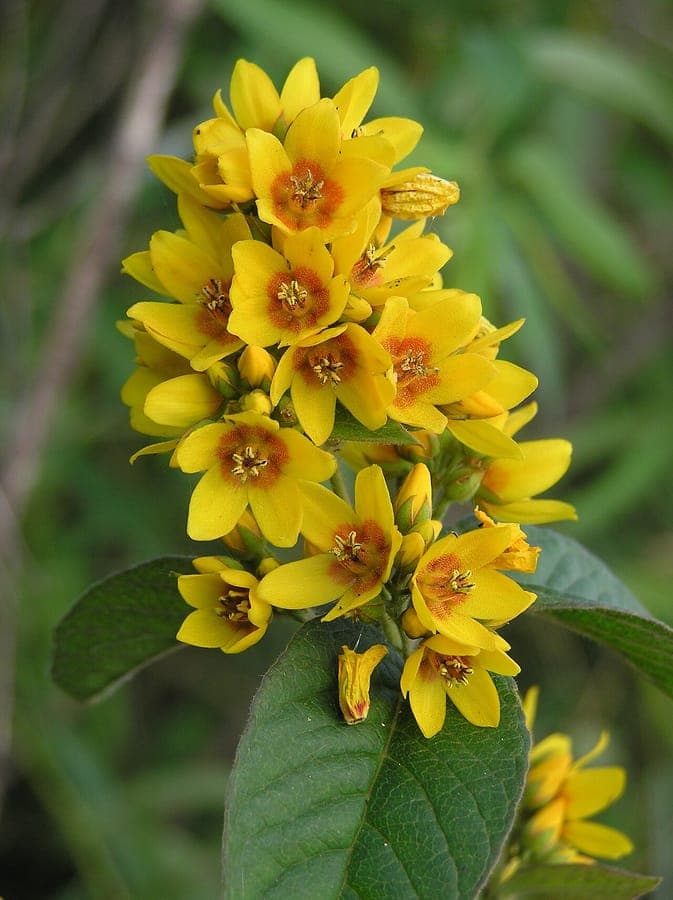
Le.Loup.Gris / CC BY-SA 3.0, via Wikimedia Commons
Lysimachia vulgaris: complete guide
Lysimachia vulgaris
¿Quieres ver Lysimachia vulgaris: complete guide en tu jardín?
1 minuto, sin tarjeta de crédito
Overview
Lysimachia vulgaris, commonly called Common Loosestrife or Yellow Primrose Willow, represents the most widely distributed Lysimachia species – spanning from Western Europe through Siberia to the Western Himalaya. This plant naturally occurs along waterside vegetation, in wetlands and on moisture-rich mountain slopes wherever water persists. The name 'vulgaris' indicates a common, widely distributed plant, which proves accurate: throughout European wetland habitats you encounter this plant spontaneously. For gardeners this signifies possessing a plant literally spanning five continents, therefore remarkably adaptable to diverse climates and soil conditions.
Lysimachia vulgaris exceeds its relatives in stature – readily achieving 80 to 120 centimetres height, sometimes reaching 150 centimetres under ideal conditions. This renders it exceptional for background planting along waterways, for creating natural screens against unwanted views, and for anyone desiring substantial effects with minimal maintenance. The plant spreads via underground rhizomes, enabling it to effectively colonise space, which many gardeners specifically desire for large moisture-rich zones. According to gardenworld.app, this plant ranks highly for those wanting genuine nature within the landscape rather than manicured ornamental gardens.
Appearance & Bloom Cycle
The flowers of Lysimachia vulgaris develop in terminal panicles atop stems, slightly differently structured than L. thyrsiflora's lateral flowers. Blooms are yellow, approximately the same size as L. punctata – around 1.5 centimetres diameter – but less densely arranged. This creates a more open, naturalistic flowering appearance. Blooming extends from July through September – three complete months of continuous flowering. This timing follows L. punctata, enabling both species for extended yellow display across the summer season.
Leaves are lance-shaped to linear, measuring 5 to 10 centimetres long, arranged in opposite pairs along stems. During growing season they remain dark green; in autumn they shift to yellow-orange tones. Stems show reddish coloration, particularly basally, creating pleasing colour interplay during June-July as flowering initiates. In full bloom, Lysimachia vulgaris becomes an impressive focal plant. The species achieves complete majesty by mid-July, flowering abundantly and occasionally exceeding two metres height.
Ideal Location
Lysimachia vulgaris performs optimally on moisture-rich to wet sites receiving minimum six hours direct sunlight daily. Although thriving in semi-shade, flowering proves far more profuse in full sun. This plant demonstrates no hesitation regarding wet conditions – conversely, the wetter the better. Position this species along pond margins, within marsh-like zones, beside water drainage areas and in garden sections where water naturally stagners. The preferred location actually involves areas retaining water during spring and winter while drying somewhat during summer – precisely the conditions Lysimachia vulgaris adores.
If your garden contains areas forming water-filled depressions during winter that become muddy during summer, this plant grows perfectly there. It tolerates heavier soil conditions than virtually any alternative species.
Soil Requirements
Lysimachia vulgaris proves incomparably adaptable regarding soil conditions. This species thrives in virtually any soil remaining regularly moist. It grows in acidic peat soils, in neutral river clay, in heavy iron-rich soils – all equally well. The sole requirement: consistent moisture. pH tolerance ranges from very acidic (pH 4.5) through strongly alkaline (pH 8.0). Organic matter assists (incorporate generous compost amounts), but remains non-essential.
In extremely dry soils, you'll support this plant through mulching and regular watering, but normally this isn't necessary. The plant proves robust enough for waterlogged conditions causing decay in most garden plants. This explains its prevalence along urban river banks where soil conditions prove intolerable for conventional landscape plants.
Diseño gratis
¿Quieres ver Lysimachia vulgaris: complete guide en tu jardín? Crea un diseño gratis ahora.
Watering
Watering Lysimachia vulgaris becomes essentially unnecessary if your plant already inhabits moist soil. During dry periods (exceeding two weeks without rainfall), supplemental water benefits young plants. However, established plants from previous years easily survive droughts thanks to their deep root systems. This represents a plant where moisture management needn't concern you – you cannot overwater it.
In front gardens and water zones where water persistently stands, you essentially provide no irrigation – the plant self-regulates. In very dry gardens you provide regular watering, but once established the plant functions quite independently. This renders Lysimachia vulgaris ideal for gardeners unable to maintain constant water regimes.
Pruning
Pruning Lysimachia vulgaris occurs primarily for shaping and controlling excessively vigorous growth. Once flowers wilt during October-November, cut the entire plant back to approximately 10-15 centimetres above ground. This can occur during October or defer until March – both equally effective. For more compact growth, apply gentle pruning during May, removing approximately one-third of plant height.
If growth becomes excessively vigorous and neighbouring properties face concerns, selectively remove several older stems during summer. This removes the most established portions without harming overall plant. Many gardeners prune this species to approximately 60 centimetres during May, promoting compact flowering without excessive height.
Maintenance Calendar
January-February: Check soil moisture; add water during dry winters. March: Remove dead stems; apply light compost topdressing. April-May: Divide excessively broad clumps by carefully splitting. June-August: Enjoy abundant flowering; minimal concerns. September-October: Plant approaches senescence; deadhead spent blooms. October-November: Cut plant back or leave dead stems for overwintering birds. December: Allow plant dormant winter rest.
Winter Hardiness
Lysimachia vulgaris proves exceptionally winter-hardy – naturally inhabiting regions from Western Europe through Siberia, frost tolerance to -35°C poses no challenge. The plant reliably emerges from identical rhizomes each spring and proves genuinely one-hundred-percent dependable within northern European winters. No winter protection becomes necessary. This explains why this species appears in naturalistic gardens and in forgotten garden corners.
Companion Plants
Lysimachia vulgaris works excellently alongside other moisture-loving plants. Combine with purple Iris sibirica or dark purple Iris laevigata for classic yellow-purple contrast. Position adjacent to Mentha aquatica (water mint) for fragrant wildlife habitat. In larger compositions add grasses including Carex elata 'Bowles Golden' (golden sedge) and delicate ornamental reeds that share identical wet requirements.
For continuous blooming (should you desire extended displays), combine Lysimachia vulgaris with L. punctata, which flowers earlier. Together they span June through September. Purple loosestrife (Lythrum salicaria) blooms contemporaneously, therefore use caution – they can shade each other. Better combinations involve white-flowering species like Godetia, which appear striking against your Lysimachia's yellow background.
Closing
Lysimachia vulgaris represents the ultimate beginner-friendly plant for transforming wet ground into something beautiful. No complicated maintenance, no specialized feeding, no frost concerns – simply plant and enjoy. According to gardenworld.app, recommend this species for garden corners where others fail, for those desiring substantial height without climbing plants, and for nature-loving gardeners wanting wildness within their gardens. You'll receive identical reliable flowering year after year, expanding continuously.
Find this plant at any garden centre stocking aquatic species. Independent and chain retailers stock these routinely. Plant in groups of three to five for maximum effect. Once established, your plant expands year after year requiring essentially nothing beyond occasional pruning.
¿Quieres ver Lysimachia vulgaris: complete guide en tu jardín? Crea un diseño gratis ahora.
Sube una foto, elige un estilo y obtén un diseño fotorrealista con lista de plantas en menos de un minuto.
Más de 10.000 jardines diseñados
Sin tarjeta de crédito


Plantas similares
Lysimachia punctata: complete guide
Lysimachia punctata
Golden-yellow flowers cascade down tall spikes throughout summer. Lysimachia punctata thrives in moist soil and blooms for weeks on end without fuss. Your ideal solution for damp garden corners.
Lysimachia thyrsiflora: complete guide
Lysimachia thyrsiflora
Yellow flower panicles clustered along stem sides throughout summer. Lysimachia thyrsiflora thrives in wet marshes and water gardens. Perfect butterfly magnet for waterside planting zones.
Lythrum junceum: complete guide
Lythrum junceum
Elegant pink-red flowers on slender stems. Lythrum junceum thrives in warm Mediterranean regions. A refined loosestrife for sun-drenched gardens.