
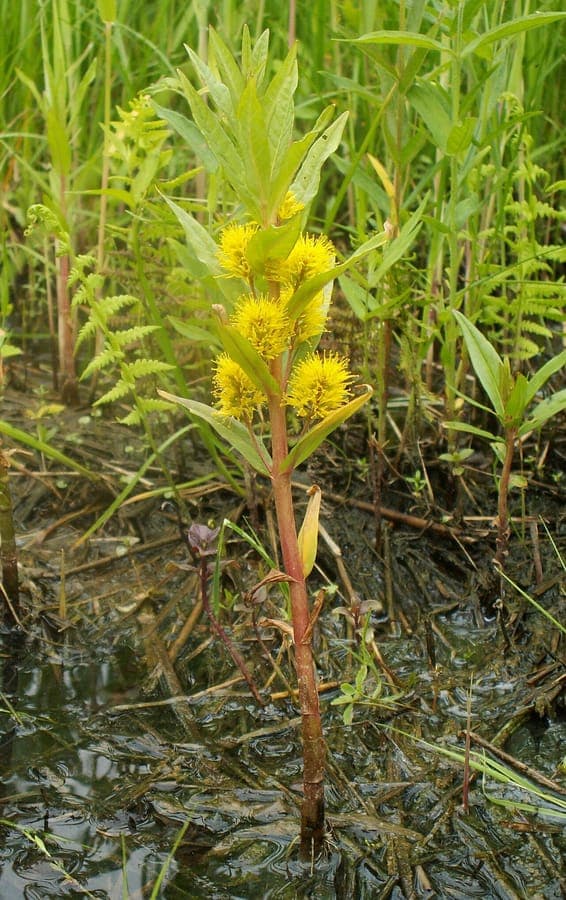
Krzysztof Ziarnek / CC BY-SA 3.0, via Wikimedia Commons
Lysimachia thyrsiflora: complete guide
Lysimachia thyrsiflora
¿Quieres ver Lysimachia thyrsiflora: complete guide en tu jardín?
1 minuto, sin tarjeta de crédito
Overview
Lysimachia thyrsiflora, commonly called Tufted Loosestrife or Asiatic Swamp Loosestrife, represents a far less familiar yet extraordinarily valuable aquatic perennial for northern gardeners. This species naturally inhabits subarctic and temperate regions across the northern hemisphere, from North America through Scandinavia and Russia to Japan. Its preference for genuinely wet, marshy conditions makes it ideal for gardeners seeking authentic wetland environments without groundwater complications. Lysimachia thyrsiflora reaches heights between 30 and 60 centimetres and spreads via underground runners, making it perfectly suited for large pond margins and marsh-edge plantings.
What immediately strikes gardeners about Lysimachia thyrsiflora is its notably compact growth compared to its more vigorous relatives L. punctata and L. vulgaris. This makes it exceptionally useful for smaller water features and front gardens that shouldn't become overgrown. The plant flowers during June through August with small yellow blooms arranged in characteristic dense panicles positioned laterally along stems – a completely different visual impression from L. punctata's spiral arrangements. This plant genuinely belongs in natural landscapes and gardens desiring more wildlife character and aquatic authenticity. According to gardenworld.app, this species deserves greater recognition as an undervalued alternative to conventional landscape plants.
Appearance & Bloom Cycle
The flowers of Lysimachia thyrsiflora are considerably more delicate than those of L. punctata. They develop in densely packed clusters (panicles) positioned along stem sides, not encircling the stem. This creates asymmetrical, almost ethereal flower arrangements. Each individual bloom measures approximately 8-10 millimetres diameter and glows bright yellow. Flowering commences in June and continues through August – roughly eight to twelve weeks of continuous bloom. This subtle character attracts far more specialized pollinators: documented observations show this plant serves as a preferred foraging site for particular bee species and hoverflies.
The leaves of Lysimachia thyrsiflora are linear to lance-shaped, measuring 3 to 6 centimetres long, creating a more elegant, almost grassy appearance than its relatives. Stems show reddish colouring at the base, providing pleasant spring colour effects. The mature form of Lysimachia thyrsiflora remains considerably more slender and graceful than L. punctata. This renders it particularly suitable for gardens preferring subtle, naturalistic compositions over mass displays. The plant achieves its full potential when multiple specimens grow as loose groups of three to five, creating a delicate grassy flower mist.
Ideal Location
Lysimachia thyrsiflora thrives optimally on moisture-rich to wet sites receiving minimum four hours direct sunlight daily. It tolerates semi-shade excellently – indeed, often better than full sun in warm climates, where partial shade prevents excessive drying. This plant proves particularly valuable for marsh and pond margins where it can stand in shallow water. It tolerates submersion to 10-15 centimetres water depth while simultaneously thriving in regularly saturated soil conditions.
One major advantage is Lysimachia thyrsiflora's superior tolerance of semi-shaded pools compared to many aquatic plants. If your pond sits beneath tree cover, this plant still flowers prolifically. This represents a genuine asset for challenging marshy corners with limited sunlight. The plant equally succeeds in front gardens that retain winter water and where heavy soils dominate.
Soil Requirements
Soil requirements for Lysimachia thyrsiflora are unambiguous: this demands marsh-edge soil, rich in organic matter and intensely moist. Incorporate approximately 40-50 percent well-rotted plant material, such as composted peat or bark mulch. pH tolerance spans slightly acidic through neutral (pH 5.5 to 7.5). Contrary to numerous aquatic plants, Lysimachia thyrsiflora dislikes permanent waterlogging – many experienced growers report it actually performs better in regularly saturated rather than permanently waterlogged conditions.
Incorporate one to two centimetres compost biannually, maintaining soil humus richness. The plant declines rapidly in dry, impoverished soils, so organic feeding proves essential. Avoid synthetic fertilisers – this plant tolerates them poorly and thrives better with slow-release natural feeding.
Diseño gratis
¿Quieres ver Lysimachia thyrsiflora: complete guide en tu jardín? Crea un diseño gratis ahora.
Watering
Watering Lysimachia thyrsiflora essentially requires reverse thinking – rather than quantifying application volume, ensure consistent moisture provision. This plant prefers remaining in wet soil throughout the entire growing season. During droughts or warm periods exceeding three weeks, water generously – essentially daily. This plant merits water that literally stands at soil surface without sinking completely. Thorough soaking surpasses frequent light watering.
In front gardens where soil remains wet during winter months, minimal supplemental watering becomes necessary during growing season. During dry conditions, water abundantly – render soil not merely moist but literally saturated. The plant thrives in soils where water visibly stands at surface for multiple weeks. This renders Lysimachia thyrsiflora ideal for pond-margin planting where surface water tolerance is acceptable.
Pruning
Pruning Lysimachia thyrsiflora requires far less attention than its more vigorous relatives. The plant grows compactly and needs no formative pruning. Once flowers brown during September-October, cut back to approximately 10-15 centimetres height. This can occur during November or defer until March. Many gardeners leave dead stems standing throughout winter, as they provide frost protection and retain interesting architectural appeal.
Removing old stems from the crown to stimulate young growth becomes occasionally worthwhile in the third or fourth year, best performed during early spring before vigorous regrowth commences.
Maintenance Calendar
January-February: Monitor water levels; add water if drying occurs. March: Remove dead stems or defer until growth commences. April-May: Apply light compost topdressing; ensure soil moisture increases. June-August: Maintain consistent moisture; no additional feeding required. September-October: Deadhead spent blooms; gradually reduce watering. November-December: Allow plant rest; minimal care needed.
Winter Hardiness
Lysimachia thyrsiflora is absolutely winter-hardy across subarctic and temperate zones (USDA zones 2-7, considerably further north than L. punctata). This plant tolerates frost to -40°C and naturally inhabits Arctic Scandinavia and Russia. Northern European winters prove quite mild for this species. The primary winter requirement is preventing soil desiccation – during dry winters where front gardens receive minimal rainfall, supplemental watering helps. Usually unnecessary, but monitor during January-February.
Companion Plants
Lysimachia thyrsiflora combines beautifully with other marsh-dwelling species. Position alongside Iris laevigata or Iris sibirica for striking blue contrast. The elegant structure of Lysimachia thyrsiflora works superbly with fennel, carex grasses (especially ornamental varieties) and other grass-like plants. For larger compositions incorporate additional moisture-lovers including sagittaria, acorus and marsh marigolds.
Above waterline, this plant associates excellently with subtler perennials sharing moisture requirements. White or soft pink astilbe creates pleasing contrast, as do dicentra and heuchera varieties. Lysimachia thyrsiflora's slenderness permits densely planting diverse species without takeover occurring.
Closing
Lysimachia thyrsiflora remains largely unknown among many European gardeners, yet those creating naturalistic semi-natural water features should genuinely know this plant. It thrives where numerous alternatives fail, flowers elegantly for extended periods, and demands minimal maintenance. According to gardenworld.app, all water-loving gardeners should definitely experiment with this species. This isn't mass floral display like L. punctata, rather a delicate grassy flower mist persisting through your marsh environment for weeks. Seek this plant through specialised aquatic garden centres or online water-plant suppliers. Plants establish rapidly and spread via runners, so small specimens quickly develop into substantial plantings. For gardeners seeking Japanese wetland gardens or naturalistic pond environments, Lysimachia thyrsiflora simply proves indispensable.
¿Quieres ver Lysimachia thyrsiflora: complete guide en tu jardín? Crea un diseño gratis ahora.
Sube una foto, elige un estilo y obtén un diseño fotorrealista con lista de plantas en menos de un minuto.
Más de 10.000 jardines diseñados
Sin tarjeta de crédito


Plantas similares
Lysimachia punctata: complete guide
Lysimachia punctata
Golden-yellow flowers cascade down tall spikes throughout summer. Lysimachia punctata thrives in moist soil and blooms for weeks on end without fuss. Your ideal solution for damp garden corners.
Lysimachia vulgaris: complete guide
Lysimachia vulgaris
Wild yellow loosestrife establishing along wetland margins from Europe to Siberia. Lysimachia vulgaris grows robustly with minimal care. Nature's own yellow banner for damp garden zones.
Lythrum junceum: complete guide
Lythrum junceum
Elegant pink-red flowers on slender stems. Lythrum junceum thrives in warm Mediterranean regions. A refined loosestrife for sun-drenched gardens.