
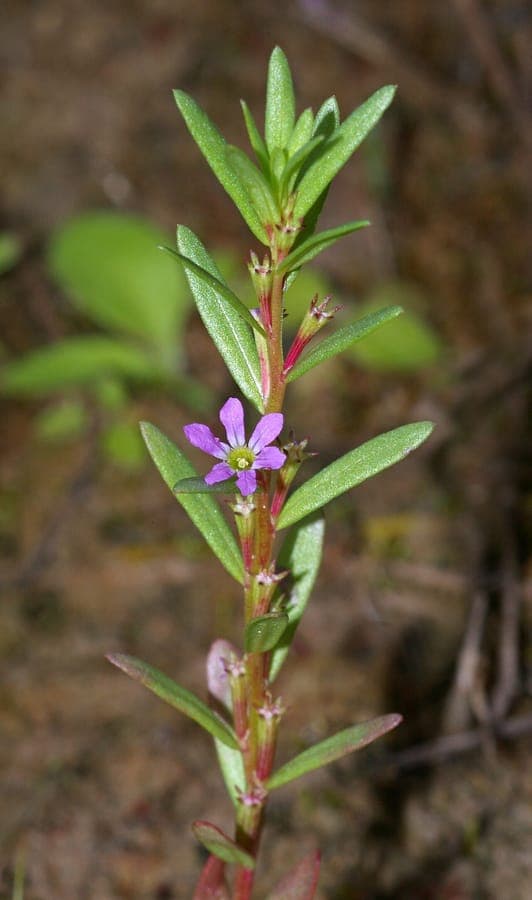
Christian Fischer / CC BY-SA 3.0, via Wikimedia Commons
Lythrum hyssopifolia: complete guide
Lythrum hyssopifolia
¿Quieres ver Lythrum hyssopifolia: complete guide en tu jardín?
1 minuto, sin tarjeta de crédito
Overview
Lythrum hyssopifolia, commonly called Grass-Poly or Hyssop-Leaved Loosestrife, represents a small, moisture-loving plant vastly less recognized than its larger relative Lythrum salicaria. This species naturally inhabits Europe through Central Asia and Iran, and has naturalized to North Africa and even Australia. Conversely to L. salicaria, regarded as an aggressive spreader and deemed invasive in several countries, L. hyssopifolia remains deliberately restrained and controlled in growth – rendering it ideal for gardeners desiring moisture-loving plants without concerns regarding aggressive takeover.
The plant reaches heights of merely 15 to 40 centimetres, making it exceptionally suitable for foreground plantings along pond margins. Leaves are narrow and grasslike, measuring approximately 1 to 2 centimetres long, providing a refined appearance. During summer, it produces small pink flowers along stems, creating a delicate, almost ethereal flowering presence. This isn't the massed display of Lythrum salicaria but rather a refined detail offering substantial character. According to gardenworld.app, this species deserves recognition as an undervalued choice for modest water features and damp corners.
Appearance & Bloom Cycle
Lythrum hyssopifolia differs fundamentally from its larger relatives through compact growth and delicate foliage. Leaves are linear-lanceolate and extraordinarily narrow – measuring 1 to 2.5 centimetres long – providing the plant a grasslike appearance, hence the common name. Flowers are pink to magenta, extremely small (approximately 4-6 millimetres diameter) and arranged in loose clusters along stems. This diminutive flower size creates a refined, almost ethereal flowering impression far less imposing than relatives, yet genuinely compelling.
Flowering extends from July through September – two to three months of continuous tiny pink blooms. The plant grows upright but maintains a delicately spiky appearance, appearing quite natural in semi-wild conditions. The overall impression suggests a delicate plant you might overlook at first glance until closer inspection. This appeals specifically to gardeners: not everything requires massed, attention-demanding displays. The plant achieves full size by mid-June and maintains identical proportions throughout remaining summer and autumn.
Ideal Location
Lythrum hyssopifolia performs optimally on moisture-rich to wet sites receiving minimum four hours direct sunlight daily. The plant tolerates semi-shade excellently, though flowering proves less abundant. This species proves particularly valuable for front gardens and marginal water zones where water regularly stagnates, particularly during winter and spring. It thrives excellently in moisture-rich clay, muddy zones alongside ponds and even permanent shallow water (to approximately 10 centimetres depth).
A major advantage of Lythrum hyssopifolia is its superior performance in semi-shaded water features compared with many aquatic plants. If your pond sits beneath tree canopy, this species still delivers good results. This renders it perfect for challenging, shaded damp corners you'd like to enliven with colour.
Soil Requirements
Lythrum hyssopifolia demonstrates minimal soil pickiness provided conditions remain consistently moist. It thrives in all soil types: heavy clay, sandy mixtures, even pure mud and silt. The plant even performs in moisture-rich, mineral-poor soils unsuitable for numerous alternatives. pH tolerance is substantial – from acidic (pH 5.0) to neutral (pH 7.5), though the plant performs optimally in neutral to slightly acidic soils.
Incorporate organic matter where possible, though this remains non-essential. The plant proves robust enough for the most challenging conditions provided moisture persists. This renders it ideal for those problematic wet spots where virtually everything else fails.
Diseño gratis
¿Quieres ver Lythrum hyssopifolia: complete guide en tu jardín? Crea un diseño gratis ahora.
Watering
Watering Lythrum hyssopifolia becomes necessary when the plant already occupies regularly moist soil. The plant tolerates dry periods poorly, therefore consistent moisture provision remains essential. In front gardens that become wet during winter and moderately dry during summer, water regularly once soil feels dry. In extremely dry gardens this plant cannot thrive successfully.
In water gardens and pond margins with permanent moisture, you'll rarely require supplemental watering. The plant actually prefers partial water submersion, thus placing it in a pot within shallow water produces optimal results. This essentially achieves best results – situating the plant in shallow water or muddy water rather than dry soil.
Pruning
Pruning Lythrum hyssopifolia requires minimal intervention. If the plant becomes untidy after October-November blooming, remove above-ground portions to approximately 5 centimetres above soil. This remains optional – many gardeners simply leave the plant and remove dead portions during early spring.
During growing season, deadheading spent flowers becomes unnecessary – the plant maintains neat appearance independently. Compact growth ensures the plant rarely outgrows its allocated space or occupies excessive room.
Maintenance Calendar
January-February: Check moisture levels; ensure soil doesn't completely desiccate even during winter. March: Remove dead plant material from previous season. April-May: Provide supplemental water if spring proves dry. June-August: Enjoy abundant flowering; water regularly. September-October: Flowering diminishes; reduce watering somewhat. October-November: Remove dead plant material or leave for birds. December: Allow plant dormant winter rest.
Winter Hardiness
Lythrum hyssopifolia proves winter-hardy to USDA zone 6 (to approximately -23°C). The plant overwinters successfully throughout northern Europe and reliably emerges from identical root systems annually. Above-ground portions die back during winter, while underground parts remain dormant and re-emerge during April. This renders Lythrum hyssopifolia dependable for northern European gardens.
Companion Plants
Lythrum hyssopifolia combines beautifully with other delicate moisture-loving species. Combine with Mentha aquatica (water mint) for fragrant wet areas. Position beside small sedges such as Carex nigra or Carex rostrata for interesting foliage textures. For colour contrast incorporate small white-flowering plants like Alisma plantago-aquatica (water plantain).
The delicate appearance of Lythrum hyssopifolia also combines nicely with larger aquatic plants including irises and astilbes, where it mingles subtly with larger foliage. This precisely defines where this species excels – as refined foreground specimens for water features rather than as attention-demanding focal points.
Closing
Lythrum hyssopifolia represents a genuine discovery for many gardeners – a small, moisture-loving plant lacking invasive tendencies yet thriving in those difficult wet spots. According to gardenworld.app, recommend this species for those preferring subtle, naturalistic waterscapes rather than massed effects. You'll obtain a dependable plant returning annually and even performing admirably in challenging circumstances.
Locate this plant through specialized aquatic garden centres – not all standard retailers stock it. Online water-plant suppliers regularly maintain inventory. Plant in groups of five to ten for a delicate misted effect along your pond edge. Once established, it slowly spreads through self-distributed seeds, meaning within several years you'll possess an attractive plantlet haze along your waterline.
¿Quieres ver Lythrum hyssopifolia: complete guide en tu jardín? Crea un diseño gratis ahora.
Sube una foto, elige un estilo y obtén un diseño fotorrealista con lista de plantas en menos de un minuto.
Más de 10.000 jardines diseñados
Sin tarjeta de crédito


Plantas similares
Lythrum junceum: complete guide
Lythrum junceum
Elegant pink-red flowers on slender stems. Lythrum junceum thrives in warm Mediterranean regions. A refined loosestrife for sun-drenched gardens.
Lysimachia punctata: complete guide
Lysimachia punctata
Golden-yellow flowers cascade down tall spikes throughout summer. Lysimachia punctata thrives in moist soil and blooms for weeks on end without fuss. Your ideal solution for damp garden corners.
Lysimachia vulgaris: complete guide
Lysimachia vulgaris
Wild yellow loosestrife establishing along wetland margins from Europe to Siberia. Lysimachia vulgaris grows robustly with minimal care. Nature's own yellow banner for damp garden zones.