
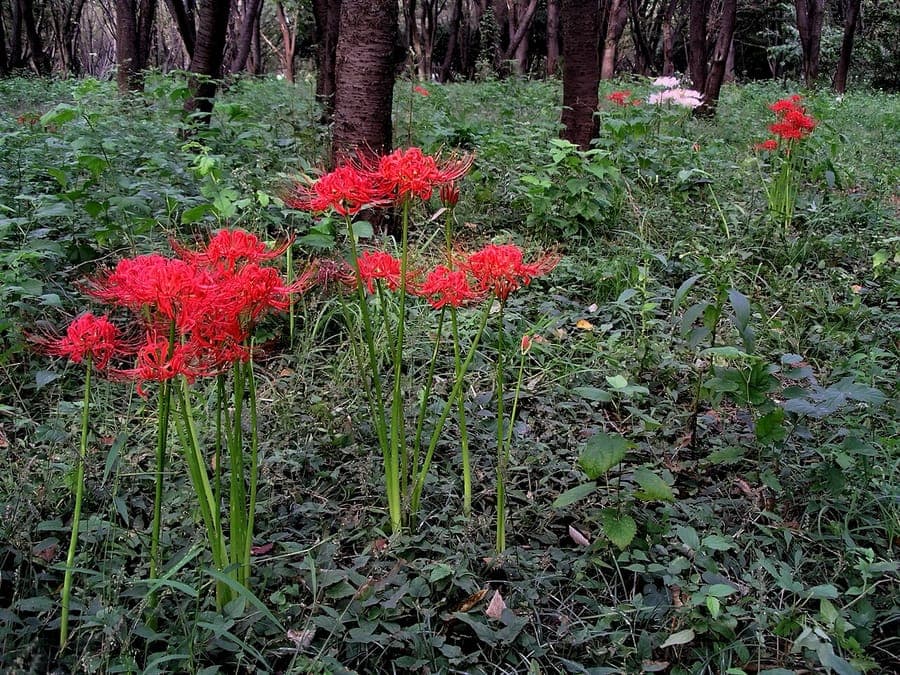
Blue Lotus / CC BY 2.0, via Wikimedia Commons
Red Spider Lily: complete guide
Lycoris radiata
¿Quieres ver Red Spider Lily: complete guide en tu jardín?
1 minuto, sin tarjeta de crédito
Overview
The red spider lily (Lycoris radiata) is a stunning autumn bloomer originating from Nepal, China, and Japan. This fascinating plant is renowned for its delicate, spider-like flowers that seem to defy nature's usual design. With their vibrant red to reddish-orange hues, these blooms are a true garden spectacle. This bulb typically flowers in late summer and fall, particularly in September and October, and is known for producing results quickly after planting.
Appearance and bloom
The red spider lily is a bulbous plant that grows approximately 30 to 50 centimeters tall. Its most distinctive feature is its flowers with long, curled petals in bright red to reddish-orange. The flowers grow in clusters and genuinely resemble spiders with long legs. Each bulb can produce multiple flower stems, resulting in a flood of color. Blooming occurs from August through October and is typically very abundant. After flowering, long, narrow leaves emerge that remain green throughout winter.
Ideal location
Red spider lilies prefer sunny to partially shaded spots. Ideally, a location receiving at least four to six hours of direct sunlight daily. This encourages blooming and supports strong, healthy plants. In warm climates, some afternoon shade is beneficial, especially during hot summers. Ensure the location is well-protected from strong winds, which can damage the delicate flower stems.
Soil
The red spider lily is not particularly fussy about soil composition but thrives in well-draining soil. Add compost or garden soil to heavy clay soils to improve drainage. This plant naturally has no preference for specific pH, though neutral to slightly acidic soils (pH 6.0 to 7.0) are optimal. Ensure sufficient organic matter by incorporating compost annually.
Diseño gratis
¿Quieres ver Red Spider Lily: complete guide en tu jardín? Crea un diseño gratis ahora.
Watering
Red spider lilies have moderate water requirements. During the growing season and bloom (autumn), water regularly but not excessively. Ensure the soil remains moist but not waterlogged. In spring and summer, when the plant is dormant (leafless), it needs little water. Significantly reduce watering frequency and only water if the soil becomes very dry. Excessive water can lead to bulb rot.
Pruning
Red spider lilies require minimal pruning. Remove wilted flowers to keep the plant neat, but this is not essential. Allow leaves to remain until late winter so they can nourish the bulbs. Only in May or June, once all leaves are completely withered, can they be removed. This ensures the bulb stores enough nutrients for next year's bloom.
Maintenance calendar
FEBRUARY - APRIL: Plant red spider lily bulbs in August or September. Let them take effect quickly and enjoy the preparation.
MAY - JULY: Ensure dormant bulbs remain dry and quiet. Reduce watering significantly. This is the rest period.
AUGUST - OCTOBER: Begin watering as new growth starts. Enjoy the spectacular bloom. This is the highlight!
NOVEMBER - JANUARY: Remove wilted flowers. Leaves remain to feed the bulb. Fertilizing can be beneficial.
Winter hardiness
Red spider lilies are generally freeze hardy to USDA zone 7a or 6 (-15 to -20°C). In colder regions, bulbs must be lifted in fall and stored in a cool, dry place. In temperate climates, they can remain in the ground if planted in a sheltered spot. Mulch also helps protect bulbs from extreme freezing.
Companion plants
Red spider lilies look beautiful alongside autumn bloomers such as:
¿Quieres ver Red Spider Lily: complete guide en tu jardín? Crea un diseño gratis ahora.
Sube una foto, elige un estilo y obtén un diseño fotorrealista con lista de plantas en menos de un minuto.
Más de 10.000 jardines diseñados
Sin tarjeta de crédito


Plantas similares
Douglas' Onion: complete guide
Allium douglasii
Douglas' onion is a compact ornamental allium with purple flowers, perfect for rock gardens and sunny borders. Learn care, siting and hardiness.
Oblique onion: complete guide
Allium obliquum
The oblique onion is a hardy ornamental allium with chartreuse flower heads and blue-green foliage. Location, soil and care explained.
False hooded garlic: complete guide
Allium pseudocalyptratum
Discover false hooded garlic (Allium pseudocalyptratum): a rare ornamental onion from Lebanon for rock gardens and alpine troughs.