
Bernd Haynold / CC BY-SA 3.0, via Wikimedia Commons
Christmas green: complete guide
Lycopodium complanatum
¿Quieres ver Christmas green: complete guide en tu jardín?
1 minuto, sin tarjeta de crédito
Overview
Christmas green (Lycopodium complanatum) is a remarkable primitive plant that thrives in shady woodland gardens across northern temperate regions. Despite its modest appearance, this slow-growing moss-like plant offers year-round interest and is virtually carefree once established. It's native to subarctic and temperate zones of the Northern Hemisphere.
Appearance and bloom cycle
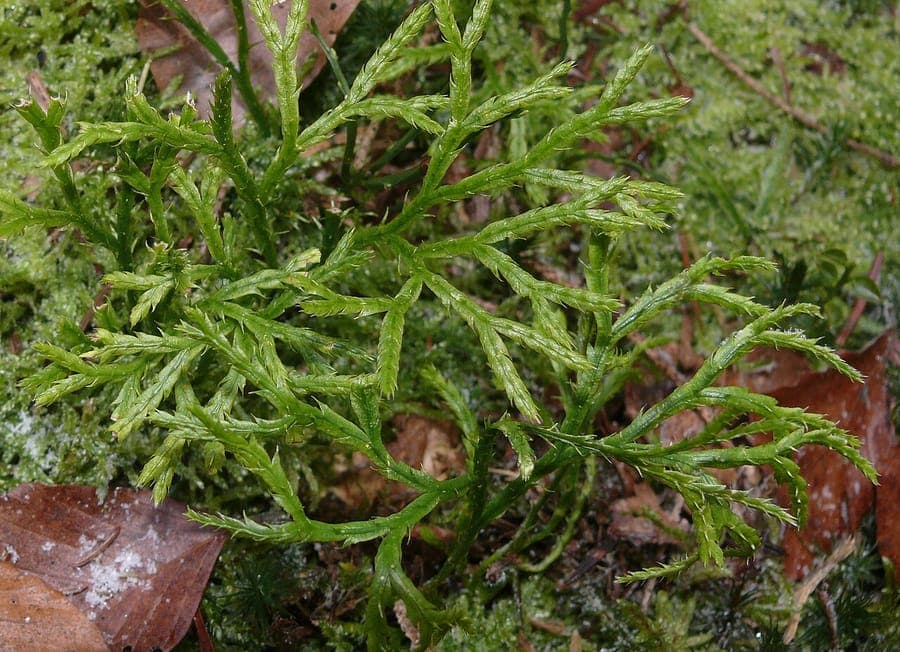
Christmas green develops distinctive flat, compressed stems with tiny scale-like leaves arranged in four ranks. Growing to 10-15 cm tall, it spreads horizontally to create a delicate, branching pattern resembling miniature conifer branches. The foliage is yellow-green in summer, intensifying to emerald in winter, providing striking contrast in frost-covered landscapes.
Ideal location
Place Christmas green in full shade to partial shade positions, ideally beneath conifers like spruce and pine where it thrives in natural leaf litter. This plant needs consistent cool conditions and protection from direct afternoon sun and heat. Woodland edges and north-facing garden beds are perfect.
Soil requirements
Christmas green requires acidic to neutral soil (pH 4.5-6.0) rich in organic matter. Incorporate peat moss and leaf mold to mimic woodland conditions. Excellent drainage is crucial; waterlogged soil causes decline and fungal problems.
Watering
Maintain consistently moist (not wet) soil throughout the growing season. Water during dry periods, especially in summer, but ensure excess water drains freely. Morning watering prevents fungal issues. In winter, reduce watering but don't let soil dry completely.
Diseño gratis
¿Quieres ver Christmas green: complete guide en tu jardín? Crea un diseño gratis ahora.
Pruning
No pruning needed. Christmas green grows slowly and naturally without intervention. Simply remove any dead or frost-damaged stems by hand. This plant requires minimal maintenance once established.
Maintenance calendar
March-April: Check for winter damage. May-June: Ensure adequate moisture as growth accelerates. July-September: Maintain consistent watering during dry spells. October-November: Prepare for dormancy. December-February: Enjoy the evergreen foliage's winter color.
Winter hardiness
Christmas green is extremely frost-hardy, naturally inhabiting subarctic and cool temperate regions. It tolerates temperatures down to -20 degrees Celsius without issue, making it an excellent choice for northern gardens and high-altitude sites.
Companion plants
Combine Christmas green with ferns, hellebores, and woodland geraniums. In conifer plantings, it forms a natural forest floor covering. Avoid vigorous, spreading plants that might smother this delicate species.
Closing
Christmas green brings authentic woodland character to shaded corners. With proper placement and basic moisture management, this frost-hardy primitive thrives for decades. Discover more shade solutions on gardenworld.app. Source your Christmas green from garden centers or specialty suppliers, and let gardenworld.app help transform your dark corners into enchanting woodland sanctuaries.
¿Quieres ver Christmas green: complete guide en tu jardín? Crea un diseño gratis ahora.
Sube una foto, elige un estilo y obtén un diseño fotorrealista con lista de plantas en menos de un minuto.
Más de 10.000 jardines diseñados
Sin tarjeta de crédito


Plantas similares
Alpine clubmoss: complete guide
Lycopodium alpinum
Alpine clubmoss thrives in subarctic and temperate mountain areas across the northern hemisphere. This rare plant grows on alpine tundra and high peaks from Alaska to Greenland. Learn about habitat, cultivation, and remarkable adaptations.
Huperzia selago: complete guide
Huperzia selago
Discover the mountain clubmoss: a truly unique arctic fern-like plant for moist shaded gardens. Growing guide with soil, moisture and specialized care.
Marsh clubmoss: complete guide
Lycopodiella inundata
Discover Lycopodiella inundata, the rare Marsh clubmoss. A unique wetland plant for specialized bog gardens.