
Christian Fischer / CC BY-SA 3.0, via Wikimedia Commons
Marsh clubmoss: complete guide
Lycopodiella inundata
¿Quieres ver Marsh clubmoss: complete guide en tu jardín?
1 minuto, sin tarjeta de crédito
The Marsh clubmoss, scientifically Lycopodiella inundata, is an extremely rare and fascinating plant from the Lycopodiaceae family, native to temperate regions of the Northern Hemisphere. This is not an ordinary flowering plant but a primitive vascular plant related to ferns and clubmosses. Lycopodiella inundata has been formally recognized since 1964 and belongs to a very small group of approximately 2,000 clubmoss species worldwide, making this plant truly exceptional in home gardens.
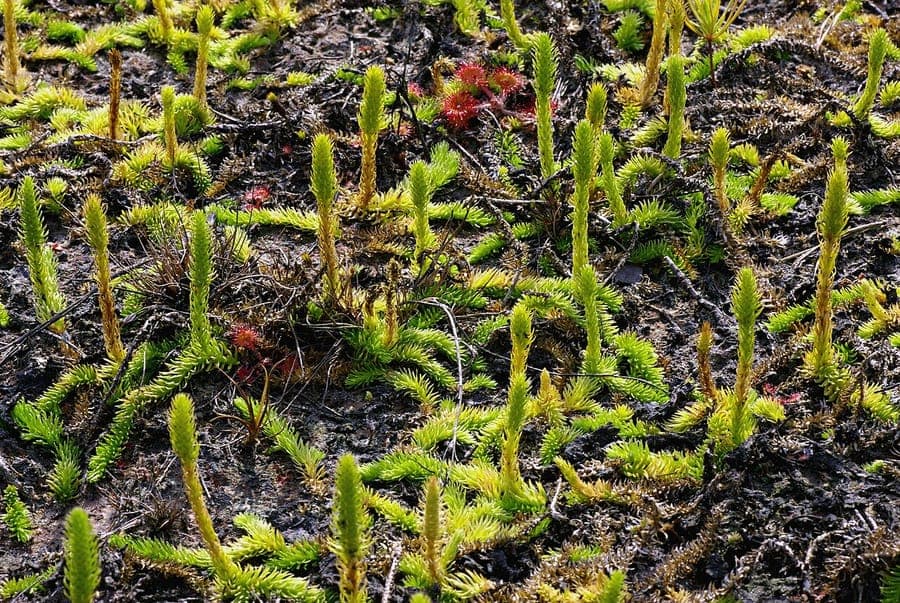
The appearance of Lycopodiella inundata is strikingly different from familiar garden plants. The plant forms extremely thin, thread-like stems that creep horizontally across marshy substrate surfaces. This creeping growth habit typically reaches only 5 to 10 centimeters above the boggy ground but can extend to over 30 centimeters in length. The microscopic leaf scales are approximately 2 to 3 millimeters long, very densely arranged, and impart a delicate, nearly feathery texture to the entire plant. During late summer, typically August through October, small spore-bearing structures emerge at the tips of certain stems. These spore-producing structures are equally small and inconspicuous, measuring only 1 to 2 millimeters, yet are biologically crucial for plant reproduction.
The ideal location for Marsh clubmoss is a highly moisture-rich, essentially waterlogged site, ideally along marshy margins or within specially constructed bog gardens. This plant thrives in environments where groundwater remains permanently elevated or where water regularly stagnates. Sunny positions to dappled shade are both acceptable, depending on water availability. The plant absolutely requires continuous moisture and cannot survive in regularly dried-out soils. Experimentation with artificial bog containers may succeed for dedicated gardeners.
The soil must be virtually pure bog material consisting of sphagnum moss, fine sand, and humus components. The pH must be extremely acidic, somewhere between 4.0 and 5.0. This plant shows no tolerance for neutral or alkaline soils. To create optimal growing conditions, construct a bog pot or small terrarium filled with a mixture of 50 percent sphagnum, 30 percent fine sandy soil, and 20 percent leaf mold. This plant is unsuitable for ordinary garden soil and demands deliberately constructed bog conditions.
Watering is the single most critical aspect of Marsh clubmoss care. The plant must continuously grow in water-saturated conditions. This can be achieved by placing the plant in a water-holding container that maintains constantly moistened submerged substrate. Use rainwater or distilled water, as tap water minerals can prove harmful. Throughout the growing season from April to October, monitor water levels and replenish as needed. Even during winter, soil must remain very moist.
Pruning is completely unnecessary and would actually damage this plant. Leave all parts intact. You may carefully remove yellowed stems, but avoid aggressive pruning. The plant grows naturally slowly and forms its own appropriate habit without intervention.
The maintenance calendar for Marsh clubmoss is very simple but demanding. From April through October, check water availability every few days or weekly. From June through August, you may apply extremely dilute fertilizer solutions, but avoid strong fertilizer applications. Each spring in March, you may carefully refresh surrounding soil. No other procedures are required.
Winter hardiness is highly relative for this species. In temperate climates, Lycopodiella inundata may survive outdoors down to approximately minus 5 to minus 10 degrees Celsius, provided it never completely freezes and water supplies in groundwater remain available. In harsher climates, protection in an unheated greenhouse or very sheltered location is warranted. Overwintering is difficult and demands very careful moisture management.
As garden companions, few options exist, as this plant grows almost exclusively in highly specific marshy environments. It may coexist with other bog plants such as sundew species, certain water ferns, and bog mosses. Many gardeners create microhabitats specifically for this precious plant rather than considering it as part of traditional plant combinations.
Marsh clubmoss is a plant for the advanced bog gardener with strong patience and dedication. This is not a beginner-friendly crop. For those with a passion for wetland ecology and unique botanical specimens, this plant offers continuous fascination. This plant is extremely rare in commerce and you will likely need to contact specialized nurseries. Gardenworld.app can help you plan the ideal moisture environment within your overall garden design. For this special plant, consult growers with expertise in marsh flora.
Cultivating Lycopodiella inundata is a recognition of scientific beauty and botanical diversity. With careful management, this rare plant can thrive for decades, rewarding you with its miniature elegance. This is botany at its most patient and rewarding.
¿Quieres ver Marsh clubmoss: complete guide en tu jardín? Crea un diseño gratis ahora.
Sube una foto, elige un estilo y obtén un diseño fotorrealista con lista de plantas en menos de un minuto.
Más de 10.000 jardines diseñados
Sin tarjeta de crédito


Plantas similares
Alpine clubmoss: complete guide
Lycopodium alpinum
Alpine clubmoss thrives in subarctic and temperate mountain areas across the northern hemisphere. This rare plant grows on alpine tundra and high peaks from Alaska to Greenland. Learn about habitat, cultivation, and remarkable adaptations.
Christmas green: complete guide
Lycopodium complanatum
Christmas green is a frost-hardy moss-like plant perfect for shady gardens and woodland edges. Growing and care guide for northern temperate climates.
Huperzia selago: complete guide
Huperzia selago
Discover the mountain clubmoss: a truly unique arctic fern-like plant for moist shaded gardens. Growing guide with soil, moisture and specialized care.