
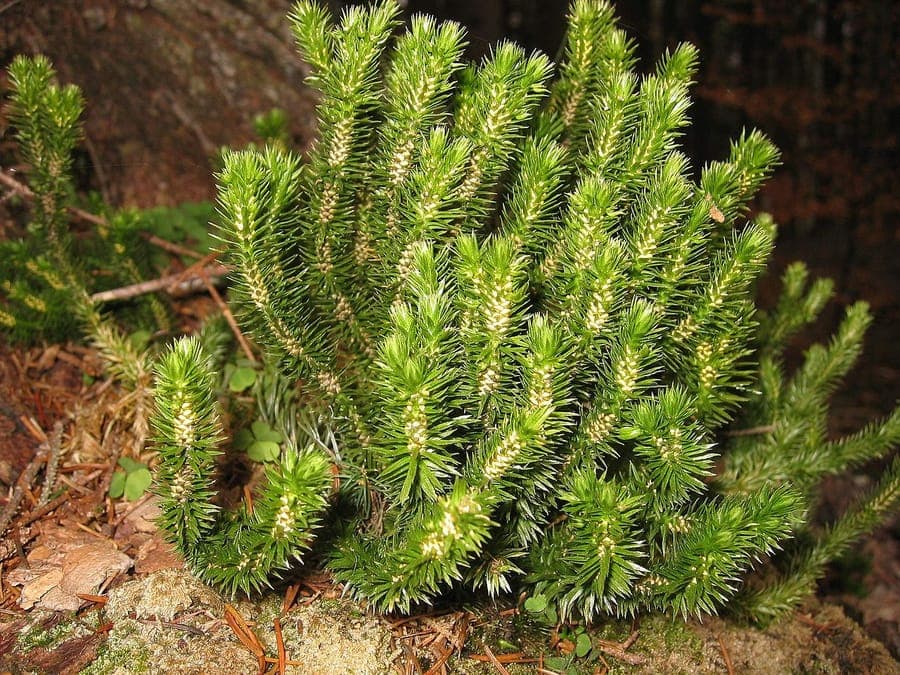
User:Tigerente / CC BY-SA 3.0, via Wikimedia Commons
Huperzia selago: complete guide
Huperzia selago
¿Quieres ver Huperzia selago: complete guide en tu jardín?
1 minuto, sin tarjeta de crédito
Overview
Huperzia selago, commonly known as Mountain Clubmoss or Northern Firmoss, is a fascinating archaic plant belonging to the Lycopodiaceae family, a familial group millions of years old consisting of the primordial ancestors of modern ferns and seed plants. This plant originates from cold mountain regions of the North Atlantic, spanning Greenland through Scandinavia to Russia, where it grows in moisture-rich mountain meadows, rocky hillsides, and forest landscapes. In a garden context, Huperzia selago offers something truly unique: it's neither a flowering plant nor a conventional fern, but rather a living fossil remaining virtually unchanged since the Devonian period.
For gardeners seeking unique, hardy, low-maintenance plant options, Huperzia selago represents an excellent choice. The plant forms dense, upright rosettes ideally suited as groundcover material in moist, shaded locations. Through gardenworld.app, we can help you design a woodland garden incorporating this and other archaic plants creating together a primordial forest aesthetic.
Appearance and Growth Pattern
Huperzia selago forms dense, clump-like growth patterns with upright, densely branched stems reaching approximately 20 to 50 centimeters tall, though usually remaining on the lower end of this range. The stems are clothed with extremely small, densely arranged linear leaflets approximately 2 to 5 millimeters long. These leaflets are glossy greenish and yellowish-green, arranged in spiral rows around the stems. The plant displays an extremely fine, hair-like appearance, almost resembling a very fine miniature conifer.
The reproductive structures prove remarkably inconspicuous. Rather than visible flowers or typical fern fronds, Huperzia selago produces exceedingly small, slightly yellowish to greenish-yellow sporangia (spore structures) in compact spike-like formations at the stems' apex. These prove neither decorative nor noticeable to most observers. The plant produces no visible blooms in any popular sense.
The plant remains green year-round, thus providing structure and interest throughout all seasons.
Ideal Location
Huperzia selago thrives in locations featuring partial to full shade, comparable to light conditions beneath forest canopies. The plant cannot tolerate significant sun exposure and will decline under intense UV radiation. Position this plant in shaded woodland corners, beneath trees, along shadowed hillsides, or in rocky mountain landscape where diffuse light dominates.
The plant also values moisture-rich conditions; dry locations prove entirely unsuitable. Avoid placement near buildings or on dry sandy sites where leafage would readily desiccate. Rocky caverns or moist rocky hillsides constitute ideal habitats.
The plant accepts very low temperatures without complaint, so locations exposed to cold mountain winds actually prove ideal.
Soil Requirements
Huperzia selago is exceptionally particular regarding soil composition, and this represents the primary cultivation success factor. The plant strongly prefers very acidic soils with pH between 4.5 and 5.5, and grows poorly in neutral or alkaline soil. This is critical: if your soil is alkaline, the plant will likely fail.
The ideal soil is extremely moisture-retentive, well-drained, and rich with organic material. The plant naturally grows in mountain moss ecosystems where soil consists of moss, dead wood, leaf litter, and extremely acidic weathered stone fragments. Attempt replicating this by mixing 50 percent peat moss and 50 percent leafmould with fine stone chips added.
The plant naturally collects nutrients from its moist environment, so heavy fertilizing proves unnecessary. Cautious application of very weak acidic organic fertilizer can prove beneficial, but substantial fertilizer proves harmful.
Diseño gratis
¿Quieres ver Huperzia selago: complete guide en tu jardín? Crea un diseño gratis ahora.
Watering and Moisture Management
Huperzia selago requires exceptionally moist, consistent soil conditions. This is not a plant tolerating drought. You must ensure soil never completely dries throughout the growing season (May through October). During winter, water requirements can reduce slightly, though soil should remain moist.
The proper watering approach maintains consistently moist, non-waterlogged soil. This means regular watering, at minimum twice weekly during dry periods. The plant also appreciates elevated air humidity, so regular misting helps, particularly during warm or dry periods.
However, permanently waterlogged soil damages roots. Balance must be found between moist and drained.
Maintenance and Care
Huperzia selago requires absolutely minimal maintenance once well-established. The plant grows slowly and is non-invasive. You require no pruning or shaping; allow the plant to maintain its natural growth pattern. Remove only dead material as it appears.
Monitor for dry leaflets or damaged material and carefully remove with tweezers. Because the plant is so small, this constitutes handwork, but involves little effort.
The plant proves resistant to pest problems, presumably due to its ancient evolutionary origin. However, fungi can prove problematic in very wet conditions, so well-drained soil proves essential.
Maintenance Calendar
May to June: Ensure plant receives adequate watering. Monitor for new growth. No feeding required.
July to August: Peak growing period. Continue regular watering. Misting helps during warm periods.
September to October: Slight reduction in watering as temperatures decline. Monitor well-drained soil.
November to April: Dormant period. Minimal watering, but soil must never completely dry. Well-drained soil proves essential for overwintering.
Winter Hardiness and Overwintering
Huperzia selago proves extremely hardy, winter hardy to zone 2 or even zone 1 (-45 degrees Celsius and lower). This means it can overwinter outdoors throughout all Dutch, Belgian, and German gardens without any protection. The plant doesn't die back in winter but remains greenish, though growth largely halts.
During extremely severe winters with very low temperatures, leaf tips may brown slightly, but the plant recovers as temperatures rise. Ensure soil drains well in winter; stagnating water damages roots more than frost.
Companion Planting
Huperzia selago pairs well with other cold-hardy, moisture-loving alpine plants. Group it with other Lycopodiaceae family members if you can locate them, or with cold-hardy ferns such as Polystichum setiferum and Blechnum spicant. This combination creates a mountain forest ecosystem.
It also works well with other archaic plants such as Huperzia phlegmaria or even mosses like Dicranum and Hypnum. Small flowering plants such as Vaccinium myrtillus (Bilberry) and Calluna vulgaris (Heather) work well alongside.
Propagation
Huperzia selago grows difficultly from spores due to their extreme small size and handling difficulty. Vegetative propagation proves much easier. Small sections or bulbils (tiny plantlets) sometimes appear at the stems' apex. These can be carefully detached and planted in moist, acidic soil under semi-shaded conditions.
Alternatively, you can carefully excavate portions of existing clumps and plant them in moist, acidic soil mix. Root development can prove slow (weeks to months), so patience is required.
Closing Thoughts
Huperzia selago represents a rare treat for adventurous gardeners seeking something unique, hardy, and low-maintenance. It is not a plant for everyone - it requires specific acidic soil conditions and moisture-rich circumstances - but for those with appropriate location, it can constitute a fascinating ornamental and ecological addition to your garden for decades. It grows slowly, requires minimal maintenance, and represents a living connection to the deepest history of the plant kingdom. For expert guidance integrating this archaic plant into your garden design, contact gardenworld.app for specialized advice.
¿Quieres ver Huperzia selago: complete guide en tu jardín? Crea un diseño gratis ahora.
Sube una foto, elige un estilo y obtén un diseño fotorrealista con lista de plantas en menos de un minuto.
Más de 10.000 jardines diseñados
Sin tarjeta de crédito


Plantas similares
Alpine clubmoss: complete guide
Lycopodium alpinum
Alpine clubmoss thrives in subarctic and temperate mountain areas across the northern hemisphere. This rare plant grows on alpine tundra and high peaks from Alaska to Greenland. Learn about habitat, cultivation, and remarkable adaptations.
Christmas green: complete guide
Lycopodium complanatum
Christmas green is a frost-hardy moss-like plant perfect for shady gardens and woodland edges. Growing and care guide for northern temperate climates.
Marsh clubmoss: complete guide
Lycopodiella inundata
Discover Lycopodiella inundata, the rare Marsh clubmoss. A unique wetland plant for specialized bog gardens.