
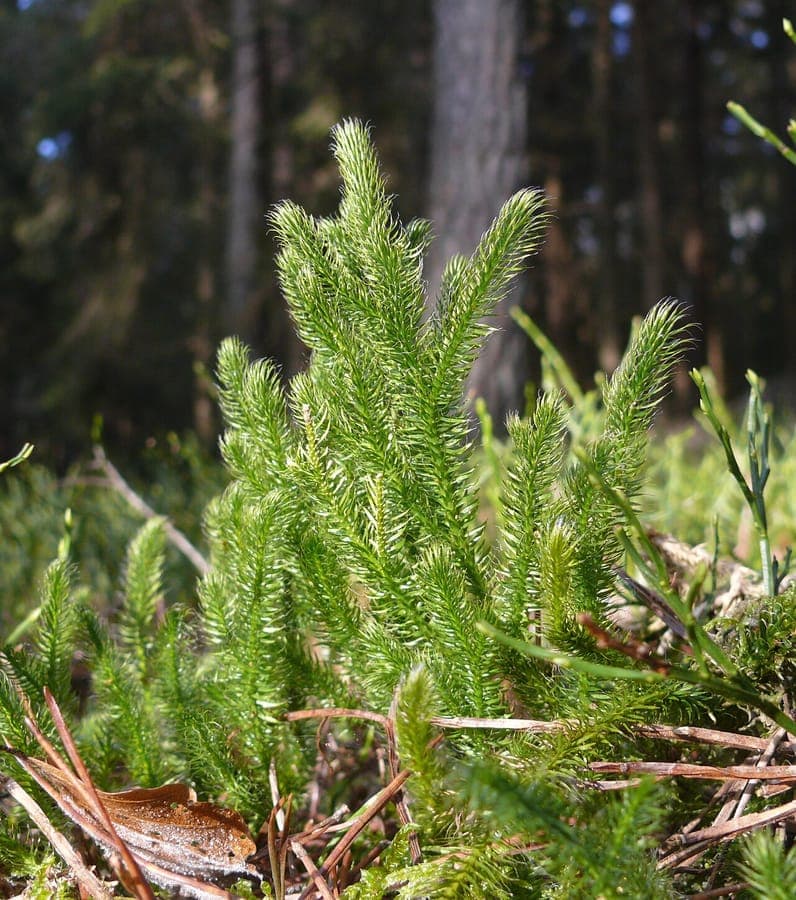
Bernd Haynold / CC BY-SA 3.0, via Wikimedia Commons
Lycopodium clavatum: complete guide
Lycopodium clavatum
¿Quieres ver Lycopodium clavatum: complete guide en tu jardín?
1 minuto, sin tarjeta de crédito
Overview
Lycopodium clavatum, better known as Ground-pine or clubmoss, is a fascinating primitive plant belonging to the very ancient Lycopodiaceae family. This evergreen fern-like plant grows slowly but steadily in temperate and subarctic forests of the northern hemisphere, forming dense ground carpets beneath conifers and mixed deciduous-coniferous forests. The plant is known for its characteristic creeping growth habit with long, thin stems that can extend over meters, and especially for its striking club-shaped sporostachya (spore-bearing structures) that protrude like small yellow knots at stem ends. This extremely hardy species, frost-tolerant to USDA zone 2, is ideal for garden owners wishing to create authentic forest-floor simulation in their gardens via gardenworld.app.
Lycopodium clavatum is undoubtedly one of the most characteristic of all clubmosses, with its unique yellow-brown sporostachya prominently extending like little tennis rackets or clubs at stem tips. These structures are especially striking in autumn light when they contrast against green foliage. The creeping stems can reach up to 2 meters long, forming intricate networks of reddish-gray branches densely covered with minuscule needle-like leaves. The plant forms extremely dense, low-growing mats typically no more than 10-15 centimeters high, making it ideal for forest-floor cover in shaded garden conditions.
What's interesting about Ground-pine is that this species has been used in traditional medicine since ancient times and was historically used in rituals and ceremonies. The yellow pollen from the sporostachya, ripening in October-November, is extremely fine and powdery and was historically used for pyrotechnic purposes because it's highly explosive when finely ground. For modern gardeners, this is primarily interesting trivia; for gardenworld.app users, it's principally an exceptional ground-cover plant requiring minimal maintenance and biologically highly valuable.
Ideal Location
Ground-pine thrives best beneath mixed to dense deciduous tree canopies, meaning under conifers, oaks, or mixed forests. The plant prefers complete to very light shade (maximum 20-30% sunlight) and will not grow in full sun. Perfect locations include forest edges, beneath dense tree clusters, or along north or west-facing building aspects where afternoon shade prevails. The plant is extremely shade-loving and grows best where other plants struggle due to darkness, making it an excellent choice for difficult-to-plant areas.
The plant tolerates considerable wind, unlike many other delicate moss-flowers, making it suitable for fairly open forest edges and windy locations. High air humidity is desirable (60-80%), so avoid very dry, full-sun, windy corners. Preferably plant this in areas somewhat protected from direct midday sun where natural ground moisture remains high.
Soil Type & Nutrition
Lycopodium clavatum grows in very acidic to neutral soils with pH between 4.0 and 6.0, leaning acidic. The plant is highly flexible regarding nutrition and thrives in very nutrient-poor soils, attracting it for inherent forest conditions. The ideal soil is humus-rich, drained yet moisture-retaining, with substantial weathered plant material and dead leaves. If you lack natural forest soil, simulate it by applying 10-15 centimeter thick layers of leaf mold, compost of dead conifer wood, or acidic peat.
Nutrient requirements are minimal. Avoid using synthetic fertilizers because this can harm the plant and disrupt the nature of its growing environment. Instead, allow natural leaf litter to accumulate annually, forming the foundation upon which this plant grows. The underlying soil must drain well while remaining constantly moist.
Diseño gratis
¿Quieres ver Lycopodium clavatum: complete guide en tu jardín? Crea un diseño gratis ahora.
Watering & Moisture Management
Ground-pine is reasonably moisture-loving and enjoys consistently moderately moist soil. However, waterlogging and stagnation become problematic. Ensure water drains well while soil never dries out. During dry periods (summer), apply regular spraying or light irrigation at least twice weekly, especially in very dry years. In moisture-rich seasons (autumn, winter), supplemental water is usually unnecessary.
Use soft or rainwater rather than tap water, as this better maintains your soil's acidity. In very wet, marshy soils the plant also grows well, but only while water doesn't stagnate. Underground irrigation via drip systems is ideal because it ensures constant moisture without excess overhead water.
Maintenance & Pruning
Ground-pine requires virtually no maintenance. Pruning is unnecessary because the plant grows very slowly and naturally maintains neat form. The only possible action is carefully removing dead or damaged branches in spring (March-April), and perhaps weeding unwanted plants growing between plantings. Heavy foot traffic must be avoided because it can damage the fine, shallow root systems.
Allow natural leaf litter and organic decay material to remain, as it benefits the plant. If wild plants or weeds grow excessively and overshadow Lycopodium, carefully remove such weeds. Algae growth on plant floors can be delicately cleaned if problematic.
Maintenance Calendar
March-April: Spring inspection, dead branch removal, moisture check May-June: Active season, ensure consistent soil moisture July-August: Possible drought irrigation, spore preparation September-October: Spore ripening and dispersal November-February: Winter dormancy, minimal maintenance, humidity maintenance
Winter Hardiness & Frost Sensitivity
Lycopodium clavatum is extremely winter-hardy and thrives in very cold climates. The plant is fully frost-tolerant to USDA zone 2 (minimum temperature -40°C), making it suitable for virtually all European gardens. The plant inhabits subarctic forests and can tolerate extreme cold without any protection. During severe winters, the plant withdraws, but underground parts survive without issue.
Snow cover is actually beneficial because it insulates against even colder weather. Very long dry frost periods without snow can cause some moisture desiccation, but the plant usually recovers independently.
Companion Plants & Installation
When establishing Lycopodium clavatum, begin by selecting suitable locations. Purchase young plant material from specialized wild plant nurseries. Plant young specimens in prepared soils of acidic, humus-rich earth beneath tree canopies, spacing 30-50 centimeters apart because the plant grows slowly but does expand.
Companion plants include other forest-floor species such as strawberry varieties, moss species, other Lycopodium species, and fine forest-floor shrubs. For authentic forest-floor atmosphere, plant this alongside anemone (Anemone nemorosa), dwarf heather (Calluna vulgaris) and decorative mosses in a low composition requiring minimal maintenance. Via gardenworld.app you can easily realize ready-made forest-floor designs.
Conclusion
Ground-pine is a subtle yet highly valuable plant for garden owners wishing to create authentic, natural forest floors in their gardens. The characteristic club-shaped sporostachya are fascinating to observe, especially in autumn colors, and the extremely slow, dense growth habit ensures a sustainable, low-maintenance ecosystem in your garden. This suits particularly those wishing to build a true forest-simulation garden via gardenworld.app.
¿Quieres ver Lycopodium clavatum: complete guide en tu jardín? Crea un diseño gratis ahora.
Sube una foto, elige un estilo y obtén un diseño fotorrealista con lista de plantas en menos de un minuto.
Más de 10.000 jardines diseñados
Sin tarjeta de crédito


Plantas similares
Alpine clubmoss: complete guide
Lycopodium alpinum
Alpine clubmoss thrives in subarctic and temperate mountain areas across the northern hemisphere. This rare plant grows on alpine tundra and high peaks from Alaska to Greenland. Learn about habitat, cultivation, and remarkable adaptations.
Christmas green: complete guide
Lycopodium complanatum
Christmas green is a frost-hardy moss-like plant perfect for shady gardens and woodland edges. Growing and care guide for northern temperate climates.
Huperzia selago: complete guide
Huperzia selago
Discover the mountain clubmoss: a truly unique arctic fern-like plant for moist shaded gardens. Growing guide with soil, moisture and specialized care.