
Bernd Haynold / CC BY 2.5, via Wikimedia Commons
Lycopodium annotinum: complete guide
Lycopodium annotinum
¿Quieres ver Lycopodium annotinum: complete guide en tu jardín?
1 minuto, sin tarjeta de crédito
Overview
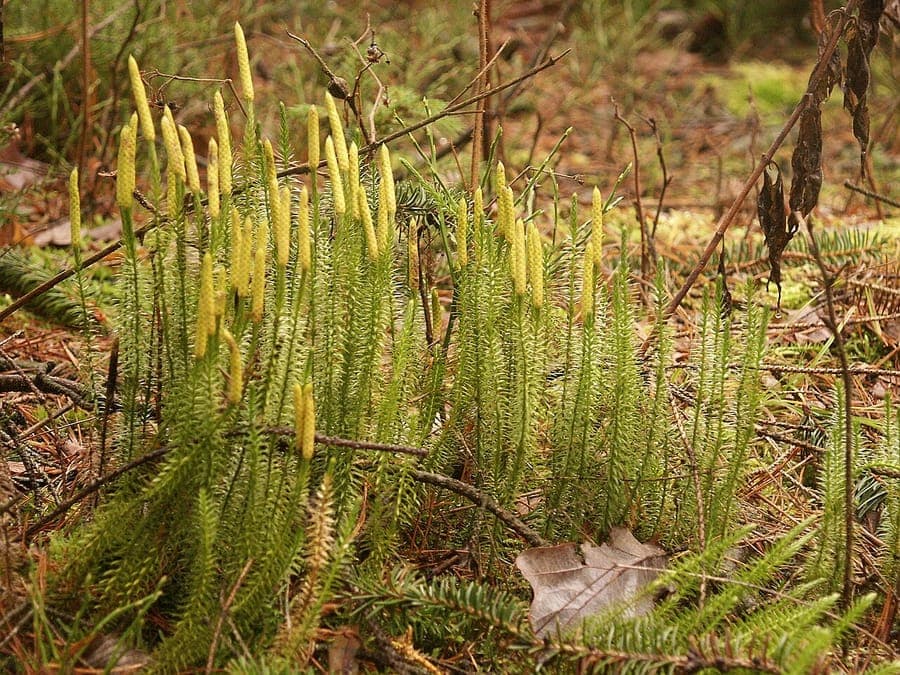
Lycopodium annotinum, commonly known as Stiff clubmoss, is an elegant primitive plant from the Lycopodiaceae family that naturally inhabits temperate and subarctic forests of the northern hemisphere. This hardy species grows slowly but steadily in moisture-rich, acidic soils beneath deciduous and coniferous trees, forming dense carpets in shaded garden corners. With its characteristic rigid, upright branches that expand in regular spirals, this little plant achieves heights of 20-40 centimeters, making it exceptionally suited to gardens with forested shade conditions. Via gardenworld.app, you can design frost-resistant gardens where this subtle forest plant reaches its full potential.
Stiff clubmoss possesses a particularly distinctive appearance with its regularly branched, pine-like structure. The stems are exceptionally rigid and rigid - hence the "stiff" clubmoss name - and grow upright rather than creeping like many other Lycopodium species. This rigidity stems from thick-walled cells and strong internal fiber structures, enabling the plant to withstand heavy snow weight in cold winters. The leaves are minuscule, mere millimeters long, and spiral around the stem, which combined with the rigid growth form creates a characteristically very geometric silhouette.
The above-ground growth of Lycopodium annotinum is impressively stable and remains green year-round, making it a valuable structure plant in winter gardens. Below ground, this plant develops an underground reproductive system with gemmae (asexual spores) enabling propagation, slowly forming expanding colonies through this mechanism. For garden designers seeking natural, elegant forest aesthetics without excessive maintenance, Stiff clubmoss represents an excellent choice you can integrate into your garden plan via gardenworld.app.
Ideal Location
Stiff clubmoss thrives best in completely shaded to very lightly shaded locations, ideally beneath dense deciduous or coniferous tree canopies. The plant dislikes direct sunlight and will wither or even completely perish if placed in full sun. Perfect locations include beneath large trees, along northern building aspects, or in natural forest environments where tree canopies diffuse daylight softly. The minimal light intensity this plant requires hovers around 10-15% of full sunshine penetration, meaning even very dark corners can support growth.
Air humidity requirements are substantial: the plant grows best in environments with 70-85% relative humidity, meaning avoid placing it in open, windy gardens. Protected, inward-facing shaded locations maintaining high humidity are ideal. If your garden is very dry and wind-prone, you can create sheltered microsites by positioning the plant beneath dense undergrowth or tightly-foliaged shrub clusters.
Soil Type & Nutrition
Lycopodium annotinum demands very specific soil conditions. This is an acid-lover thriving in acidic to very acidic soils with pH values between 4.0 and 5.5. The ideal soil is moisture-rich, humus-rich, and contains substantial organic decay material such as dead leaves, twigs, and decomposition products. This plant grows in forest zones carpeted by thick humus layers, so attempt replicating this in your garden by applying 5-10 centimeter thick layers of leaf mold, peat moss, or composted leaves.
The soil must drain well while remaining constantly moist. Heavy, compact clay soils are unsuitable, so amend your beds with sand or perlite. Nutrient requirements can stay minimal: Stiff clubmoss is adapted to nutrient-poor forest zones where nitrogen is scarce. Synthetic fertilizers are unnecessary and potentially harmful. Instead, support the plant by allowing leaf fall to accumulate, leaving this annually beneath the plant.
Diseño gratis
¿Quieres ver Lycopodium annotinum: complete guide en tu jardín? Crea un diseño gratis ahora.
Watering & Moisture Management
This plant is highly drought-sensitive because its fine leaves desiccate rapidly. Moisture consistency is therefore crucial: ensure soil remains continuously moderately moist, neither dry nor waterlogged. During summer, especially dry periods, you must water regularly or irrigate at least twice weekly. Better still: install drip irrigation systems maintaining soil around the plant constantly moist with water delivered slowly and continuously.
During rainy seasons (autumn through spring), many regions naturally receive sufficient precipitation, so supplemental watering can stay minimal. During snowfall, no extra water is needed, since snow in temperate zones where this plant thrives provides adequate moisture upon melting. Use soft, preferably rainwater rather than tap water, as this better maintains your soil's acidity.
Maintenance & Pruning
Lycopodium annotinum requires minimal maintenance. Pruning is unnecessary because the plant grows slowly and naturally maintains neat form. The only possible action is removing dead or damaged branches in late spring (April-May), though this is rarely necessary. Avoid heavy disturbance or strong foot traffic over planted beds, as these delicate plants are sensitive to root system disruption.
Weeds must be removed regularly, not by hoeing (which damages the plant), but carefully by hand. Allow naturally decomposing leaves and plant material to remain, as this contributes to the humus formation the plant depends upon. If moss infiltration causes problems, gently remove some moss, but retain sufficient coverage keeping the soil protected.
Maintenance Calendar
March-April: Inspection for damaged branches, careful clearing of dead leaves May-June: Active growing season, ensure sufficiently moist soil July-August: Peak growth period, regular misting essential, monitor spore production September-October: Spore dispersal, no intervention needed November-February: Winter dormancy, minimal maintenance, water maintenance
Winter Hardiness & Frost Sensitivity
Lycopodium annotinum is extremely winter-hardy and thrives in very cold climates. The plant is fully frost-tolerant to USDA zone 2 (minimum temperatures to -40°C), making it suitable for virtually all northern European gardens. The plant grows in subarctic forests, enabling it to withstand extreme cold without protection. Winter dormancy is complete: plants curtail their moisture economy, but leaves remain green and visible plant parts don't perish.
Snow cover is actually beneficial for this plant, as it insulates against even colder weather and reduces moisture loss through evaporation. Long frost periods without snow cover can cause minor desiccation in very severe winters, but the plant typically recovers unaided.
Companion Plants & Installation
When planning to establish Lycopodium annotinum, begin by creating suitable growth conditions. Purchase young plant material from specialized forest plant nurseries. Plant young specimens in prepared beds of acidic, humus-rich soil beneath shaded tree canopies, spacing 20-30 centimeters apart to allow slowly growing colonies to expand.
Companion plant species can include other shade and acid-loving plants such as other Lycopodium species, Dryopteris ferns, or smaller shade shrubs. For authentic forest-floor effects, plant this alongside lingonberry (Vaccinium vitis-idaea), heather (Calluna vulgaris), and mosses (Bryophyta) in a low composition requiring minimal maintenance and achievable as ready-made forest-floor design via gardenworld.app.
Conclusion
Stiff clubmoss is not spectacular in traditional terms, but for garden owners seeking authentic forest-floor structure in their dark, shaded gardens, it represents an invaluable choice. The very geometric, rigid growth form provides winter-stable interest structure, while multiple plant groupings create a fascinating, low-growing carpet. This proves especially meaningful for nature-oriented gardeners who wish to realize genuine forest simulation in their gardens through gardenworld.app.
¿Quieres ver Lycopodium annotinum: complete guide en tu jardín? Crea un diseño gratis ahora.
Sube una foto, elige un estilo y obtén un diseño fotorrealista con lista de plantas en menos de un minuto.
Más de 10.000 jardines diseñados
Sin tarjeta de crédito


Plantas similares
Alpine clubmoss: complete guide
Lycopodium alpinum
Alpine clubmoss thrives in subarctic and temperate mountain areas across the northern hemisphere. This rare plant grows on alpine tundra and high peaks from Alaska to Greenland. Learn about habitat, cultivation, and remarkable adaptations.
Christmas green: complete guide
Lycopodium complanatum
Christmas green is a frost-hardy moss-like plant perfect for shady gardens and woodland edges. Growing and care guide for northern temperate climates.
Huperzia selago: complete guide
Huperzia selago
Discover the mountain clubmoss: a truly unique arctic fern-like plant for moist shaded gardens. Growing guide with soil, moisture and specialized care.