
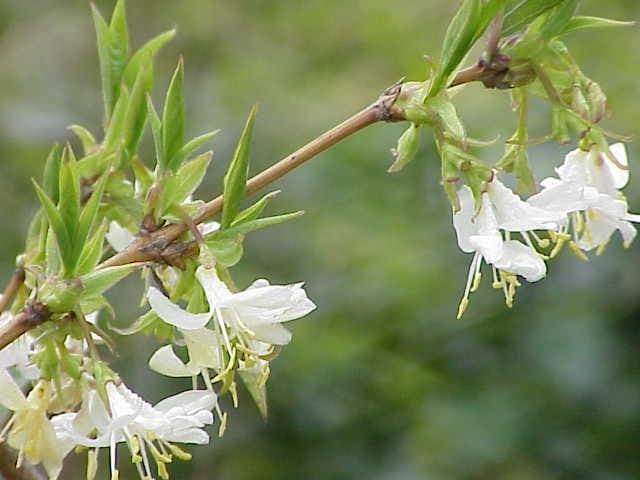
Kurt Stüber [1] / CC BY-SA 3.0, via Wikimedia Commons
Lonicera fragrantissima: complete guide
Lonicera fragrantissima
¿Quieres ver Lonicera fragrantissima: complete guide en tu jardín?
1 minuto, sin tarjeta de crédito
Lonicera fragrantissima, commonly known as winter honeysuckle, January jasmine, or fragrant honeysuckle, is a semi-evergreen shrub from the Caprifoliaceae family (honeysuckle family) native to central and south-central China. This remarkable shrub is prized for exceptionally early flowering (January-February in temperate zones), intensely fragrant blooms, and attractive dark green foliage that persists through much of winter. Growing typically 1.5 to 2.5 meters tall and equally broad, Lonicera fragrantissima is ideal for borders, informal hedges, specimen plantings, and foundation landscaping where winter interest and early-season fragrance are desired. Its semi-evergreen character provides ornamental value even during darker months. This comprehensive guide covers everything from cultivation requirements through seasonal care.
Appearance and Bloom
Lonicera fragrantissima develops an attractive, graceful shrubby form with arching branches. Plants typically reach 1.5 to 2.5 meters in height and equivalent spread, though selective pruning can maintain more compact dimensions. Leaves are dark green, oblong-elliptic, approximately 3 to 8 centimeters long and 1.5 to 3 centimeters wide, with smooth margins. Significantly, foliage is semi-evergreen, meaning leaves persist through mild winters but partially drop during severe cold. Flowering is the plant's signature feature. Blooms appear as early as January in mild climates, sometimes commencing in December. Individual flowers are diminutive approximately 1 to 1.5 centimeters long borne in paired clusters (two flowers together), ranging from pure white to very pale pink. The fragrance is remarkably intense and delightful: sweet, slightly citrus-scented, and very appealing. Blooming period extends eight to twelve weeks. Following flowering, attractive small red berries develop, gradually darkening to deeper scarlet.
Ideal Location
Lonicera fragrantissima thrives in full sun to partial shade, preferring minimum four to six hours of direct sunlight daily for optimal flowering. The plant tolerates moderate shade reasonably well, though blooming becomes somewhat sparser. In full deep shade, flowers may be sparse. For maximum winter blooming in temperate zones, south or west-facing positions capture additional warmth. The plant is extremely hardy, surviving to USDA zone 4 (minus 30 degrees Celsius), though milder zones (5-9) provide more ideal conditions. Sheltered positions where strong winter winds are moderated are preferable.
Soil Requirements
Lonicera fragrantissima accepts diverse soil types from sandy through loamy to heavy clay, provided drainage remains reasonable. The plant performs best in fertile, well-structured, freely draining soil with pH ranging from 5.5 to 7.5. Heavy clay soils improve significantly with incorporation of 5 to 10 centimeters of well-rotted organic matter (compost, aged manure, or cocoa hull mulch) before planting. Sandy soils similarly benefit from organic addition. The plant is not particularly nutrient-demanding and grows acceptably in poor soils, though richer soils produce stronger foliage and more abundant flowers.
Diseño gratis
¿Quieres ver Lonicera fragrantissima: complete guide en tu jardín? Crea un diseño gratis ahora.
Watering
Established Lonicera fragrantissima is reasonably drought-tolerant, though consistent moisture promotes superior growth and flowering. Newly planted shrubs during their first growing season (May-October) require regular irrigation: approximately once weekly with sufficient water to moisten soil to 15-20 centimeter depth. Once established (after one to two years), watering can reduce to once every two weeks under normal conditions. During extended dry periods (more than two weeks without rain), supplementary irrigation proving beneficial, especially in warm months, providing approximately 2-3 centimeters water weekly.
Pruning and Maintenance
Lonicera fragrantissima requires minimal pruning, though light pruning immediately after flowering (March-April) encourages compact form and abundant subsequent-season flowers. Spent flowers may be removed, though unnecessary for plant health. Every two to three years, older branches may be entirely removed at ground level, stimulating vigorous new growth. This rejuvenation pruning keeps the plant compact and floriferous.
Maintenance Calendar
January-February: Peak flowering period, enjoy fragrance! March-April: Light pruning after flowering promotes compact form. May-June: New growth emergence, initial fruit development. July-August: Supplementary water in very dry conditions. September-October: Winter preparation. November-December: Winter dormancy, no feeding.
Winter Hardiness
Lonicera fragrantissima is exceptionally winter-hardy, surviving to USDA zone 4 (minus 30 degrees Celsius). In many temperate climates (zones 5-9), it grows excellently. Semi-evergreen foliage may partially drop during very cold winters, but the plant recovers completely when temperatures moderate. Flowering may occur slightly later during severely cold years.
Companion Planting
Lonicera fragrantissima combines beautifully with other winter bloomers. Excellent companions include Jasminum nudiflorum (winter jasmine), Daphne odora (fragrant daphne), Sarcococca confusa (sweet box), Viburnum bodnantense (pink viburnum), and Hamamelis (witch hazel). For structural definition, dark evergreen shrubs like Buxus (boxwood) and Taxus (yew) provide excellent backdrop. For groundcover beneath the shrub, low-growing evergreens such as Hedera helix (ivy) and Euonymus fortuni work well.
Conclusion
Lonicera fragrantissima is an unmatched winter-flowering shrub piercing months of dormancy with delightful blooms and intense fragrance. With minimal maintenance requirements and excellent hardiness, it represents a practical choice for temperate gardens. Whether planting a small urban garden or extensive landscape design, this elegant shrub adds indispensable winter interest and early-season joy. Visit gardenworld.app for personalized garden designs incorporating winter interest plantings.
¿Quieres ver Lonicera fragrantissima: complete guide en tu jardín? Crea un diseño gratis ahora.
Sube una foto, elige un estilo y obtén un diseño fotorrealista con lista de plantas en menos de un minuto.
Más de 10.000 jardines diseñados
Sin tarjeta de crédito


Plantas similares
Yellow honeysuckle (Lonicera tragophylla): complete guide
Lonicera tragophylla
Meet yellow honeysuckle (Lonicera tragophylla): a Chinese climber with large golden flowers that thrives in partial shade.
Lonicera korolkowii: complete guide
Lonicera korolkowii Stapf
Discover blueleaf honeysuckle, a vigorous shrub with beautiful flowers. Guide on growing, shaping and why this Asian climbing plant is perfect for gardens.
Lonicera oblongifolia: complete guide
Lonicera oblongifolia Hook.
Discover swamp fly honeysuckle, a North American woodland plant. Guide on growing, caring and why this native species is valuable for gardens.