
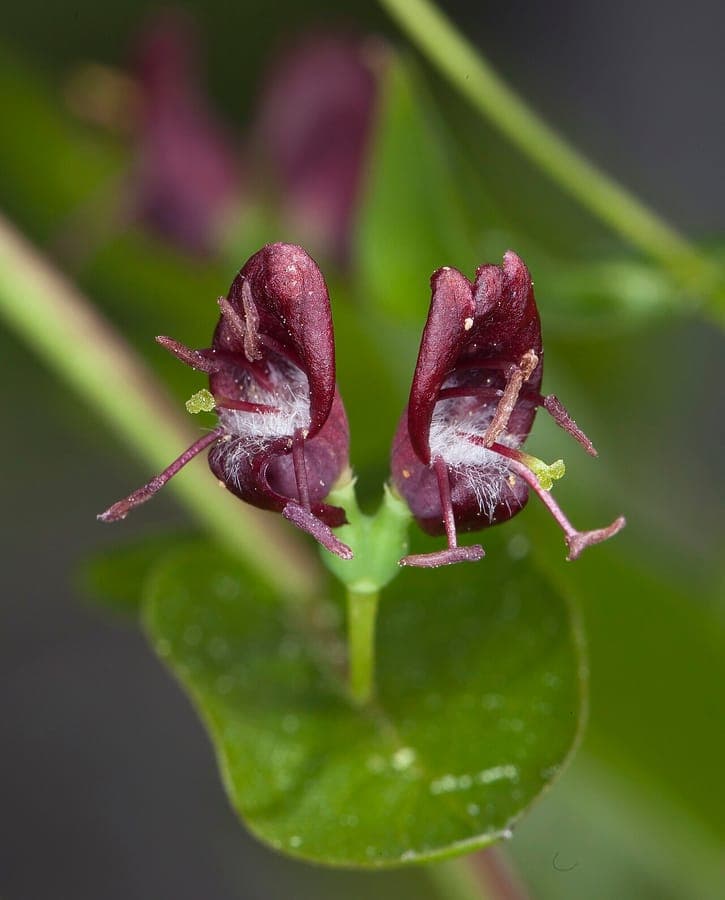
John Game / CC BY 2.0, via Wikimedia Commons
Purpleflower honeysuckle: complete guide
Lonicera conjugialis
¿Quieres ver Purpleflower honeysuckle: complete guide en tu jardín?
1 minuto, sin tarjeta de crédito
Overview
The purpleflower honeysuckle (Lonicera conjugialis) is a striking native North American shrub found throughout California, Idaho, Nevada, Oregon, and Washington. This versatile plant thrives in the western mountains and is a valuable addition to desert and rock gardens. Known for its attractive purple flowers that appear in the growing season, the shrub attracts bees and hummingbirds to any garden.
Like many native western plants, this honeysuckle has adapted to dry, sunny environments and requires minimal maintenance. The plant establishes well in landscape beds but truly shines when used as an accent in rock gardens or along borders.
Appearance and Bloom
The purpleflower honeysuckle typically grows as a light to medium-sized shrub with a natural, spreading form. The flowers are deep purple to violet colored and appear in rich clusters. This flower color is the defining characteristic that distinguishes this species from other Lonicera species in the same region.
The leaves are lance-shaped and dark green, creating a beautiful contrast against the dramatic flower colors. Following the blooms, red to dark red berries form, which are consumed by birds. These fruits are nutritious and attract diverse bird species throughout the growing season.
Blooming starts in early spring and continues into early summer. In ideal conditions, the shrub can remain in bloom for several months.
Ideal Location
This honeysuckle species grows best in full sun to lightly shaded locations. In the southernmost parts of its range, afternoon shade helps the plant enjoy cooler temperatures during peak summer heat.
The plant prefers windbreak protection, though it is reasonably wind-tolerant. It grows best when positioned against a warm, sheltered wall or integrated into a rock garden design. This placement ensures the plant achieves full growth and the richest bloom display.
Soil
The purpleflower honeysuckle thrives in well-draining, moderately fertile soil. The plant can thrive in poor and calcareous soils, making it an excellent choice for rock gardens and dry locations.
Soil improvement is not strictly necessary for this species. However, adding sand or gravel promotes drainage, especially in areas with significant winter or spring rainfall. Once established, the plant tolerates dry soils extremely well.
Watering
Once established, the purpleflower honeysuckle is highly drought-tolerant. Regular water during the first growing season helps the plant develop strong roots.
After establishment, mature plants require minimal supplemental water. Extra watering can help during dry spells lasting longer than three weeks. In regions with normal annual rainfall, this plant thrives with virtually no supplemental watering.
Diseño gratis
¿Quieres ver Purpleflower honeysuckle: complete guide en tu jardín? Crea un diseño gratis ahora.
Pruning
Minimal pruning is needed for this honeysuckle. After blooming, remove any dead or damaged branches. Formative pruning can be performed in late spring, though the plant also looks attractive in its natural form.
It is best to delay pruning until after the flowering period, as pruning during the growing season removes many flowers. Overgrown older plants can be cut back to approximately two-thirds of their original height.
Maintenance Calendar
Spring: Check the plant for winter damage. Remove dead wood. Add mulch around the plant base to reduce moisture loss. Summer: Water during dry periods. Remove spent flowers if desired, though this is not necessary. Fall: Watering can be reduced as new growth slows. Winter: In its native range, this species requires no protection. In colder climates, shelter can help.
Winter Hardiness
The purpleflower honeysuckle is highly winter-hardy and thrives in regions with cold winters and dry summers. This plant tolerates extreme temperature fluctuations without difficulty.
In warmer zones, this plant performs well in elevated gardens where cold winters occur. This plant does not feel comfortable in zones with warm, humid winters.
Companion Plants
The purpleflower honeysuckle pairs exceptionally well with other western native plants. Beautiful combinations are possible with:
Sage varieties, especially silver-leafed sages, provide contrast to the purple flowers. Rabbitbrush offers late-season yellow flowers that glow elegantly against the honeysuckle foliage. Native buckwheat species provide white flowers and interesting seed heads. Grassy western nectar plants like stipa and muhlenbergia add texture and movement.
These combinations make sunny rock gardens and dry growing zones both functional and visually striking.
Closing Thoughts
The purpleflower honeysuckle offers years of garden pleasure. With minimal maintenance, bird-friendly characteristics, and an extended bloom period, it is a valuable addition to western-inspired gardens. For anyone interested in rock gardens, elevated gardens, or simply drought-tolerant landscapes, this robust native shrub is worth discovering.
You can find the purpleflower honeysuckle at garden centers in English-speaking countries. For design advice and landscape combinations with native species, visit gardenworld.app for professional guidance and support.
¿Quieres ver Purpleflower honeysuckle: complete guide en tu jardín? Crea un diseño gratis ahora.
Sube una foto, elige un estilo y obtén un diseño fotorrealista con lista de plantas en menos de un minuto.
Más de 10.000 jardines diseñados
Sin tarjeta de crédito


Plantas similares
Yellow honeysuckle (Lonicera tragophylla): complete guide
Lonicera tragophylla
Meet yellow honeysuckle (Lonicera tragophylla): a Chinese climber with large golden flowers that thrives in partial shade.
Lonicera korolkowii: complete guide
Lonicera korolkowii Stapf
Discover blueleaf honeysuckle, a vigorous shrub with beautiful flowers. Guide on growing, shaping and why this Asian climbing plant is perfect for gardens.
Lonicera oblongifolia: complete guide
Lonicera oblongifolia Hook.
Discover swamp fly honeysuckle, a North American woodland plant. Guide on growing, caring and why this native species is valuable for gardens.