
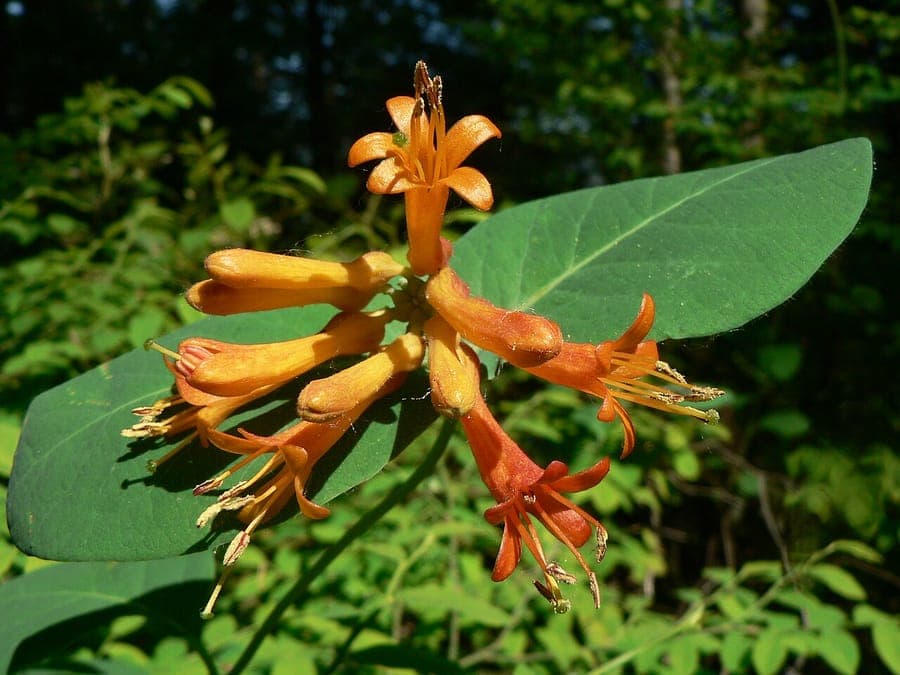
Walter Siegmund / CC BY 2.5, via Wikimedia Commons
Orange Honeysuckle: complete guide
Lonicera ciliosa
¿Quieres ver Orange Honeysuckle: complete guide en tu jardín?
1 minuto, sin tarjeta de crédito
Overview
Lonicera ciliosa, commonly known as Orange Honeysuckle or Western Trumpet Honeysuckle, is a spectacular climbing vine from the Caprifoliaceae family. Native to western Canada and the western United States where it grows in mountain forests and along stream banks, this plant is increasingly valued in European gardens for its spectacular orange flowers.
This impressive plant is especially prized for its intense orange to red-orange tubular flowers with delightful fragrance, its bird-friendly berries, and the dynamic color it adds during summer months. The plant is ideal for pergolas, wall coverings, and vertical garden applications.
Appearance and Bloom
Lonicera ciliosa is a vigorous climbing vine that can reach 3 to 4 meters or more under favorable conditions. The plant grows rapidly up support structures and forms dense, leafy coverage. Leaves are opposite, oval to elliptical, and bright green. Notable are the ciliated (hair-like) margins on leaf stems and leaf edges, explaining the plant's scientific name.
Flowering occurs from May to June, sometimes extending to July. The flowers are the star feature of this plant - long, tubular, intensely orange to red-orange, and highly fragrant. Flowers appear in bundles at branch tips. These spectacular blooms attract hummingbirds and other nectar-feeding birds. After blooming, small shiny red to orange berries develop, providing autumn food for migrating birds.
Ideal Location
Orange Honeysuckle thrives best in full sun. The plant requires at least 6 hours of direct sunlight daily to flourish and bloom abundantly. While it tolerates partial shade, flowering is reduced in shadier conditions.
The plant is excellent for pergolas, arbors, wall coverings, fences, and other vertical structures. Provide sturdy support as the plant grows vigorously.
Soil
Lonicera ciliosa prefers nutrient-rich, well-draining soil. The plant grows best in slightly acidic to neutral soil (pH 6.0 to 7.5) and appreciates organic matter incorporation. Compost may be added at planting, though the plant also tolerates poorer soils.
The plant tolerates dry soils better than some Lonicera species, though regular moisture is preferred.
Watering
Orange Honeysuckle requires regular watering during the growing season. Water consistently so the soil remains moist but not waterlogged. Once established, the plant tolerates dry periods better than many other vines.
Drip irrigation or mulch application helps maintain moisture consistency.
Diseño gratis
¿Quieres ver Orange Honeysuckle: complete guide en tu jardín? Crea un diseño gratis ahora.
Pruning and Maintenance
Lonicera ciliosa grows vigorously and requires regular pruning to maintain control. After flowering, prune fairly severely without damage. Remove excess growth and shape the plant as desired.
The plant can be cut back significantly in late winter to about half its size, promoting more blooms in spring through new growth.
Maintenance Calendar
March-April: Severe pruning. Remove dead branches and shape the plant.
May-June: Flowering period. Water regularly. No pruning.
July-September: Growing period. Continue regular watering and feeding.
October-November: Autumn; remove dead growth in preparation for winter.
December-February: Winter dormancy. Bare vines are not problematic.
Winter Hardiness
Orange Honeysuckle is moderately hardy, tolerating temperatures to approximately -15 to -20 degrees Celsius, though young plants benefit from extra protection. In colder regions, significant winter damage may occur. In warmer temperate climates it thrives excellently.
Companion Planting
Lonicera ciliosa combines beautifully with other warm-loving climbing plants. White-flowered Clematis varieties (Clematis armandii or Clematis montana alba) form elegant color contrasts. The plant can be grown with continuous bloomers and blue gloria vines for colorful displays.
Orange flowers harmonize well with yellow accents (yellow roses, yellow clematis) and purple accents (purple clematis varieties).
Pests and Diseases
Orange Honeysuckle is relatively pest and disease-resistant. Occasionally, spider mites or whiteflies may appear in very hot, dry conditions. Regular misting of foliage or strong water spray can discourage these pests. The plant rarely suffers from serious diseases when grown in well-draining soil.
Periodic inspection for signs of stress or pest damage helps catch problems early.
Conclusion
Orange Honeysuckle is a top choice for climbing plant enthusiasts and those wanting to add dynamic color and form to their gardens. This spectacular plant offers intense blooms, pleasant fragrance, bird benefits, and dramatic visual impact. With regular pruning and full sun placement, you will greatly enjoy this western North American beauty.
Consult local garden centers and nurseries for plant material. With this guide, you are well-prepared to successfully integrate this impressive vine into your garden. Discover on gardenworld.app how to use this colorful plant for maximum visual impact! Years of stunning seasonal color await you with this remarkable climber.
¿Quieres ver Orange Honeysuckle: complete guide en tu jardín? Crea un diseño gratis ahora.
Sube una foto, elige un estilo y obtén un diseño fotorrealista con lista de plantas en menos de un minuto.
Más de 10.000 jardines diseñados
Sin tarjeta de crédito


Plantas similares
Yellow honeysuckle (Lonicera tragophylla): complete guide
Lonicera tragophylla
Meet yellow honeysuckle (Lonicera tragophylla): a Chinese climber with large golden flowers that thrives in partial shade.
Lonicera korolkowii: complete guide
Lonicera korolkowii Stapf
Discover blueleaf honeysuckle, a vigorous shrub with beautiful flowers. Guide on growing, shaping and why this Asian climbing plant is perfect for gardens.
Lonicera oblongifolia: complete guide
Lonicera oblongifolia Hook.
Discover swamp fly honeysuckle, a North American woodland plant. Guide on growing, caring and why this native species is valuable for gardens.