
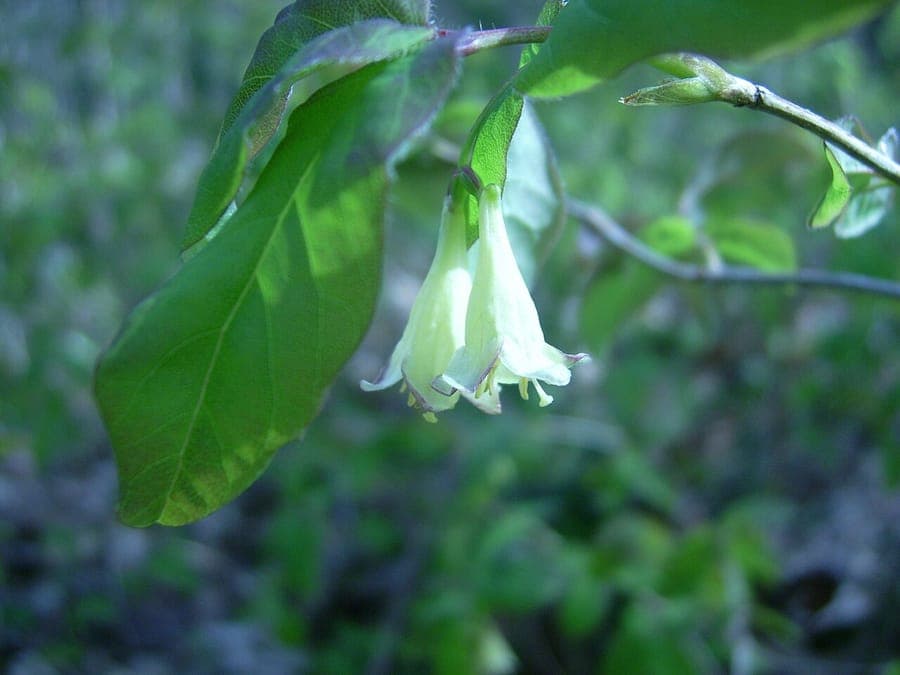
Fungus Guy / CC BY-SA 3.0, via Wikimedia Commons
American Fly Honeysuckle: complete guide
Lonicera canadensis
¿Quieres ver American Fly Honeysuckle: complete guide en tu jardín?
1 minuto, sin tarjeta de crédito
Overview
Lonicera canadensis, commonly known as American Fly Honeysuckle, is an attractive shrubby plant from the Caprifoliaceae family. Native to North American forests and streambanks from Canada to North Carolina and Tennessee, this plant has gained increasing appreciation in European gardens among those valuing natural ecology and wildlife-friendly landscapes.
This ornamental is highly valued for its elegant flowers, bird-friendly red berries, and compact growth habit. The plant is beneficial for birds, insects, and reduces garden maintenance significantly. It is an excellent choice for those who appreciate native plants and natural garden aesthetics.
Appearance and Bloom
Lonicera canadensis is an elegant shrub growing 60 to 120 centimeters tall and spreading to 150 centimeters wide. The plant exhibits a looser, more graceful growth habit than many other Lonicera species. Leaves are opposite, elliptical, and green, with new growth sometimes displaying light green or blue-tinted foliage.
Flowering occurs in late spring to early summer, typically May to June. Flowers are small, tubular, and white to very pale pink with yellow accents. Blooms appear in pairs at leaf bases and attract numerous pollinators, particularly bees and hover flies. After flowering, shiny red berries develop and persist into autumn, highly attractive to birds.
Ideal Location
American Fly Honeysuckle grows best in full sun to partial shade. The plant tolerates full sun conditions but also thrives in locations receiving 4 to 6 hours of direct sunlight daily. In very hot climates, light afternoon shade is beneficial.
The plant is ideal for natural woodland edges, hedgerow plantings, and as underplanting beneath larger trees. Its bird-friendly nature makes it excellent for ecological gardens and naturalistic landscapes.
Soil
Lonicera canadensis is highly adaptable and grows in virtually any well-draining soil. The plant prefers slightly acidic to neutral soil (pH 5.5 to 7.5) and tolerates poor soils admirably. This makes it an excellent choice for difficult, marginal garden locations.
While the plant tolerates dry soils, it thrives best in lightly moist, well-draining ground. A small amount of compost at planting may be beneficial though not essential.
Watering
Once established, American Fly Honeysuckle is very drought tolerant. During the first two years after planting, regular watering is recommended to establish strong roots. Subsequently, supplemental irrigation is usually unnecessary except during prolonged drought.
Apply moderate watering and avoid standing water. The plant tolerates moist soils but not persistent waterlogging.
Diseño gratis
¿Quieres ver American Fly Honeysuckle: complete guide en tu jardín? Crea un diseño gratis ahora.
Pruning and Maintenance
American Fly Honeysuckle requires minimal pruning. For more compact growth, light pruning after flowering is optional. The plant responds well to pruning and regenerates readily.
Remove dead or diseased branches as needed. For wilder effects, pruning may be entirely omitted.
Maintenance Calendar
April: Check planting holes and apply mulch. Repair winter damage if needed.
May to June: Flowering period. No maintenance required except optional light pruning.
July to September: Growing and berry production period. Minimal maintenance.
October to March: Winter dormancy. Check annually for any pruning needs.
Winter Hardiness
American Fly Honeysuckle is extremely hardy, tolerating temperatures to -35 degrees Celsius. The plant thrives in all temperate and cold European climates. No special winter protection is necessary. In extremely cold winters, upper branches may experience frost damage, but the plant regrows readily from the base.
The plant is also very suitable for windy locations and heavy winter winds. The branches are flexible and do not break easily even in severe conditions.
Companion Planting
Lonicera canadensis combines beautifully with other North American native plants. Attractive pairings include climbing vines such as wild grape and Virginia creeper. The plant works well with other shrubs like Black Chokeberry and Wild Apple.
In woodland edges, the plant harmonizes with ferns and shade-loving groundcovers. In more formal gardens, it combines well with other shrubs for structure and interest.
Propagation and Plant Material
American Fly Honeysuckle can be easily propagated from softwood cuttings in summer, or from seed in autumn. Seed requires a cold period and will germinate in spring. For convenience, selecting pre-grown plant material from specialized nurseries is recommended.
The plant grows fairly quickly and reaches flowering maturity within two to three years of planting.
Conclusion
American Fly Honeysuckle is an excellent choice for gardeners seeking a reliable, native shrub with beautiful flowers and bird-friendly berries. This plant is not only visually attractive but also promotes biodiversity in the garden. With minimal care and remarkable adaptability, this North American native becomes a valuable garden element.
For information on purchasing American Fly Honeysuckle, consult local garden centers and nurseries. With the guidance in this article, you will succeed in growing this remarkable native plant. Discover on gardenworld.app how to perfectly integrate this wildlife-supporting shrub into your garden design! An investment in this plant means years of ecological enhancement to your garden.
¿Quieres ver American Fly Honeysuckle: complete guide en tu jardín? Crea un diseño gratis ahora.
Sube una foto, elige un estilo y obtén un diseño fotorrealista con lista de plantas en menos de un minuto.
Más de 10.000 jardines diseñados
Sin tarjeta de crédito


Plantas similares
Yellow honeysuckle (Lonicera tragophylla): complete guide
Lonicera tragophylla
Meet yellow honeysuckle (Lonicera tragophylla): a Chinese climber with large golden flowers that thrives in partial shade.
Lonicera korolkowii: complete guide
Lonicera korolkowii Stapf
Discover blueleaf honeysuckle, a vigorous shrub with beautiful flowers. Guide on growing, shaping and why this Asian climbing plant is perfect for gardens.
Lonicera oblongifolia: complete guide
Lonicera oblongifolia Hook.
Discover swamp fly honeysuckle, a North American woodland plant. Guide on growing, caring and why this native species is valuable for gardens.