
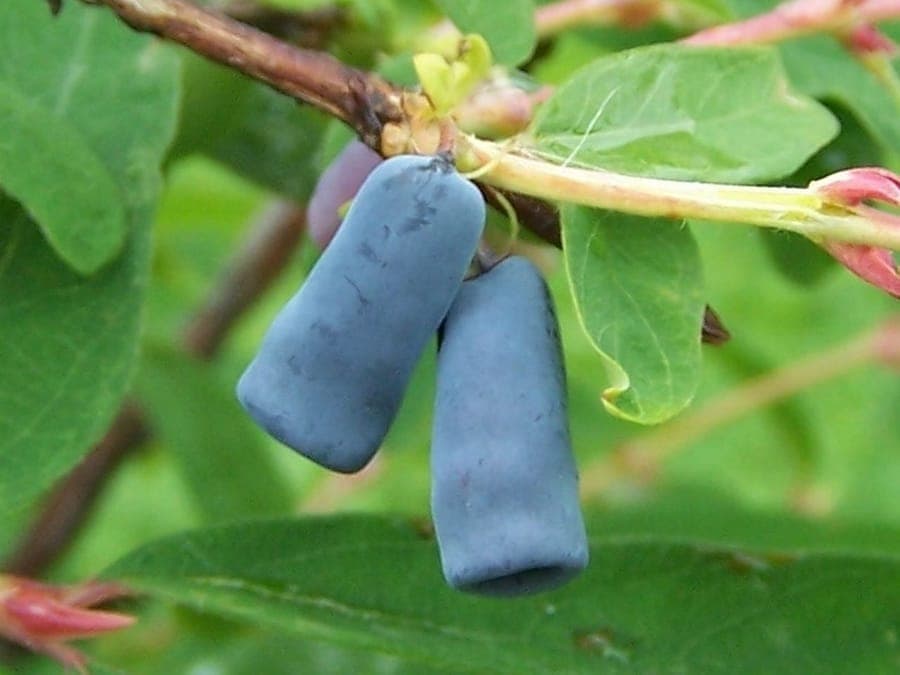
Opioła Jerzy (Poland) / CC BY 2.5, via Wikimedia Commons
Blue honeysuckle: complete guide
Lonicera caerulea
¿Quieres ver Blue honeysuckle: complete guide en tu jardín?
1 minuto, sin tarjeta de crédito
Overview
Blue honeysuckle (Lonicera caerulea) is an attractive deciduous shrub from the Caprifoliaceae family. Prized for delicate spring flowers and distinctive blue berries that ripen in August, this shrub thrives in temperate regions. Hardy to USDA zone 2, it tolerates colder climates while performing beautifully in moderate conditions across northern Europe and North America.
Appearance & Bloom Cycle
Lonicera caerulea reaches 1.5 to 2 meters tall with a naturally compact habit. In April and May, small yellowish flowers appear in characteristic paired formations - a trademark of the Lonicera genus. Flowers develop from buds set the previous summer.
After flowering, ovoid blue berries emerge in June, maturing by late July through August. Each berry measures 10-15mm long and develops a distinctive powdery blue coating that protects the ripening fruit inside. Blackbirds and thrushes actively forage these berries.
Opposite leaves are lance-elliptic, 4-7cm long, and turn warm yellow to reddish-brown before dropping in autumn. The bark develops subtle textural interest in winter.
Ideal Location
Blue honeysuckle performs best in full sun to light shade, ideally receiving 4-6 hours of direct sunlight daily. More shaded positions reduce flowering and fruiting. The shrub excels as:
- Informal hedging or screen plantings
- Mixed border specimens
- Bird garden features
- Compact shrub beds
Soil Requirements
The plant is not fussy but prefers well-draining, humus-rich loam with pH 5.5-7.5. Both acidic and slightly alkaline soils are tolerated. Before planting, amend with compost or well-rotted manure to improve structure. Apply a 5cm mulch layer in late February to conserve moisture.
Diseño gratis
¿Quieres ver Blue honeysuckle: complete guide en tu jardín? Crea un diseño gratis ahora.
Watering
Water regularly during establishment (first growing season) until roots penetrate deeply. Mature plants tolerate moderate drought but prefer consistent moisture during dry spells. Water when soil 5cm below surface feels dry. Avoid waterlogging, which damages roots. Mulch maintains soil moisture.
Pruning
Minimal pruning maintains the naturally graceful form. Light shaping occurs after flowering (June). Remove dead wood annually in early spring.
Every three years, remove one-third of the oldest stems after flowering to maintain density. Always cut just above outward-facing buds.
Maintenance Calendar
- February-March: Apply fresh mulch, remove old canes
- April-May: Flowering, water as needed
- June-July: Berries develop, attract birds
- August-September: Peak fruiting, provides natural food
- October-November: Leaf drop, dormancy begins
- December-January: Winter rest, no action needed
Winter Hardiness
Blue honeysuckle ranks among the hardiest shrubs, surviving temperatures to -40°C (USDA zones 2-8). In cooler regions, young plants benefit from mulch protection, though mature specimens rarely need winter care. Shield from harsh winds if possible.
Companion Plants
Blue honeysuckle combines beautifully with:
- Forsythia (spring yellow contrast)
- Hydrangea (varied bloom timing)
- Gaultheria (persistent winter foliage)
- Autumn asters (extended season color)
Closing
Blue honeysuckle delivers reliable performance with elegant flowers, interesting foliage, and bird-attracting berries. Hardy and low-maintenance, it's perfect for wildlife gardens. Visit GardenWorld to visualize this shrub in your landscape design. Explore more plant guides for additional planting inspiration.
¿Quieres ver Blue honeysuckle: complete guide en tu jardín? Crea un diseño gratis ahora.
Sube una foto, elige un estilo y obtén un diseño fotorrealista con lista de plantas en menos de un minuto.
Más de 10.000 jardines diseñados
Sin tarjeta de crédito


Plantas similares
Yellow honeysuckle (Lonicera tragophylla): complete guide
Lonicera tragophylla
Meet yellow honeysuckle (Lonicera tragophylla): a Chinese climber with large golden flowers that thrives in partial shade.
Lonicera korolkowii: complete guide
Lonicera korolkowii Stapf
Discover blueleaf honeysuckle, a vigorous shrub with beautiful flowers. Guide on growing, shaping and why this Asian climbing plant is perfect for gardens.
Lonicera oblongifolia: complete guide
Lonicera oblongifolia Hook.
Discover swamp fly honeysuckle, a North American woodland plant. Guide on growing, caring and why this native species is valuable for gardens.