
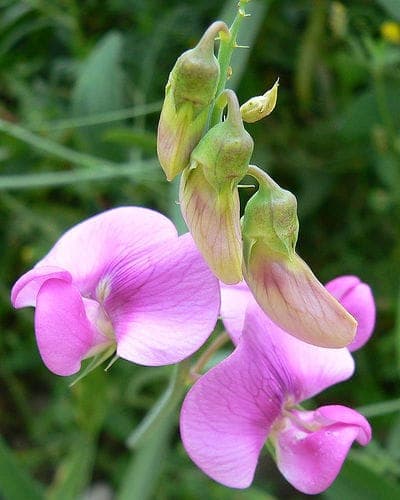
Arx Fortis at English Wikipedia / CC BY-SA 3.0, via Wikimedia Commons
Everlasting pea (Lathyrus latifolius): complete guide
Lathyrus latifolius
¿Quieres ver Everlasting pea (Lathyrus latifolius): complete guide en tu jardín?
1 minuto, sin tarjeta de crédito
Overview
The everlasting pea (Lathyrus latifolius), also known as eternal everlasting pea or broad-leaved singletary, is a remarkably strong garden climber that has enriched European gardens for centuries. This perennial climbing or twining plant owes its name to the broad, wing-shaped leaflets characteristic of this species. With its striking pink to purple flower clusters, which often display two to three colour variations in a single truss, Lathyrus latifolius brings an elegant, romantic dimension to any garden where space for rambling growth exists.
On gardenworld.app you can have a garden design created where this climbing pea provides abundant flowering on difficult-to-reach spots - along pergolas, garden fences, old walls, shed sides and other vertical structures. The plant reaches 1.5 to 2 metres in height and spreads laterally to approximately 80-100 cm. Thanks to its deep root systems, it can inhabit the same location for many years without major maintenance.
Appearance and bloom period
The everlasting pea flowers from June to September with pink to purple flower clusters standing in pairs above the foliage. Each truss contains three to ten individual flowers that together form an impressive display. The foliage is characteristically broad and dark green, consisting of two large wing-shaped leaflets and tendril-like ends that assist in climbing.
After flowering, long, flat seed pods appear where brown seeds ripen. The seed can remain viable for decades and the plant sometimes self-seeds spontaneously. The entire plant grows almost without support structure, especially once the tendrils have taken hold of structures. The fragrance of the flowers is mild but pleasant.
Ideal location
The everlasting pea thrives in full sun to partially shaded locations with at least four hours of direct sun daily. A south- or west-facing wall, pergola or fencing is ideal. The plant tolerates some shade better than many other climbers and can even provide semi-dense coverage.
Ensure the climber has a sturdy wire system, trellis, wooden latticework or other climbing support system. Plant approximately 30-40 cm from the support structure. The plant grows quickly and can cover a large area within two seasons.
Soil requirements
The everlasting pea is very flexible regarding soil requirements. The plant thrives in both lean and fertile soils, provided they are well-draining. In heavy clay, add sand or gravel (20-30%); in pure sand, add humus to improve water retention.
The preferred pH ranges from 6.0 to 8.0. Feeding is not essential - on the contrary, excess nutrition leads to excessive foliage and fewer flowers. A thin mulch in spring (3-5 cm) helps with moisture retention and weed suppression.
Diseño gratis
¿Quieres ver Everlasting pea (Lathyrus latifolius): complete guide en tu jardín? Crea un diseño gratis ahora.
Watering
During the first growing season, water weekly - approximately 10-15 litres per plant - until roots are well established. Water at the base of the plant. From the second year onward, the plant is very drought-tolerant thanks to its deep roots. Supplementary water is only necessary during extreme drought lasting more than four weeks.
In winter, ensure water does not stagnate around the roots. The plant is frost-hardy but moisture-sensitive in winter months. A good drainage system is more important than regular watering.
Pruning
The everlasting pea grows quickly and can become aggressive. In late spring (April-May), cut back all dead or damaged stems. After flowering, you can lightly prune the plant to maintain shape. Heavy pruning in autumn is not recommended - it weakens the plant for winter.
The plant essentially maintains the same leaf pattern year to year, regrowing from the same location. Let the plant grow but remove dead stems and tangled tendrils annually.
Maintenance calendar
March-April: Remove dead and damaged stems. Plant new specimens; ensure sturdy support system.
May-June: Peak growth period. Monitor for drought; gently tie straying tendrils to support.
June-September: Peak flowering. Harvest seed if desired; seed ripens continuously in summer.
October-November: Autumn foliage reaches peak. Plant for autumn to gain overwintering time.
December-February: Quiet period. Protection is usually unnecessary except for very young plants during severe frost.
Winter hardiness
Lathyrus latifolius is very winter-hardy, down to -20°C (USDA zones 4-9). Provided feet remain dry, winter loss is rare. Young plants may benefit from protection against severe frost in their first season.
Companion plants
The everlasting pea forms attractive combinations with other climbers and rock plants. Combine with climbing roses, Virginia creeper (Parthenocissus) or fragrant honeysuckle (Lonicera) for a mix of flowering times and colours. At the base, plant winter-hardy herbs, for instance brown sedum and ajuga, which hide the structural base.
On gardenworld.app you can fully integrate this plant combination into your garden design. Plant at least three to four locations for maximum flowering effect.
Final thoughts
The everlasting pea is a plant for gardeners seeking sustainable, perennial growth and abundant flowering. Thanks to its strength, winter capabilities and adaptability, this is an ideal choice for pergolas, walls and screens. Plant several vines along your garden structure this spring and enjoy elegant pink-purple flowering for years to come.
¿Quieres ver Everlasting pea (Lathyrus latifolius): complete guide en tu jardín? Crea un diseño gratis ahora.
Sube una foto, elige un estilo y obtén un diseño fotorrealista con lista de plantas en menos de un minuto.
Más de 10.000 jardines diseñados
Sin tarjeta de crédito


Plantas similares
Japanese pea (Lathyrus japonicus): complete guide
Lathyrus japonicus
Discover Japanese pea (Lathyrus japonicus), a hardy beach vetchling with purple flowers and grey-green foliage. Perfect for rock gardens, borders, and coastal landscapes. Planting, care, and winter hardiness.
Black pea (Lathyrus niger): complete garden guide
Lathyrus niger
Discover black pea, an elegant wild-growing climbing plant. Growing tips, bloom period, ideal location, and uses in natural garden designs.
Grass vetchling (Lathyrus nissolia): complete guide
Lathyrus nissolia
Discover grass vetchling, an elegant wild plant with grass-like leaves. Growing tips, May-June bloom, and suitability for natural garden design.