
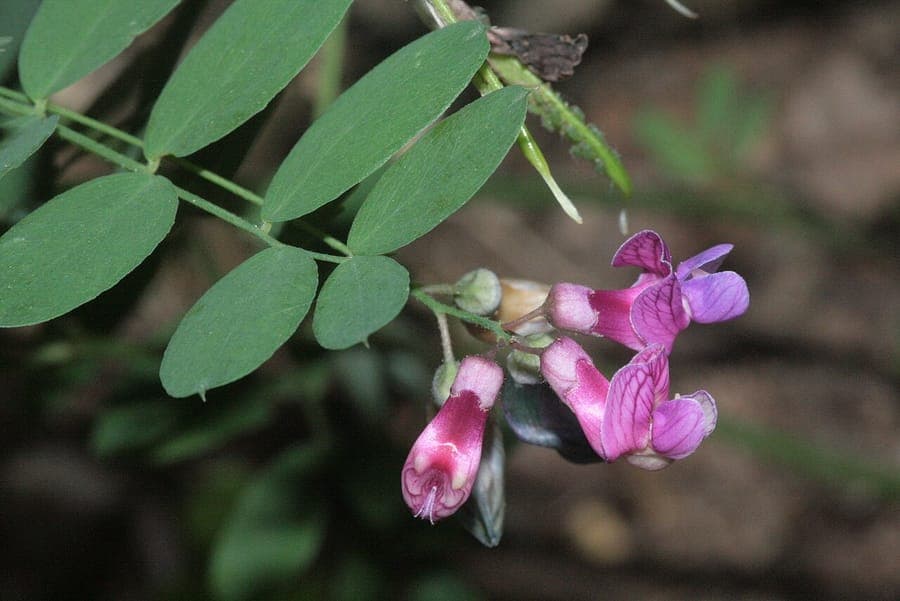
HermannSchachner / CC0, via Wikimedia Commons
Black pea (Lathyrus niger): complete garden guide
Lathyrus niger
¿Quieres ver Black pea (Lathyrus niger): complete garden guide en tu jardín?
1 minuto, sin tarjeta de crédito
Overview
Black pea (Lathyrus niger), known in some regions as Schwarze Platterbse (Black flat pea), is a striking wild climbing plant from the legume family (Fabaceae). This perennial is native from Europe to the Caucasus and North Africa, growing wild in forest edges and mountain regions. The plant earns its name from its characteristically dark purple to black stems and flowers - an underappreciated wildflower for natural gardens where wild blooms and pollinator attraction are priorities.
Appearance and Bloom
Black pea is a scrambling (non-adhesive) climber with elegant, compound leaves arranged in paired leaflets. The stems are characteristically dark brown-purple, especially toward the base. The plant reaches 80-120 cm and can sprawl considerably with climbing support.
Bloom period: June to August. Flowers are small (1.5-2 cm), deep purple to violet, arranged in drooping clusters of 3-8 per truss. The bloom form is classically pea-shaped (papilionaceous), typical of the Fabaceae family.
Fruit: After flowering, green seed pods develop containing hard black seeds. These retain viability for years.
Ideal Location
Black pea thrives in:
- Light: Half-shade to full sun (4-6 hours direct light daily ideal)
- Microclimate: Cool, consistently moist environment. Shade from larger trees helps in hot summers
- Position: Against low walls, along trellises, or mixed among other plants
- Wind: Somewhat sheltered spots; wind stress reduces growth
Less suited to:
- Very hot, unshaded south-facing slopes
- Dense shade (little or no blooming)
- Extremely dry sites
Tip: Black pea combines beautifully with other perennial wildflowers in natural gardens; together they create layered summer bloom.
Soil
Black pea is undemanding in soil requirements:
- Soil type: Sandy to loamy soils; heavy clay less ideal
- Drainage: Moderate to good. Waterlogged conditions are problematic; soil should be moist but not soggy
- pH: Neutral to slightly acidic (6.0-7.0). Very chalky soils less suitable
- Fertility: Low. Excess nitrogen promotes leafy growth at bloom's expense
- Organic matter: Compost or aged manure at planting aids root development
Preparation: Loosen soil 30 cm deep; remove weeds. Avoid heavy feeding - it drives foliage over flowers.
Watering
Black pea requires moderate water:
Establishment (first year):
- Regular watering (2-3x weekly) during dry spells
- After 6-8 weeks' establishment: reduce watering frequency
- In-ground plants: supplemental water only during severe droughts
Mature plants (year 2+):
- Usually self-sufficient from natural rainfall
- Only in extreme drought (>3 weeks without rain) supplement
- Occasional overhead misting (evening) helps during heat waves
Drip irrigation: Effective during establishment; apply at soil level.
Diseño gratis
¿Quieres ver Black pea (Lathyrus niger): complete garden guide en tu jardín? Crea un diseño gratis ahora.
Pruning and Maintenance
Black pea requires minimal intervention:
First-year formation:
- No deliberate pruning
- Loosely tie wandering shoots to supports using soft twine
- Continuous deadheading (removing spent flowers) encourages prolonged blooming
Subsequent years:
- Post-bloom (September): remove old climbing wood to 30-40 cm height
- March: remove dead branches; prune back to living buds
- Allow seed self-sowing; remove unwanted seedlings
Disease prevention:
- Black pea is relatively disease-free
- Rarely: spider mite during extreme heat; natural predators (hunting spiders) control this
- Prevention: good air circulation, avoid overwatering foliage
Maintenance Calendar
April-May: Plant/direct sow, install support structures June-July: Bloom peak, deadheading August: Late bloom, seed pods mature September-October: Seed drop, remove old climbing growth November-March: Dormancy, check for dead wood April: Spring prune, growth resumes
Winter Hardiness
Black pea is hardy to USDA Zone 5 (-18 to -10°C average winter low). This poses no issue in temperate regions.
Winter care:
- Mature healthy plants: no protection needed
- Young plants (first winter): light mulch around base helps
- Snow/frost protects underground portions; foliage dies but roots survive
- Avoid autumn pruning after October (protective dead foliage layer remains)
Companion Planting
Black pea combines beautifully in mixed, wild plantings:
Good companions:
- Other Fabaceae: Bird's-foot trefoil (Ornithopus), other Lathyrus species
- Wildflowers: Ox-eye daisy (Leucanthemum), larkspur (Delphinium), sunflower (Helianthus)
- Shade trees: Oak, American beech (structural backdrop)
- Climbing partners: Wild grapevine (Vitis), clematis (Clematis)
Poor companions:
- Intensively managed gardens: Black pea suits wild settings better
- Formal design schemes: Its wild character may feel out of place
Closing Remarks
Black pea is a striking wildflower accent attracting butterflies, hummingbirds, and native bees. It blooms continuously through summer and requires minimal maintenance - ideal for gardeners seeking to encourage wildlife without intensive labor.
Combined with other nectar and host plants, black pea creates an ecosystem-friendly garden supporting biodiversity. Birds consume seed in fall; butterflies use foliage as host plant.
Plan your wild garden design via gardenworld.app for optimal composition of nectar and host plants. Seed retention and self-sowing make black pea a self-supporting garden component.
For more wildflower gardening tips and natural design: visit gardenworld.app.
¿Quieres ver Black pea (Lathyrus niger): complete garden guide en tu jardín? Crea un diseño gratis ahora.
Sube una foto, elige un estilo y obtén un diseño fotorrealista con lista de plantas en menos de un minuto.
Más de 10.000 jardines diseñados
Sin tarjeta de crédito


Plantas similares
Tall Silky Lupine: complete guide
Lupinus elatus
Tall silky lupine is a fast-growing Californian perennial with silvery foliage and blue-purple flower spikes, ideal for a prairie-style garden.
Garfield Lupine: complete guide
Lupinus garfieldensis
The Garfield lupine is a rare, fast-growing American perennial for alkaline, dry grassland gardens, with striking blue flower spikes.
Lupinus elegans: complete guide
Lupinus elegans
Lupinus elegans, the elegant lupine, is a spectacular blooming plant from Mexico with blue flower spikes. Care, cultivation and garden use.