
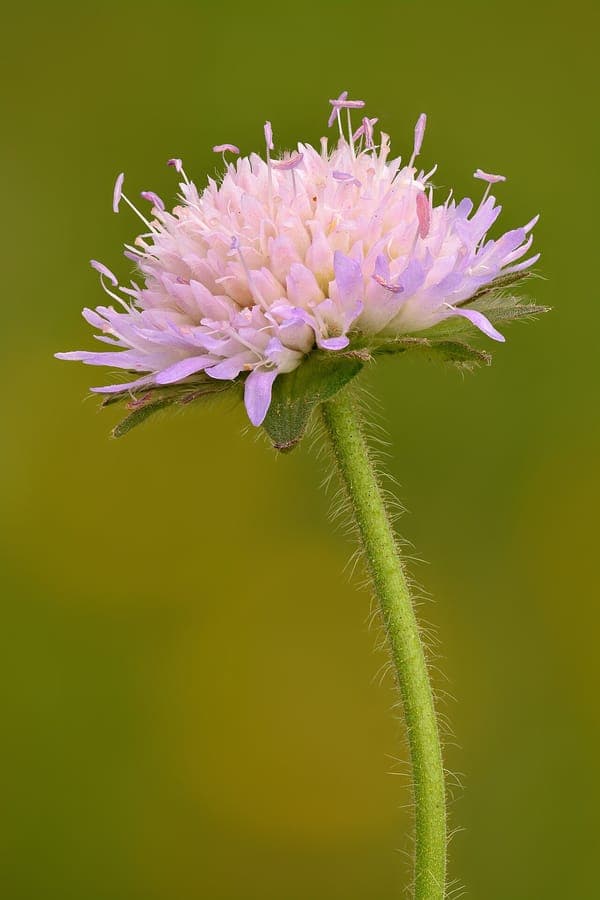
Ivar Leidus / CC BY-SA 4.0, via Wikimedia Commons
Field Scabious: complete guide
Knautia arvensis
¿Quieres ver Field Scabious: complete guide en tu jardín?
1 minuto, sin tarjeta de crédito
Overview
Field Scabious, scientifically known as Knautia arvensis, is a charming native wildflower found naturally across Europe, extending to Siberia and the North Caucasus. With its distinctive purple pom-pom-like flower heads, this plant is a magnet for bees and butterflies, making it an invaluable addition to ecological gardens. Named for its historical use against skin conditions, it's now valued primarily for its beauty and ecological benefits.
Belonging to the Caprifoliaceae family, Field Scabious thrives on poor, well-drained soils where many other plants struggle. Using gardenworld.app, you can design a wildflower meadow that showcases Knautia arvensis alongside complementary bee-friendly plants for maximum ecological impact.
Appearance & Bloom Cycle
Field Scabious forms an upright, herbaceous plant reaching 40-80 cm in height. The stems are rough and hairy, giving the plant a bushy appearance. The flowers are the real showpiece: tightly-packed flower heads approximately 2-3 cm across with purple florets, the outer ones slightly larger. This distinctive structure makes them irresistible to pollinators.
The bloom cycle runs from May through September, with peak flowering in June and July. After blooming, distinctive hairy seed heads develop. Basal leaves are rough and hairy, linear to narrow lance-shaped, arranged mostly at the base and sparsely along the stem.
Ideal Location
Field Scabious thrives in full sun to partial shade. For optimal flowering, full sun (minimum 6 hours direct sunlight daily) is essential. The plant is remarkably tough, tolerating wind and rough weather without complaint. Seeds readily self-sow in sunny corners where birds deposit them.
Soil & Nutrition
This plant is undemanding and actually prefers poor, dry soils – it truly thrives on marginal land where rich feeding is unnecessary. Heavy, waterlogged clay can increase disease risk. Ideal substrate is well-draining, lean soil with a pH of 6.0-7.5. No fertilizer needed; rich soil actually promotes foliage at the expense of flowers. Good drainage is essential.
Diseño gratis
¿Quieres ver Field Scabious: complete guide en tu jardín? Crea un diseño gratis ahora.
Watering
Once established, Field Scabious needs minimal water. During growth and flowering (May-September), water regularly but allow soil to dry between waterings. In normal years, natural rainfall usually suffices. Only supplement during extended drought. Waterlogging is far more damaging than drought stress.
Pruning & Maintenance
No pruning required, though removing spent flowers encourages extended blooming and keeps the plant looking tidy. Leave seed heads in autumn – they feed birds and enable natural self-seeding for next season. Only remove dead stems in early spring.
Maintenance Calendar
March-April: Support autumn-grown plants, remove dead material, thin self-seeded youngsters. May-June: Peak flowering, deadhead for extended bloom, maintain consistent moisture. July-September: Flowering tapers, adjust watering based on weather, seed heads ripen. October-November: Leave seed heads for wildlife, encourage natural seeding. December-February: Winter dormancy, no maintenance needed.
Winter Hardiness
Field Scabious is exceptionally hardy, tolerating temperatures down to -25°C without protection. It's native to increasingly cold regions, making winter survival guaranteed across all Northern European gardens (USDA zones 4-9). No winter protection needed.
Complementary Plant Partners
Field Scabious pairs beautifully with other wildflowers and native flora:
- Small Scabious (Scabiosa columbaria)
- Wild Marjoram (Origanum vulgare)
- Lamb's Ear (Stachys byzantina)
- Meadow Clary (Salvia pratensis)
- Ox-eye Daisy (Leucanthemum vulgare)
- Yarrow (Achillea millefolium)
These combinations create a colorful, bee-friendly tapestry blooming May through October.
Closing Thoughts
Field Scabious is the ideal plant for those wanting to integrate native wildflowers while creating a pollinator paradise. With minimal maintenance, abundant insect visitors, and charming purple blooms, this wildflower is a win for any ecological garden. Design a complete wildflower meadow on gardenworld.app – our experts will help you create the perfect mix of bee plants and wildlife-supporting vegetation for your space.
¿Quieres ver Field Scabious: complete guide en tu jardín? Crea un diseño gratis ahora.
Sube una foto, elige un estilo y obtén un diseño fotorrealista con lista de plantas en menos de un minuto.
Más de 10.000 jardines diseñados
Sin tarjeta de crédito


Plantas similares
Yellow honeysuckle (Lonicera tragophylla): complete guide
Lonicera tragophylla
Meet yellow honeysuckle (Lonicera tragophylla): a Chinese climber with large golden flowers that thrives in partial shade.
Lonicera korolkowii: complete guide
Lonicera korolkowii Stapf
Discover blueleaf honeysuckle, a vigorous shrub with beautiful flowers. Guide on growing, shaping and why this Asian climbing plant is perfect for gardens.
Lonicera oblongifolia: complete guide
Lonicera oblongifolia Hook.
Discover swamp fly honeysuckle, a North American woodland plant. Guide on growing, caring and why this native species is valuable for gardens.