
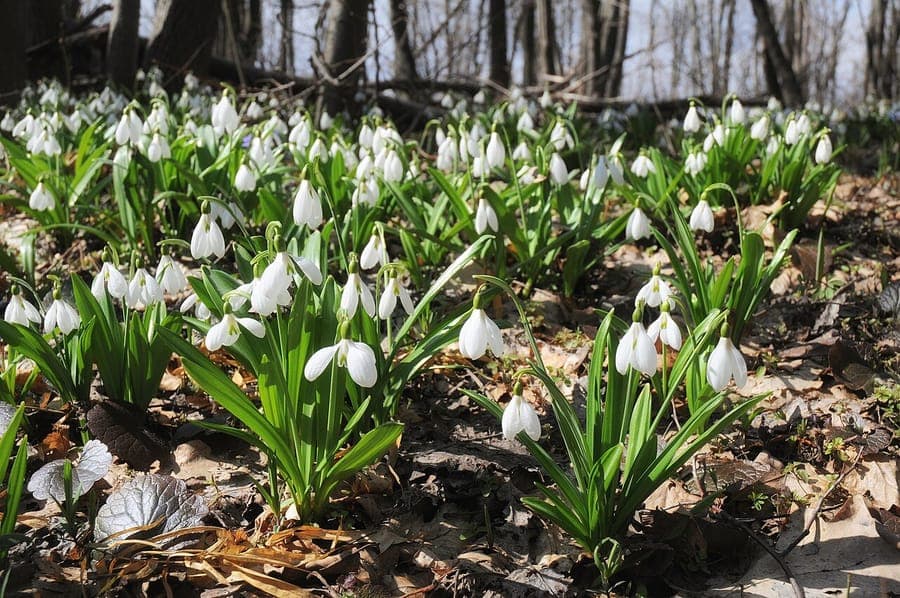
Сергій Криниця (Haidamac) / CC BY-SA 3.0, via Wikimedia Commons
Snowdrop (Plicatus): complete guide
Galanthus plicatus
¿Quieres ver Snowdrop (Plicatus): complete guide en tu jardín?
1 minuto, sin tarjeta de crédito
Overview
The pleated snowdrop (Galanthus plicatus) is a striking species from Turkey, Romania, Ukraine, and Crimea. It's distinguished by pleated foliage - an unusual characteristic among snowdrops.
This snowdrop flowers later than its cousins, typically February through March, thus extending the snowdrop season considerably. The blooms are equally lovely: white pendant flowers with green heart marking, slightly larger than common snowdrop.
The plant grows as robustly as common snowdrop but offers extended seasonal display when combined with earlier varieties.
Appearance & bloom cycle
Pleated snowdrop has a striking characteristic: leaves are distinctly pleated (folded lengthwise), immediately distinguishing it from other snowdrops. These pleats create interesting texture.
Growing leaves reach 18-25 cm. The plant forms compact, dense clumps.
From February through March, flowers emerge: pendant, white, up to 3 cm, with green heart marking. They're slightly larger than common snowdrop. Fragrance is pleasant and mild, especially on warm days. Each bulb typically produces one to two flowers.
Ideal location
Pleated snowdrop prefers partial shade beneath deciduous trees - protection from intense afternoon sun, especially important for extended bloom. Beneath oaks, birches, maples, or mixed woodland is ideal.
In warm regions: shade aids moisture retention. Full sun in cooler areas is acceptable.
Soil requirements
Excellent drainage is essential for all snowdrops. This species thrives on soil pH 6.5-7.5. Heavy clay must be amended with sand and humus.
Ensure humus-rich soil with sand to prevent winter waterlogging.
Diseño gratis
¿Quieres ver Snowdrop (Plicatus): complete guide en tu jardín? Crea un diseño gratis ahora.
Watering
Natural winter and spring moisture typically suffices. Extra water is rarely needed once established. Good drainage is crucial.
In dry summers post-bloom: sparse watering. In winter: prevent complete drying of soil.
Pruning
No pruning needed. Leave foliage undisturbed until it naturally fades - it recharges the bulb. Remove only dead material.
If you want natural self-sown colonies, leave seed heads; this species self-seeds readily.
Maintenance calendar
September-October: Plant bulbs (sooner is better)
November-January: Minimal care, check drainage
February-March: Bloom period; gently clear snow
March-April: Foliage continues, bloom ends
May: Foliage disappears, remove dried material
June-September: Underground development, above-ground rest
Winter hardiness
Pleated snowdrop is very hardy, USDA zones 3-8. It grows in Turkey, Crimea, and the Caucasus where winters are severe. Temperatures to -25 °C are routine.
Companion plants
Pair with:
- Other snowdrops: G. nivalis (early), G. elwesii (large) for staggered bloom
- Scilla sibirica (Siberian squill) for blue
- Crocus vernus for purple and yellow
- Eranthis hyemalis (Winter aconite) for gold
- Helleborus (Christmas rose) for green and white
Conclusion
The pleated snowdrop is an admirable finale to the snowdrop season. Its distinctive pleated foliage gives it unique appeal, and its late bloom makes it perfectly complementary to earlier varieties.
Design your garden at gardenworld.app and plan snowdrops for full seasonal coverage. Discover more plant ideas at gardenworld.app.
¿Quieres ver Snowdrop (Plicatus): complete guide en tu jardín? Crea un diseño gratis ahora.
Sube una foto, elige un estilo y obtén un diseño fotorrealista con lista de plantas en menos de un minuto.
Más de 10.000 jardines diseñados
Sin tarjeta de crédito


Plantas similares
Douglas' Onion: complete guide
Allium douglasii
Douglas' onion is a compact ornamental allium with purple flowers, perfect for rock gardens and sunny borders. Learn care, siting and hardiness.
Oblique onion: complete guide
Allium obliquum
The oblique onion is a hardy ornamental allium with chartreuse flower heads and blue-green foliage. Location, soil and care explained.
False hooded garlic: complete guide
Allium pseudocalyptratum
Discover false hooded garlic (Allium pseudocalyptratum): a rare ornamental onion from Lebanon for rock gardens and alpine troughs.