
Schnobby / CC BY-SA 3.0, via Wikimedia Commons
Giant snowdrop: complete guide
Galanthus elwesii
¿Quieres ver Giant snowdrop: complete guide en tu jardín?
1 minuto, sin tarjeta de crédito
Overview
The giant snowdrop (Galanthus elwesii) is the largest snowdrop species - up to 30 cm tall - making it a striking presence in any spring garden. Native to Southeast Europe and Turkey, it thrives in mountain regions where snow lingers.
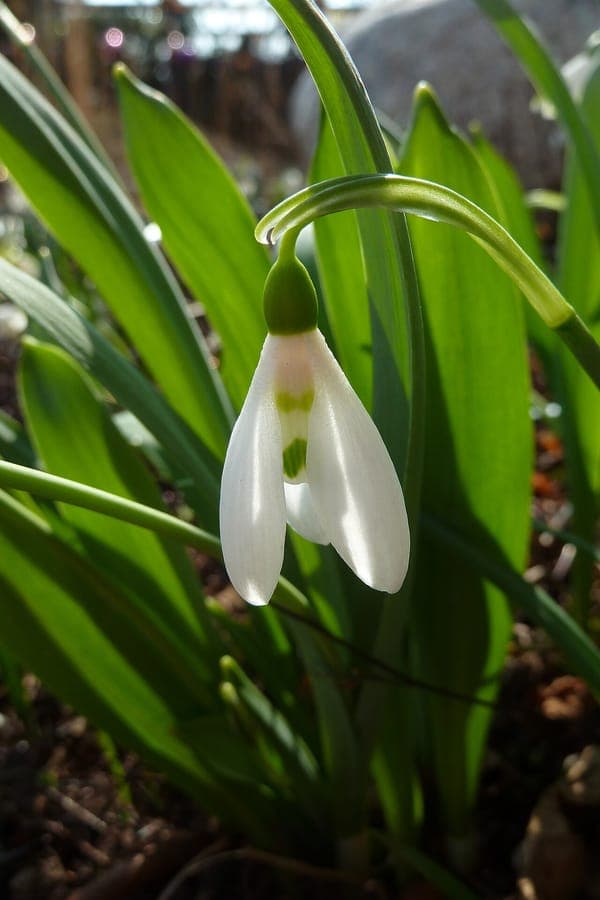
Its ornamental charm is exceptional: white, pendant flowers with distinctive double green V markings on each segment (most snowdrops have a single V). The fragrance is subtly sweet, especially evident on mild mornings.
It's often among the first flowers of late winter, blooming January-February, sometimes still under snow. Perfect for gardeners eager to celebrate spring's arrival.
Appearance & bloom cycle
Giant snowdrop forms clumps of slender, gray-green leaves, 20-30 cm long - larger than common snowdrops. The foliage is more substantial with a waxy coating.
From January through March, flowers emerge: 4-5 cm pendant blooms, pure white with two green V-marks per segment (creating a more detailed, elegant appearance than single-marked varieties). Each bulb produces 1-2 flowers. Scent is mild and sweet, especially on warm mornings.
Ideal location
Snowdrops prefer partial shade beneath deciduous trees - protection from intense afternoon March sun. Beneath oaks, birches, or light woodland is ideal.
They tolerate full sun in locations where soil dries in summer, but partial shade is preferred.
Soil requirements
Excellent drainage is essential. Snowdrops hate waterlogging, especially in winter. Plant in raised beds or well-amended soil with substantial sand and humus.
Soil pH 6.5-7.5 is ideal. In heavy clay: incorporate 5-7 cm sand before planting.
Diseño gratis
¿Quieres ver Giant snowdrop: complete guide en tu jardín? Crea un diseño gratis ahora.
Watering
Snowdrops are drought-tolerant once established. Natural winter and spring moisture typically suffices. Supplemental water is rarely needed.
Ensure excellent drainage; winter waterlogging is fatal. In drying soils post-bloom: occasional watering if bone-dry.
Pruning
No pruning needed. Leave foliage until it naturally dies back - it recharges the bulb. Remove only dead or damaged material.
Faded flowers can be removed, but leave seed heads if you want natural spread.
Maintenance calendar
October: Plant bulbs (earlier is better)
November-December: Minimal care, monitor drainage
January-March: Bloom period, clear snow if desired
March-April: Foliage continues growing - do not disturb
May: Foliage fades, remove dried material
June-September: Dormancy; bulbs develop underground
Winter hardiness
Giant snowdrop is extremely hardy, USDA zones 3-8. It grows in Turkish mountains with severe winters. Temperatures to -25 °C are routine.
Companion plants
Pair with:
- Other snowdrops (nivalis, plicatus) to extend bloom season
- Scilla sibirica (Siberian squill) for blue
- Crocus vernus for purple and yellow
- Helleborus (Christmas rose) for green and white tones
- Low groundcovers: Ajuga, Saxifraga
Conclusion
Giant snowdrop is an indispensable classic for anyone eager to celebrate early spring. Its distinctive double V-markings differentiate it from other varieties.
Design your garden at gardenworld.app and plan snowdrops for immediate spring announcement. Explore more plants and combinations at gardenworld.app.
¿Quieres ver Giant snowdrop: complete guide en tu jardín? Crea un diseño gratis ahora.
Sube una foto, elige un estilo y obtén un diseño fotorrealista con lista de plantas en menos de un minuto.
Más de 10.000 jardines diseñados
Sin tarjeta de crédito


Plantas similares
Douglas' Onion: complete guide
Allium douglasii
Douglas' onion is a compact ornamental allium with purple flowers, perfect for rock gardens and sunny borders. Learn care, siting and hardiness.
Oblique onion: complete guide
Allium obliquum
The oblique onion is a hardy ornamental allium with chartreuse flower heads and blue-green foliage. Location, soil and care explained.
False hooded garlic: complete guide
Allium pseudocalyptratum
Discover false hooded garlic (Allium pseudocalyptratum): a rare ornamental onion from Lebanon for rock gardens and alpine troughs.