
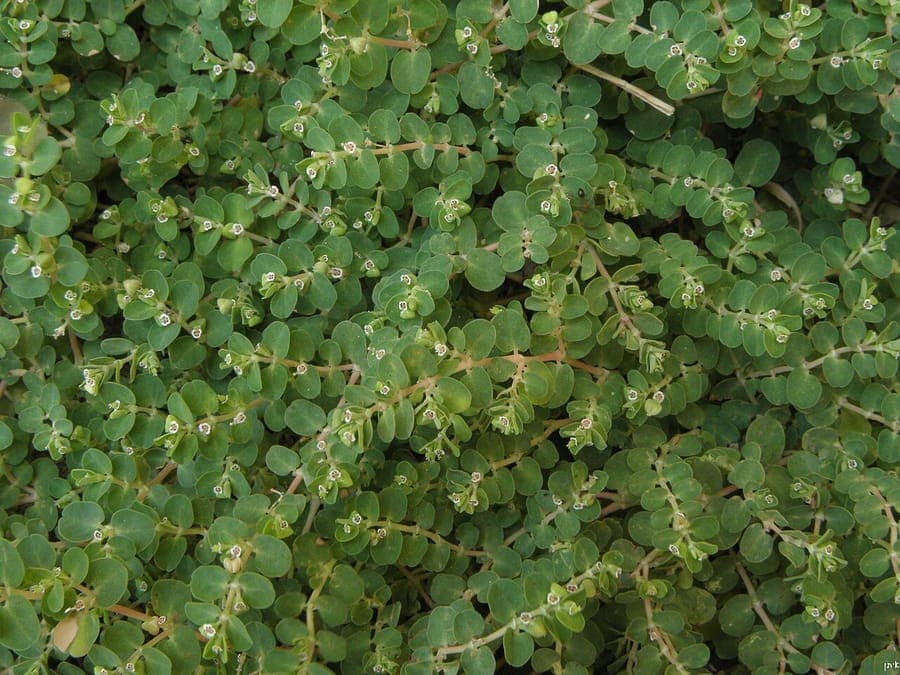
איתן פרמן / CC BY-SA 3.0, via Wikimedia Commons
Spurge: complete guide
Euphorbia chamaesyce
¿Quieres ver Spurge: complete guide en tu jardín?
1 minuto, sin tarjeta de crédito
Overview
Spurge (Euphorbia chamaesyce) is a compact, versatile plant belonging to the Euphorbiaceae family. Growing naturally from Macaronesia to West Siberia and Pakistan, this remarkable species demonstrates exceptional adaptability across diverse climates. The plant thrives with minimal intervention and shrugs off challenging conditions.
Appearance & Bloom Cycle
Spurge is a low-growing groundcover that spreads horizontally across soil surfaces. The plant displays characteristic small, lance-shaped leaves arranged along thin stem structures. Foliage undergoes subtle color shifts as seasons change. Flowers are minute and unshowy, forming interesting cyathia structures rather than conventional blooms. Height reaches 10-20 cm with spread extending to 30-40 cm.
Blooming occurs May through September, with tiny floral structures commanding attention through geometric form rather than color. Each bloom contains yellow nectaries that attract beneficial insects.
Ideal Location
Spurge excels in sunny to semi-shaded positions. Provide minimum 4-6 hours direct sunlight daily for optimal performance. The plant adapts brilliantly to variable light conditions and persists in challenging spots. South or west-facing garden positions work particularly well, especially where other plants struggle.
This species is perfect for difficult-access areas, steep banks, or spaces with aggressive plant competition. Also suitable for containers and raised beds.
Soil Requirements
Spurge demonstrates remarkable tolerance across soil types and thrives on virtually all ground conditions. It performs excellently on sandy, acidic, or nutrient-poor soils where few plants establish. The species is celebrated for colonizing marginal lands where conventional plants fail.
The only absolute requirement is adequate drainage. Avoid heavy clay without modification. Otherwise, amend with sand and compost for improved water movement. A pH range of 5.5 to 7.5 proves acceptable.
Watering
Extremely drought-tolerant once established. Water regularly during the first 6-8 weeks after planting until roots develop fully. Subsequently, supplemental irrigation becomes unnecessary except during extreme drought (exceeding 4 weeks without rainfall).
For containerized plants, water when the top 2-3 cm of soil feels dry. Prevent waterlogging, which causes root rot. Reduce watering in autumn and winter months.
Diseño gratis
¿Quieres ver Spurge: complete guide en tu jardín? Crea un diseño gratis ahora.
Pruning & Maintenance
Spurge requires minimal pruning. The plant maintains compact form without invasive growth. Remove dead stem sections or frost damage in early spring (March). Deadhead spent flower clusters to maintain neat appearance.
If the plant becomes overly sprawling, gentle pruning in June/July encourages bushier, more compact growth. Never remove more than one-third of total plant material.
Maintenance Calendar
March: Inspect for winter damage; remove dead growth. Light shaping if needed.
April-June: Active growth period; monitor development. Add mild organic matter if soil is extremely nutrient-poor.
July-August: Water during dry spells. Deadhead faded flowers.
September-October: Growth slows. Reduce watering.
November-February: Dormancy period. No maintenance required in mild climates; provide protection in harsh winters.
Winter Hardiness
Spurge demonstrates reasonable cold-hardiness, surviving winters to approximately -5°C without protection in well-drained soil. In cold regions (USDA zone 6 or colder), provide winter protection using leaves or burlap in October.
Container plants are less hardy; relocate to protected locations or heel in for winter. In temperate climates (USDA zones 7-9), no special protection needed.
Companion Plants
Spurge pairs excellently with fellow drought-tolerant species:
- Sedum varieties for color and structure
- Lavandula for fragrance and bloom
- Festuca grasses for textural contrast
- Aurinia saxatilis for yellow accents
- Dianthus carthusianorum for visual interest
Combine in dry rock gardens, green roofs, or container compositions. Low-growing, spreading form makes it ideal for border foreground planting.
Practical Tips
Source nursery-grown plants from reputable suppliers. Intratuin and Gamma stock this species regularly during growing season. Space plantings 30-40 cm apart for complete groundcover establishment.
Root cuttings are also viable in early summer. Harvest 5-8 cm sections from healthy roots, plant in sand/potting soil mix, and maintain moderate moisture. Roots develop within 2-3 weeks.
For container cultivation, blend standard potting soil with 30% additional sand. Monitor containers regularly for moisture balance, especially during warm periods. Repot every 2-3 years.
Disinfect garden tools with methylated spirits or bleach between plants, as euphorbias can develop fungal issues. Milky sap irritates sensitive skin; wash hands thoroughly after handling.
Visit gardenworld.app for additional plant guides and design inspiration. Browse the gallery to see how other gardeners incorporate this species into their landscapes.
¿Quieres ver Spurge: complete guide en tu jardín? Crea un diseño gratis ahora.
Sube una foto, elige un estilo y obtén un diseño fotorrealista con lista de plantas en menos de un minuto.
Más de 10.000 jardines diseñados
Sin tarjeta de crédito


Plantas similares
Sickle spurge: complete guide
Euphorbia falcata
Master Sickle spurge (Euphorbia falcata): cultivation methods, care requirements, plant distribution, and practical care tips.
Variegated spurge: complete guide
Euphorbia marginata
Explore Variegated spurge (Euphorbia marginata): cultivation, care, ideal locations, and practical tips for this striking ornamental.
Eyebane: complete guide
Euphorbia nutans
Understand Eyebane (Euphorbia nutans): cultivation, care, characteristics, and management tips for this aggressive spreading plant.