
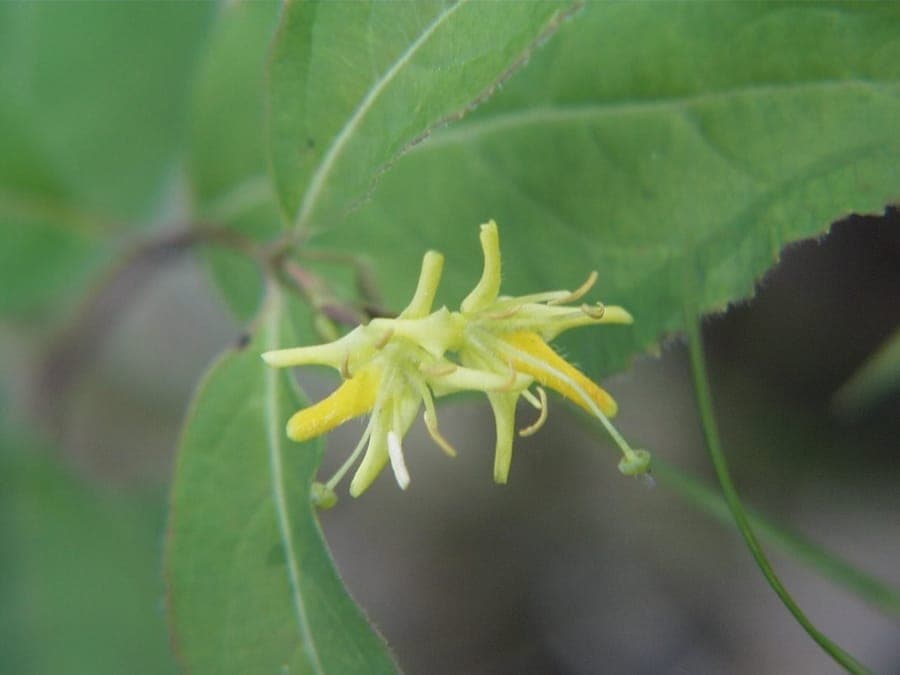
US Wildlife and Fish Service, Sherburne National Wildlife Refuge / Public domain, via Wikimedia Commons
Diervilla: complete guide
Diervilla lonicera
¿Quieres ver Diervilla: complete guide en tu jardín?
1 minuto, sin tarjeta de crédito
Overview
Diervilla lonicera, better known as bush-honeysuckle or diervilla, is a North American shrub from the Caprifoliaceae family. This plant grows from Subarctic America to North Carolina and the Eastern US. It is a native shrub widely used in landscape design.
Diervilla is known for its attractive yellow flowers, which appear from June through August. The shrub is also valuable for its fall color, with foliage turning red to purple. It is a very hardy plant that requires little maintenance.
This shrub is an excellent choice for native gardens, wild garden effects and other sustainable garden designs. It attracts pollinators and is valuable for birds.
Appearance and bloom
Diervilla lonicera is a compact shrub that typically grows 1-1.5 meters tall. The stems are thin and woody, with gray-brown bark. The leaves are small to medium-sized (3-8 cm long), oval to lance-shaped, with a greener front and lighter underside.
The flowers are the highlight of this shrub. They are small, trumpet-like flowers in bright yellow to yellow-orange. They appear in clusters at the ends of branches. The plant flowers abundantly from June through August, providing a long blooming period.
In fall the foliage transforms into red to dark purple tones, creating a beautiful fall effect. The fruits are small, elliptical capsules. The shrub has a natural, relaxed form that requires no pruning.
Ideal location
Diervilla grows best in full sun to partial shade. In full sun it produces the most abundant blooms. The plant can also grow in shady spots, although blooming may be reduced.
The plant is extremely wind and frost tolerant. It is perfect for exposed locations on hillsides or open gardens. It can also be grown in coastal areas due to its salt-spray tolerance.
Use it as part of native planting designs, wild gardens or natural hedgerows. It is also used in groups for erosion control on slopes.
Soil
Diervilla lonicera is very flexible regarding soil conditions. It grows in all soil types, from sandy to clay. The optimal pH is between 4.8 and 7.0, so it can tolerate acidic soils.
The plant prefers well-draining soil, although it is fairly moisture-tolerant. It is very tolerant of poor soils and conditions low in nutrients.
Ensure well-aerated soil when planting. Supplemental fertilizer is usually not necessary.
Diseño gratis
¿Quieres ver Diervilla: complete guide en tu jardín? Crea un diseño gratis ahora.
Watering
Once established, Diervilla is very drought-tolerant. Young plants need regular watering, especially in the first year. Water deeply and less frequently.
Mature plants need minimal water. They can endure long dry periods, making this an excellent choice for dry gardens or water-restricted regions.
In very hot, dry periods, supplemental water can promote growth and blooming, but it is not strictly necessary.
Pruning
Diervilla requires minimal pruning. The plant naturally forms a compact, attractive shape. Remove only dead branches or very wild growth.
Light pruning in late spring can improve form, but it is optional. Heavy pruning can disrupt the plant's natural shape.
The plant can be cut back in spring after frost damage, although this is rarely necessary.
Maintenance calendar
MAY-JUNE: Plant new shrubs; water regularly. JULY-AUGUST: Full bloom; enjoy yellow flowers. SEPTEMBER-OCTOBER: Fall color; seeds ripen. NOVEMBER-DECEMBER: Dormancy; no maintenance. JANUARY-APRIL: Winter; remove dead branches.
Winter hardiness
Diervilla lonicera is very winter-hardy and tolerates temperatures well below zero. It naturally occurs in Subarctic America and is acclimated to severe winters.
The plant can grow without protection in all temperate climate zones. It is ideal for areas with severe winters where many other shrubs cannot grow.
In very warm southern regions, it may perform less well, so plant it in these areas in partial shade.
Companion plants
Combine Diervilla with other native shrubs for a natural effect. Serviceberry, Viburnum and other native species grow well together.
Underplant with native flowers such as Coneflower and Black-eyed Susan. Grasses add texture.
The plant works well in groups for hedgerows or as a solitary accent. It also combines well with rock gardens and dry gardens.
Warning: No Toxicity
Fortu nately, Diervilla lonicera is not toxic to humans or animals. It is safe to grow in households with children and pets. Birds eagerly eat the seeds.
Closing thoughts
Diervilla lonicera is a valuable, easy-to-care shrub that offers many benefits. With its native status, drought tolerance and beautiful flowers, it is an ideal choice for sustainable gardens.
Visit OBI or Hornbach for quality shrubs. Learn more about native plants and sustainable gardening at gardenworld.app.
Gardenworld.app helps you create beautiful, environmentally friendly gardens with plants like Diervilla lonicera.
¿Quieres ver Diervilla: complete guide en tu jardín? Crea un diseño gratis ahora.
Sube una foto, elige un estilo y obtén un diseño fotorrealista con lista de plantas en menos de un minuto.
Más de 10.000 jardines diseñados
Sin tarjeta de crédito


Plantas similares
Yellow honeysuckle (Lonicera tragophylla): complete guide
Lonicera tragophylla
Meet yellow honeysuckle (Lonicera tragophylla): a Chinese climber with large golden flowers that thrives in partial shade.
Lonicera korolkowii: complete guide
Lonicera korolkowii Stapf
Discover blueleaf honeysuckle, a vigorous shrub with beautiful flowers. Guide on growing, shaping and why this Asian climbing plant is perfect for gardens.
Lonicera oblongifolia: complete guide
Lonicera oblongifolia Hook.
Discover swamp fly honeysuckle, a North American woodland plant. Guide on growing, caring and why this native species is valuable for gardens.