
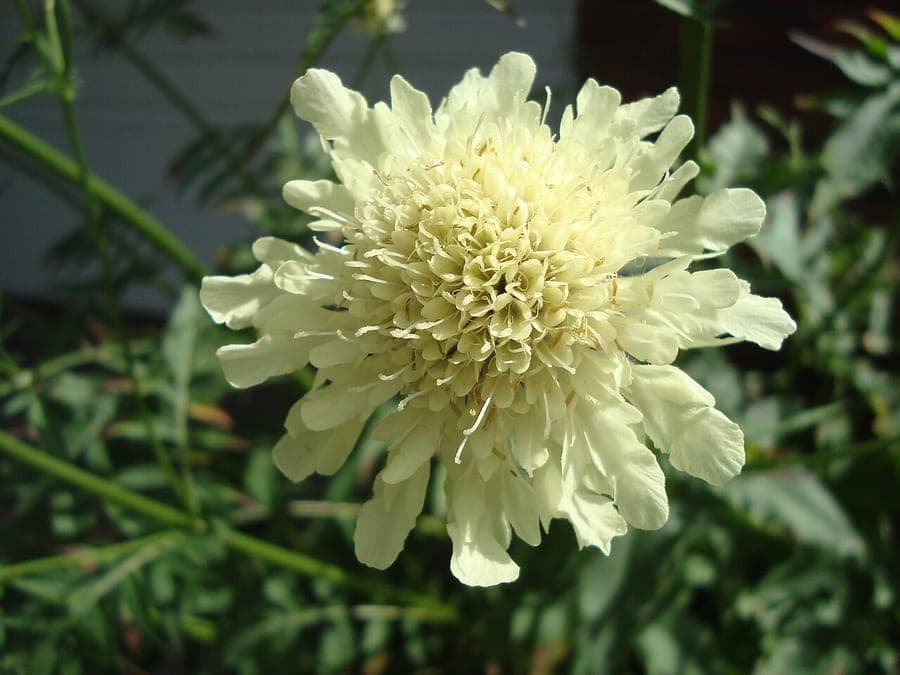
Uleli / CC BY 3.0, via Wikimedia Commons
Cephalaria gigantea: complete guide
Cephalaria gigantea
¿Quieres ver Cephalaria gigantea: complete guide en tu jardín?
1 minuto, sin tarjeta de crédito
Overview
Cephalaria gigantea, commonly known as giant scabious or tatarian cephalaria, is a spectacular herbaceous perennial that transforms any garden design with its impressive stature and extended flowering period. This Caprifoliaceae family member reaches 1.5 to 2 meters in height and produces countless sulfur-yellow, globe-shaped flowers from June through September. The plant is exceptionally winter hardy and thrives in poor soils without demanding extensive care. This makes it perfect for gardeners seeking durable, low-maintenance planting schemes that deliver impact.
Appearance and bloom
Giant scabious presents an elegant, statuesque form with slender stems carrying bright yellow flowers. The blooms are approximately 3-4 centimeters across and resemble true scabious, hence the common name. Stems are smooth and greenish, with more prominent foliage at the plant's base. Growth is rapid, forming substantial mass within a single season. After flowering, attractive seed heads remain ornamental and attract beneficial birds and pollinators. The flowers persist remarkably long and can continue for four months consecutively, making this plant unusually valuable in gardens.
Ideal location
Select positions with full sun exposure, minimum 6 hours direct sunlight daily. The plant succeeds in partial shade, though flowering becomes less abundant. Provide adequate space since the plant expands considerably. Avoid planting directly against other large perennials; give it breathing room for graceful growth. Open, airy positions prevent excessive stem leaning. In windy locations, support may be necessary, but usually the plant grows compact enough to support itself. The plant also succeeds in gardens with light sea breeze exposure.
Soil
Cephalaria gigantea demonstrates remarkable soil tolerance. Plants thrive in heavy clay, light sand, or gravelly soils equally. Well-draining soil is preferred, particularly in wet locations. Alkaline soils are fine, as are acidic soils. Mix compost into very poor soils at planting time, but excessive fertilization is unnecessary and counterproductive. The plant actually performs better in poor soils without many nutrients, as this promotes compact growth and extended flowering.
Watering
Water regularly during the first growing season, keeping soil slightly moist. Once established, this plant requires minimal supplemental watering. During dry summers, water only when soil feels dry 5 centimeters below the surface. In rainy periods, no additional watering is needed. The plant tolerates drought well and prefers some drying between waterings to excessive moisture. Young plants newly planted must receive more regular water until well-rooted, approximately three to four weeks.
Diseño gratis
¿Quieres ver Cephalaria gigantea: complete guide en tu jardín? Crea un diseño gratis ahora.
Pruning
Once established, giant scabious requires minimal maintenance. After flowering, deadheading improves neatness, though seed heads are decorative and valuable for wildlife. In early spring, remove any frost-damaged or dead stems. Usually, the plant regenerates from the base annually, becoming fuller each year. Avoid heavy pruning in autumn, as this can cause damage.
Maintenance calendar
Spring: Check for frost damage, remove dead growth. Mulching is optional but promotes growth. Summer: Water during dry spells, enjoy prolific yellow blooms June through September. No feeding needed. Autumn: Leave seed heads for overwintering birds, avoid pruning to preserve wildlife food. Plant prepares for winter. Winter: Completely cold hardy in Netherlands; no protection or covering needed. Can remain under snow cover.
Winter hardiness
Cephalaria gigantea is exceptionally winter hardy to USDA zone 4, thriving without difficulty in the Netherlands. The plant tolerates temperatures to -25 degrees Celsius. During extreme winters, underground portions remain protected beneath snow and ice. Visible growth appears only in spring. The plant experiences no frost damage and requires no wrapping or coverage. No other special precautions are needed.
Companion plants
Giant scabious combines beautifully with other tall perennials: Orchid-like perennials such as Thalictrum for vertical lines Softer blooms of Echinops (globe thistle) for color contrast Lavandula angustifolia for fragrance and purple tones Ornamental grasses like Stipa gigantea for textural interest Vertical accents of blue Delphiniums for cool complement Geranium 'Rozanne' for foreground placement
Specialized retailers stock various cephalaria seedlings seasonally. Online specialist suppliers offer seed for propagation. Gardenworld.app helps determine perfect plant positioning for maximum visual impact. Gardenworld.app provides guidance on plant combinations tailored to your specific garden space.
Closing
Giant scabious is essential for contemporary and naturalistic gardens. Its imposing height, extended flowering, and cold tolerance make it ideal for permanent planting schemes. Once planted, it requires minimal attention for years while delivering spectacular summer shows of yellow blooms that attract birds and beneficial insects.
¿Quieres ver Cephalaria gigantea: complete guide en tu jardín? Crea un diseño gratis ahora.
Sube una foto, elige un estilo y obtén un diseño fotorrealista con lista de plantas en menos de un minuto.
Más de 10.000 jardines diseñados
Sin tarjeta de crédito


Plantas similares
Yellow honeysuckle (Lonicera tragophylla): complete guide
Lonicera tragophylla
Meet yellow honeysuckle (Lonicera tragophylla): a Chinese climber with large golden flowers that thrives in partial shade.
Lonicera korolkowii: complete guide
Lonicera korolkowii Stapf
Discover blueleaf honeysuckle, a vigorous shrub with beautiful flowers. Guide on growing, shaping and why this Asian climbing plant is perfect for gardens.
Lonicera oblongifolia: complete guide
Lonicera oblongifolia Hook.
Discover swamp fly honeysuckle, a North American woodland plant. Guide on growing, caring and why this native species is valuable for gardens.