
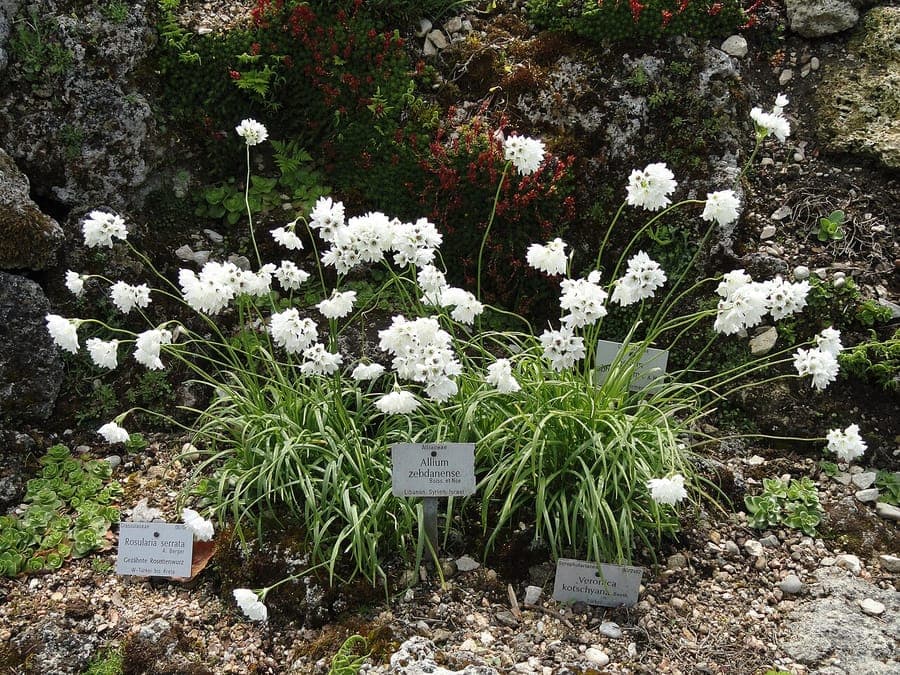
Daderot / Public domain, via Wikimedia Commons
Allium zebdanense: complete guide
Allium zebdanense
¿Quieres ver Allium zebdanense: complete guide en tu jardín?
1 minuto, sin tarjeta de crédito
Overview
Allium zebdanense, commonly known as Lebanese garlic, is a charming wildflower bulb native to the Levant region (Turkey, Lebanon, Syria). This slender plant produces delicate, star-shaped flowers in purple-pink tones. With its fine, filigree appearance, this Allium is ideal for gardens and borders where you want subtle color and soft texture.
This is a relatively unknown gem in many gardens, but certainly deserves more attention. The plant grows easily and requires minimal maintenance. It combines beautifully with other spring and summer bloomers.
Appearance and Bloom
Allium zebdanense grows as a compact plant reaching approximately 30-40 centimeters tall. The thin, grass-like leaves form a fine, delicate base. Flowers appear in late spring through early summer, typically April to May. Each flower is a solid globe up to about 3-4 centimeters in diameter, composed of dozens of small star-shaped flowers in purple-pink to lilac tones.
The flowers are highly attractive to bees and other pollinators. As they age, they develop into attractive seed heads that can also be decorative.
Ideal Location
Allium zebdanense prefers full sun to light shade. Plant it where it receives at least 4 to 6 hours of sunlight daily. In warm climates, light afternoon shade helps.
This plant is cold-hardy in USDA zones 4 to 9, making it suitable for most temperate climates. Plant in sheltered locations in very cold regions.
Soil
Well-draining soil is essential, especially in winter. Adding sand or gravel to standard garden soil helps tremendously. The plant does not tolerate wet winter weather or waterlogging. Light, loose soil works best.
PH can be neutral to slightly alkaline. The plant can grow in poor soil and requires no rich fertilizer.
Diseño gratis
¿Quieres ver Allium zebdanense: complete guide en tu jardín? Crea un diseño gratis ahora.
Watering
Once established, Allium zebdanense is drought-tolerant. Water young plants regularly during their first growing season. Once established, you can significantly reduce watering.
During growing season (early spring through early summer), water when soil surface feels dry. After blooming, stop or minimize water entirely. This helps harden the bulb for winter.
Pruning
Pruning is unnecessary. You may deadhead spent flowers if desired, but many gardeners leave them for seed production. Do not remove leaves until they are fully yellow and dead - they continue feeding the bulb.
Maintenance Calendar
FEBRUARY-MARCH: Bulbs begin sprouting. Check for moisture problems. APRIL-MAY: Blooms appear. Enjoy the beautiful flowers. JUNE-JULY: Bloom fades. Seed heads form. Minimize watering. AUGUST-OCTOBER: Leaves die back. No water needed. NOVEMBER-JANUARY: Bulbs rest. No watering required.
Winter Hardiness
Allium zebdanense is hardy to USDA zone 4 (-30 to -25 degrees Celsius). In cold climates, plant on higher ground where water will not accumulate. Good drainage is key to winter survival.
Gravel or gritty mulch around the plant helps winter drainage.
Companion Plants
Allium zebdanense combines beautifully with:
- Other Allium species
- Spring bulbs (tulips, crocuses)
- Ajuga
- Lamium
- Pulmonaria
- Dianthus
Closing
Allium zebdanense brings delicate beauty to your spring garden. This easily grown bulb requires minimal maintenance once established. With its purple-pink flowers and slender form, this is a refined choice for plant lovers wanting something different.
Available at garden centers. Discover more garden inspiration on gardenworld.app.
¿Quieres ver Allium zebdanense: complete guide en tu jardín? Crea un diseño gratis ahora.
Sube una foto, elige un estilo y obtén un diseño fotorrealista con lista de plantas en menos de un minuto.
Más de 10.000 jardines diseñados
Sin tarjeta de crédito


Plantas similares
Douglas' Onion: complete guide
Allium douglasii
Douglas' onion is a compact ornamental allium with purple flowers, perfect for rock gardens and sunny borders. Learn care, siting and hardiness.
Oblique onion: complete guide
Allium obliquum
The oblique onion is a hardy ornamental allium with chartreuse flower heads and blue-green foliage. Location, soil and care explained.
False hooded garlic: complete guide
Allium pseudocalyptratum
Discover false hooded garlic (Allium pseudocalyptratum): a rare ornamental onion from Lebanon for rock gardens and alpine troughs.