
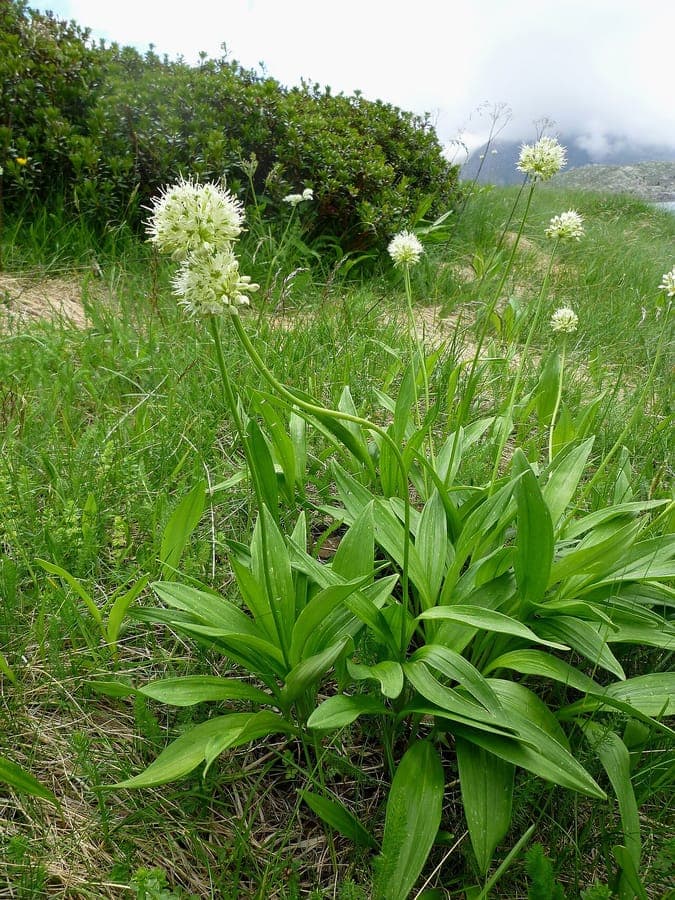
Isidre blanc / CC BY-SA 4.0, via Wikimedia Commons
Alpine leek: complete guide
Allium victorialis
¿Quieres ver Alpine leek: complete guide en tu jardín?
1 minuto, sin tarjeta de crédito
Overview
The alpine leek (Allium victorialis) is an elegant alpine plant belonging to the onion and garlic family (Amaryllidaceae). Native to mountains spanning from Europe to the Himalaya, this species thrives on alpine slopes and high meadows. With its delicate white star-shaped flowers arranged in tight spheres, it's a captivating addition to any alpine garden.
Appearance & bloom cycle
Reaching 30-50 cm in height, the alpine leek produces narrow grass-like foliage from the base. Flowers emerge in July-August with delicate white to pale pink colouring, arranged in tight dome-shaped umbels. This creates a remarkably ornamental effect. After flowering, decorative seed heads persist into autumn.
The plant's deep root system ensures drought tolerance once established. The bulbs are edible with a mild garlic flavour and are valued in Asian cuisines. Most garden centres in the UK stock this plant seasonally.
Ideal location
This plant prefers full sun to light shade conditions. In warmer regions, afternoon shade becomes beneficial. Alpine leeks demand absolutely perfect drainage - waterlogged soil is fatal. Rock gardens, alpine troughs, and raised borders provide ideal growing locations.
In the UK, this plant excels in gravel gardens and scree beds. Winter hardy to USDA zone 3 (-35°C), it thrives throughout most of temperate regions.
Soil requirements
The alpine leek is undemanding regarding soil fertility but demands excellent drainage. Mix standard garden soil with 20-30% sharp sand or fine gravel. The plant tolerates nutrient-poor conditions, making heavy feeding unnecessary. Neutral to slightly acidic soil (pH 6.0-7.5) is ideal. Avoid heavy clay soils where water pools.
Diseño gratis
¿Quieres ver Alpine leek: complete guide en tu jardín? Crea un diseño gratis ahora.
Watering
Ensure perfect drainage - this is non-negotiable. Water when the top 2 cm of soil feels dry. After flowering and in autumn, reduce watering. During winter dormancy, prevent soil from becoming waterlogged.
Pruning
This plant requires minimal pruning. Simply remove dead leaves and spent flower stems. This promotes flowering and maintains a neat appearance.
Maintenance calendar
- March-April: Check drainage after snow melt. Add humus to the surface.
- May-June: Monitor for weeds that might smother young plants.
- July-September: Enjoy the delicate white blooms.
- October-November: Collect seed if desired. Bulbs develop underground.
- December-February: Plant enters dormancy. Minimal water and attention needed.
Winter hardiness
The alpine leek is extremely hardy, surviving winters throughout temperate regions. It requires no protection in zone 3 (-35°C) and warmer. A light mulch of fine gravel provides protection during exceptionally wet winters where bulb rot becomes possible.
Companion plants
Excellent companions include:
- Fine sempervivum and sedum species
- Edelweiss and alpine phlox
- Dwarf primulas and forget-me-nots
- Small alpine tulips and crocuses
Combine with gravel and stone for authentic alpine displays. These combinations can be easily visualized on gardenworld.app.
Closing thoughts
The alpine leek is an underappreciated alpine treasure enriching any rock garden or alpine bed. With proper drainage and minimal attention, this plant flourishes effortlessly. It's an essential addition to any alpine enthusiast's plant palette.
¿Quieres ver Alpine leek: complete guide en tu jardín? Crea un diseño gratis ahora.
Sube una foto, elige un estilo y obtén un diseño fotorrealista con lista de plantas en menos de un minuto.
Más de 10.000 jardines diseñados
Sin tarjeta de crédito


Plantas similares
Douglas' Onion: complete guide
Allium douglasii
Douglas' onion is a compact ornamental allium with purple flowers, perfect for rock gardens and sunny borders. Learn care, siting and hardiness.
Oblique onion: complete guide
Allium obliquum
The oblique onion is a hardy ornamental allium with chartreuse flower heads and blue-green foliage. Location, soil and care explained.
False hooded garlic: complete guide
Allium pseudocalyptratum
Discover false hooded garlic (Allium pseudocalyptratum): a rare ornamental onion from Lebanon for rock gardens and alpine troughs.